
Introduction
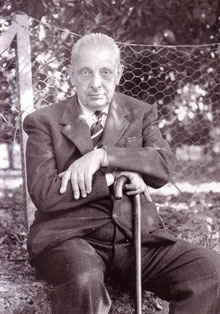
Giuseppe Tomasi di Lampedusa, born on December 23, 1896, in Palermo, Sicily, is a name synonymous with literary brilliance, particularly for his masterwork Il Gattopardo (The Leopard). A solitary figure in Italian literature, Tomasi di Lampedusa’s life was marked by personal loss, aristocratic lineage, and the creation of a single, monumental novel that captures the complexities of Sicilian history and society. Despite facing numerous rejections during his lifetime, Tomasi di Lampedusa’s work has posthumously gained immense recognition, cementing his place as one of Italy’s most celebrated authors.
Early Life and Aristocratic Heritage
Giuseppe Tomasi di Lampedusa was born into one of Sicily’s most prominent aristocratic families. He was the Duke of Palma di Montechiaro and the Prince of Lampedusa, titles that reflected his noble heritage. His father, Giulio Maria Tomasi, and mother, Beatrice Mastrogiovanni Tasca di Cutò, belonged to two of the most powerful and influential families in Sicily. This aristocratic background played a significant role in shaping Tomasi di Lampedusa’s worldview and the themes that would later dominate his writing.
As a child, Giuseppe was educated at home in Palermo, under the guidance of private tutors, his mother, and his grandmother. His mother, a woman of strong character and significant influence in his life, taught him French, while his grandmother introduced him to the world of literature, reading him the novels of Emilio Salgari. These early literary influences, combined with the grandeur and isolation of his family’s estates, instilled in Tomasi di Lampedusa a deep appreciation for history, culture, and the complexities of human nature.
Education and Early Struggles
In 1911, Tomasi di Lampedusa began attending a classical high school in Rome, though he would eventually complete his studies in Palermo. His early education was interrupted by the outbreak of World War I, during which he was drafted into the Italian army. Tomasi di Lampedusa’s wartime experiences were harrowing; he participated in the Battle of Caporetto, one of Italy’s most significant military defeats, and was captured by Austrian forces. He was interned in a concentration camp in Hungary, from which he eventually escaped, making a perilous journey back to Italy on foot.
Following his return to Sicily, Tomasi di Lampedusa attempted to resume his studies, enrolling in law at the University of Rome. However, he soon abandoned his studies, disillusioned by the academic environment and increasingly drawn to the solitary contemplation of literature and history. His early adult years were marked by a series of personal and familial struggles, including the death of his father in 1934, which left him the head of the family and the heir to its titles and estates.
Marriage and Personal Life
In 1932, Tomasi di Lampedusa married Alexandra Wolff Stomersee, known as Licy, a Latvian-born psychoanalyst of noble German descent. Their marriage was unconventional and marked by long periods of separation, largely due to the significant differences in their personalities and the tension between Licy and Giuseppe’s mother. Licy, a strong-willed and independent woman, found it difficult to adapt to life in Palermo and often returned to her native Riga, leaving Giuseppe to manage the family estates in Sicily.
The couple’s relationship, though strained at times, was deeply intellectual. Licy introduced Tomasi di Lampedusa to psychoanalytic theory, which influenced his understanding of human psychology and his portrayal of characters in his later work. Despite the geographical and emotional distance that often separated them, the bond between Giuseppe and Licy remained strong, rooted in mutual respect and shared intellectual pursuits.
Literary Beginnings and The Leopard
Tomasi di Lampedusa’s literary career was unconventional, to say the least. Despite his deep love for literature, he did not begin writing seriously until later in life. His early attempts at writing were limited to a few essays and short stories, which he did not consider worthy of publication. It was not until 1954, during a visit to a literary conference in San Pellegrino Terme with his cousin, the poet Lucio Piccolo, that Tomasi di Lampedusa began to contemplate writing a novel.
Inspired by his discussions with other writers, including the poet Eugenio Montale, and motivated by the realization that his aristocratic world was rapidly disappearing, Tomasi di Lampedusa embarked on the creation of Il Gattopardo. The novel, which he completed in 1956, is a sweeping historical narrative that chronicles the decline of the Sicilian aristocracy during the Risorgimento—the period of Italian unification in the 19th century. The central character, Don Fabrizio Corbera, Prince of Salina, is a fictionalized representation of Tomasi di Lampedusa’s great-grandfather, and through him, the novel explores themes of decay, change, and the inevitability of death.
The Struggle for Publication
Despite the brilliance of Il Gattopardo, Tomasi di Lampedusa faced numerous rejections when he sought to have the novel published. Both Einaudi, one of Italy’s most prestigious publishing houses, and Mondadori, another leading publisher, rejected the manuscript. The rejection from Einaudi, in particular, was a source of great bitterness for Tomasi di Lampedusa, as it was dismissed by the editor, Elio Vittorini, who failed to recognize the novel’s potential.
The continuous rejections took a toll on Tomasi di Lampedusa’s health and spirit. He was diagnosed with lung cancer in 1957, and as his health deteriorated, he grew increasingly despondent about the future of his literary work. Tragically, Giuseppe Tomasi di Lampedusa died on July 23, 1957, in a modest hotel room in Rome, far from the grandeur of his family’s estates and the city of Palermo that had shaped so much of his life and work.
Posthumous Fame and Legacy
The story of Il Gattopardo did not end with Tomasi di Lampedusa’s death. Thanks to the intervention of Elena Croce, the daughter of the philosopher Benedetto Croce, the manuscript was sent to Giorgio Bassani, a writer and editor at Feltrinelli, another major Italian publishing house. Recognizing the novel’s genius, Bassani championed its publication, and Il Gattopardo was finally published in 1958, a year after Tomasi di Lampedusa’s death.
The novel was an immediate success, capturing the imagination of readers and critics alike. In 1959, Il Gattopardo was awarded the prestigious Premio Strega, Italy’s highest literary honor, cementing Tomasi di Lampedusa’s place in the pantheon of great Italian writers. The novel’s success was not confined to Italy; it was translated into multiple languages and became a global literary phenomenon.
Il Gattopardo has since been recognized as one of the most important works of 20th-century literature, praised for its rich historical detail, psychological depth, and lyrical prose. The novel’s exploration of the inevitability of change and the decline of the old social order resonated with readers around the world, and its themes remain relevant today.
In 1963, Il Gattopardo was adapted into a film by the acclaimed Italian director Luchino Visconti. The film, starring Burt Lancaster as Prince Fabrizio, Claudia Cardinale as Angelica, and Alain Delon as Tancredi, won the Palme d’Or at the Cannes Film Festival and is considered one of the greatest films ever made. Visconti’s adaptation brought Tomasi di Lampedusa’s vision to life on the screen, further cementing the novel’s place in popular culture.
Giuseppe Tomasi di Lampedusa’s Impact on Literature
The impact of Giuseppe Tomasi di Lampedusa on literature is profound. Although he produced only one major work, Il Gattopardo has had a lasting influence on both Italian and global literature. The novel’s portrayal of a fading aristocracy in a time of political and social upheaval speaks to universal themes of change, loss, and the passage of time.
Tomasi di Lampedusa’s writing is characterized by its deep introspection, historical consciousness, and an acute awareness of the transient nature of human existence. His ability to weave together the personal and the political, the historical and the fictional, has made Il Gattopardo a touchstone for writers and scholars alike.
In addition to its literary qualities, Il Gattopardo offers a rich commentary on the nature of power and the complexities of social change. The novel’s famous line, “If we want things to stay as they are, things will have to change,” encapsulates the paradox of revolution and reform, a theme that continues to resonate in contemporary discussions of politics and society.
Conclusion
Giuseppe Tomasi di Lampedusa’s life and work are a testament to the enduring power of literature. Despite facing rejection and obscurity during his lifetime, his legacy has grown to become one of the most significant in modern literary history. Il Gattopardo stands as a monument to a vanished world, capturing the essence of a time and place with unparalleled clarity and insight.
As we reflect on Tomasi di Lampedusa’s contributions to literature, it is clear that his work transcends the boundaries of time and geography. His exploration of the human condition, set against the backdrop of a changing world, continues to captivate readers and inspire writers. Giuseppe Tomasi di Lampedusa may have been a solitary figure in his lifetime, but his voice echoes through the ages, reminding us of the enduring relevance of great literature.


