
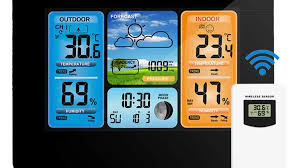
The Ultimate Guide to Choosing a Stationary Weather Station
Are you tired of relying on inaccurate weather forecasts? Do you want to have precise control over the atmospheric conditions in your home or office? Look no further! In this article, we’ll guide you through the process of choosing the perfect stationary weather station for your needs.
What is a Stationary Weather Station?
A stationary weather station is an instrument that measures and displays various meteorological parameters such as temperature, humidity, barometric pressure, wind speed, and precipitation. These devices are designed to be installed in a fixed location, usually indoors or outdoors, and provide real-time data on the current atmospheric conditions.
Types of Weather Stations
There are two main types of weather stations: Amateur and professional.
- Amateur Weather Stations: These are entry-level devices that are perfect for casual use. They usually come with a basic display screen and measure temperature and humidity only.
- Professional Weather Stations: These are high-end devices designed for serious weather enthusiasts or professionals. They come with advanced features such as UV index measurement, rain gauge, and anemometer.
Factors to Consider When Choosing a Stationary Weather Station
- Accuracy: Look for stations with high precision levels (±1°C or ±5% RH) to ensure accurate readings.
- Frequency of Update: Choose stations that update data frequently (every 5 minutes or less).
- Sensor Type: Opt for sensors that are waterproof and durable, with a good range of transmission (up to 100 meters).
- Display Screen: Select devices with clear and easy-to-read displays, preferably with backlighting.
- Power Source: Consider stations with battery backup and solar panels for added autonomy.
- Compatibility: Ensure the station is compatible with your smartphone or tablet using a dedicated app.
Top Stationary Weather Stations on The Market
- Levipe A001: This compact device measures temperature, humidity, and pressure, with a range of 10°C to 50°C and ±1°C accuracy.
- Uzoli Awake With Projector Clock: This multifunctional station includes an alarm clock, thermometer, hygrometer, and forecast display.
- Baldr 359V2-BL: This advanced device features a wide LCD display, barometric pressure measurement, and forecast display.
- Liorque Station Meteo With External Sensor: This wireless station measures temperature, humidity, and pressure, with a range of -40°C to 60°C and ±1.5°C accuracy.
- Kalawen Station Meteo Automatic Digital Wireless: This avant-garde device features an external sensor for accurate weather forecasts and includes a digital calendar and clock.
Additional Tips
- Always read the user manual carefully before installing your station.
- Ensure proper calibration of your station to ensure accurate readings.
- Regularly update your station’s firmware to ensure optimal performance.
Conclusion
Choosing the right stationary weather station can be overwhelming, but with this guide, you’ll be well-equipped to make an informed decision. Remember to consider factors such as accuracy, frequency of update, sensor type, display screen, power source, and compatibility when selecting a device that suits your needs. Whether you’re a seasoned weather enthusiast or just starting out, investing in a reliable stationary weather station will provide you with precise control over the atmospheric conditions in your home or office.
Faqs
- Q: What is The Difference Between an Amateur And Professional Weather Station?
A: Amateur stations are entry-level devices that measure temperature and humidity only, while professional stations come with advanced features such as UV index measurement, rain gauge, and anemometer. - Q: How Often Should I Update my Station’s Firmware?
A: Regularly update your station’s firmware every 6-12 months to ensure optimal performance and prevent any potential issues. - Q: Can I Use a Weather Station in Areas With Extreme Temperatures?
A: Yes, some stations are designed for use in extreme temperatures (up to -40°C or 60°C), but always check the specifications before purchasing. - Q: How Far Can The Wireless Sensor Transmit Data?
A: Wireless sensors typically have a range of up to 100 meters, depending on the device and environmental conditions. - Q: Can I Use a Weather Station With my Smartphone or Tablet?
A: Yes, many stations come with dedicated apps for smartphones and tablets, allowing you to monitor your station’s data remotely.
I hope this guide has been informative and helpful in choosing the perfect stationary weather station for your needs.


