
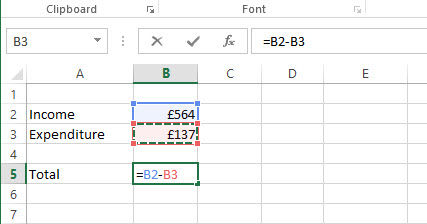
How to Summarize a Column in Excel: A Step-by-step Guide
Are you tired of manually adding up numbers in a column in Excel? Look no further! In this article, we will show you how to summarize a column in Excel using the SUM function and other tips.
What is The Sum Function in Excel?
The SUM function in Excel is used to add up a range of cells. It’s a powerful tool that can help you quickly calculate totals, sums, and averages. To use the SUM function, simply select the cell where you want to display the sum, type =SUM(, and then select the range of cells you want to add up.
Summarizing a Column in Excel: A Step-by-step Guide
To summarize a column in Excel, follow these steps:
- Select The Cell: Select the cell where you want to display the sum.
- Click on The Autosum Button: Click on the AutoSum button in the Home tab of the ribbon. This will automatically select the range of cells above and below your cursor.
- Enter The Formula: Enter the formula =SUM(A1:A5), where A1:A5 is the range of cells you want to add up.
- Press Enter: Press Enter to calculate the sum.
Summarizing Two or More Columns in Excel
If you want to summarize two or more columns at once, simply select the cells for each column and enter the formula =SUM(A1:A5,B1:B5). You can also use the AutoSum button to quickly add up multiple columns.
Summarizing a Column With Filtered Data
Sometimes, you may need to sum a column of numbers that are filtered. In this case, you can use the SUBTOTAL function instead of the SUM function. The SUBTOTAL function ignores hidden rows and is perfect for filtering data in Excel.
Summing Columns Using a Grouping Structure
If you have multiple columns with corresponding numbers (e.G., Prices), you can sum them up using a grouping structure in Excel. To do this, select the cells for each column and go to the Data tab > Group & Outline. Select the columns you want to group and click on the “Group” button.
Calculating an Average or Median Value
Sometimes, you may need to calculate an average or median value from a set of numbers. In this case, you can use the AVERAGE function instead of the SUM function. To do this, select the cell where you want to display the average and enter the formula =AVERAGE(A1:A5).
Conclusion
In conclusion, summarizing a column in Excel is a simple process that can be accomplished using the SUM function or other tips. Whether you need to sum up numbers, create an average, or filter data, Excel has got you covered.
Frequently Asked Questions (FAQs)
Here are some frequently asked questions about summarizing columns in Excel:
- Q: How do I Summarize a Column of Numbers?
A: You can use the SUM function to add up a range of cells. - Q: Can I Sum Multiple Columns at Once?
A: Yes, you can enter multiple ranges of cells and separate them with commas. - Q: What is The Difference Between The Sum And Subtotal Functions?
A: The SUM function adds up all values in a range, while the SUBTOTAL function ignores hidden rows. - Q: How do I Group Columns Using a Grouping Structure in Excel?
A: Select the cells for each column and go to the Data tab > Group & Outline. - Q: Can I Create an Average or Median Value From a Set of Numbers?
A: Yes, you can use the AVERAGE function to calculate an average or median value.
Bonus Tips
Here are some bonus tips to help you master summarizing columns in Excel:
- Use the AutoSum button to quickly add up a range of cells.
- Experiment with different formulas and functions to find what works best for your needs.
- Practice, practice, practice! The more you use Excel, the more comfortable you’ll become with its features.


