
How to Calculate Btu: A Comprehensive Guide
Are you tired of feeling like you’re sweating seven shirts every time you try to cool down your home? Do you find yourself hesitant when choosing a conditioner, unsure of how to calculate the British Thermal Units (BTU) necessary for your space? Look no further! In this article, we’ll delve into the world of BTU calculations, providing you with a comprehensive guide on how to determine the ideal power of a conditioner for your home.
What Are Btus?
Before we dive into the calculations, let’s first understand what BTUs are. BTUs measure the energy output of an air conditioning system, expressed in units of heat energy. It’s essential to know that 1 BTU is equivalent to 1055 joules or 0.252 Calories.
Calculating Btus For a Room
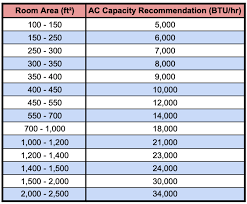
To calculate the BTUs needed for a room, you’ll need to follow these steps:
Step 1: Measure The Surface Area of The Room
Measure the length and width of the room in meters. Multiply the length by the width to get the surface area in square meters (m²).
Example: If your room is 4 meters long and 5 meters wide, the surface area would be:
4 M x 5 m = 20 m²
Step 2: Calculate The Volume of The Room
Multiply the surface area by the height of the room in meters to get the volume.
Example: If your room is 3 meters high and has a surface area of 20 m², the volume would be:
20 M² x 3 m = 60 cubic meters
Step 3: Multiply The Volume by 300
Multiply the volume by 300 to get an estimate of the BTUs needed.
Example: In this case, the estimated BTUs would be:
60 Cubic meters x 300 = 18,000 BTU
Additional Factors to Consider
When calculating the BTUs needed for a room, consider the following factors:
- The number of people regularly present in the room
- The insulation level of the room (good, average, or poor)
- The degree of sun exposure (heavily shaded, average, or very sunny)
- The climate and temperature requirements
Using Online Calculators
To make calculating BTUs even easier, consider using online calculators like the Calculator.Net tool. This tool allows you to input various parameters, such as room size, height, insulation level, and more, to get an accurate estimate of the BTUs needed.
How to Calculate Btus For a House
Calculating BTUs for a house is similar to calculating for a single room. However, you’ll need to consider the entire house’s surface area, volume, and other factors mentioned above.
Step 1: Measure The Surface Area of The House
Measure the length, width, and height of each room in meters. Multiply the length by the width by the height for each room, then sum the results to get the total surface area.
Example: If your house has a living room with an area of 20 m² x 3 m = 60 cubic meters x 300 = 18,000 BTU, a kitchen with an area of 15 m² x 2.5 M = 37.5 Cubic meters x 300 = 11,250 BTU, and a bedroom with an area of 12 m² x 3 m = 36 cubic meters x 300 = 10,800 BTU, the total surface area would be:
60 + 37.5 + 36 = 133.5 M²
Step 2: Calculate The Volume of The House
Multiply the total surface area by the height of the house in meters to get the volume.
Example: If the height of the house is 4 meters, the volume would be:
133.5 M² x 4 m = 534 cubic meters
Step 3: Multiply The Volume by 300
Multiply the volume by 300 to get an estimate of the BTUs needed.
Example: In this case, the estimated BTUs would be:
534 Cubic meters x 300 = 160,200 BTU
Additional Factors to Consider
When calculating the BTUs needed for a house, consider the following factors:
- The number of people regularly present in the house
- The insulation level of the house (good, average, or poor)
- The degree of sun exposure (heavily shaded, average, or very sunny)
- The climate and temperature requirements
Using Online Calculators
To make calculating BTUs even easier, consider using online calculators like the Calculator.Net tool. This tool allows you to input various parameters, such as room size, height, insulation level, and more, to get an accurate estimate of the BTUs needed.
Conclusion
Calculating BTUs can seem daunting, but with these step-by-step guides, you’ll be able to determine the ideal power of a conditioner for your home or office. Remember to consider various factors, such as room size, insulation level, sun exposure, and climate requirements, to ensure accurate results.


