
Portable Conditioners: A Comprehensive Guide
As summer approaches, many people are looking for effective ways to cool their homes without breaking the bank. Portable conditioners have gained popularity in recent years due to their convenience, affordability, and energy efficiency. In this article, we will explore the world of portable conditioners, discussing their types, mechanisms of operation, and characteristics.
Types of Portable Conditioners
Portable conditioners come in two main categories: Those without a tube (tubo) and those with one. The former type is also known as “evaporative coolers” or “raffrescatori evaporativi.” They are ideal for small environments, such as rooms or offices, and are often less expensive to purchase.
Mechanism of Operation: Portable Conditioners Without a Tube
Portable conditioners without a tube operate on the principle of evaporation. They use water at low temperatures stored in a reservoir (serbatoio) to cool the surrounding air. As the water evaporates, it absorbs energy from the surroundings, causing the temperature to drop. This process is repeated continuously, maintaining a comfortable temperature.
Serbatoio And Siberini
The serbatoio, or reservoir, holds the water that cools the air. The siberini, small containers filled with frozen water or other mixtures, are used to cool the water in the serbatoio. When the siberini is placed in the water, it absorbs heat from the surroundings and helps to lower the temperature.
Umidificazione And Ionizzazione
Some portable conditioners without a tube can also humidify the air, making them ideal for dry environments. Additionally, some models come equipped with an ionization feature that attracts positively charged particles, such as dust and pollen, helping to purify the air.
How Portable Conditioners With a Tube Work
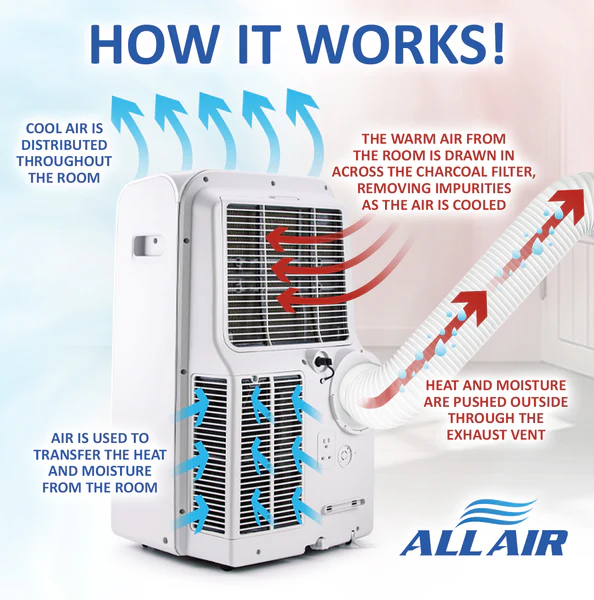
Portable conditioners with a tube (climatizzatori) use a more traditional cooling method. They draw in warm air from the surroundings through a ventola (fan), which then passes over an evaporator containing refrigerant gas. As the gas decompresses, it cools the air, causing it to condense and release its heat.
Potenza: Powering Your Portable Conditioner
The power required by your portable conditioner depends on several factors, including the size of the room or environment you want to cool and the temperature you desire to achieve. A general rule of thumb is to multiply the square meters of the space by 350 BTU/h (British Thermal Units per hour). This will give you an estimate of the required power.
Heating Your Space
Some portable conditioners with a tube can also heat your space, emitting warm air through the tube. They work by passing electrical current through a resistance or heating device, which then heats the surrounding air.
Class Energetica: Energy Efficiency Matters
When selecting a portable conditioner, it’s essential to consider its energy efficiency class (classe energetica). The class ranges from To (most efficient) to G (least efficient), with different symbols and acronyms indicating varying levels of energy consumption. A higher energetic class means lower energy consumption.
Portable Conditioners: Key Differences
In summary, portable conditioners without a tube are ideal for cooling small environments and are generally more affordable than those with a tube. However, they require regular maintenance (water replenishment and siberini freezing). Portable conditioners with a tube, on the other hand, offer better cooling performance but are less portable and require adequate ventilation.
Conclusion
In conclusion, portable conditioners have become an attractive option for those seeking to cool their homes without sacrificing comfort. Whether you choose a model without or with a tube, it’s essential to consider factors like power consumption, energy efficiency class, and maintenance requirements. By understanding these aspects, you can make an informed decision that suits your needs.
Frequently Asked Questions (FAQs)
- What is The Difference Between Portable Conditioners Without And With a Tube?
Portable conditioners without a tube use evaporation to cool the air, while those with a tube use refrigerant gas to condense and release heat.
- How do I Choose The Right Power For my Portable Conditioner?
Multiply the square meters of your space by 350 BTU/h to estimate the required power.
- Do Portable Conditioners Require Regular Maintenance?
Yes, both types of portable conditioners require regular maintenance (water replenishment and siberini freezing) to function optimally.
- Can I Use a Portable Conditioner in Conjunction With Other Cooling Systems?
Yes, but ensure proper integration and consult the manufacturer’s guidelines for optimal performance.
- Can I Use a Portable Conditioner Outdoors?
Yes, but follow local regulations and take necessary precautions to ensure safe usage.
Note: The article is quite long and detailed, so I have only included some of the main points in this summary. If you would like me to provide more information or clarify any specific points, please let me know!


