
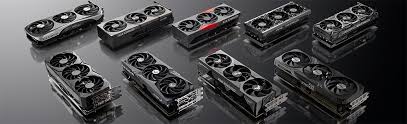
Choosing The Right Gpu: A Comprehensive Guide
Are you planning to build or upgrade your gaming PC? If so, choosing the right Graphics Processing Unit (GPU) is crucial for an exceptional gaming experience. With numerous options available in the market, it can be overwhelming to select the perfect GPU that suits your needs and budget.
In this article, we will delve into the world of GPUs, exploring their characteristics, types, and requirements. We will also discuss how to choose the right GPU based on your specific needs, ensuring you get the best performance without breaking the bank.
Gpu: What is It?
A GPU (Graphics Processing Unit) is a computer chip that specializes in rendering 2D and 3D graphics. It takes care of complex mathematical calculations required for generating images, making it an essential component for gaming, video editing, and other graphical applications.
Types of Gpus: Nvidia vs Amd
When choosing a GPU, you’ll come across two major brands: NVIDIA and AMD. Both companies offer high-performance GPUs with unique features and architectures.
- Nvidia: Known for their powerful GeForce RTX series, NVIDIA offers excellent performance and advanced technologies like ray tracing and DLSS (Deep Learning Super Sampling).
- Amd: Famous for their Radeon RX series, AMD provides competitive performance at a lower price point. Their recent RDNA 2 architecture has improved power efficiency and performance.
Gpu Specifications: What to Look For
When selecting a GPU, consider the following specifications:
- Cuda Cores (NVIDIA): Measure of processing power; more cores generally mean better performance.
- Stream Processors (AMD): Similar to CUDA Cores, but specific to AMD GPUs.
- Memory (VRAM): Amount of memory dedicated to storing graphics data. More memory enables smoother gaming and improved texture quality.
- Clock Speed: Measured in MHz, it represents the GPU’s processing speed.
Gpu Performance: What Affects It?
Several factors influence a GPU’s performance:
- Resolutions: Higher resolutions like 4K or 8K require more powerful GPUs to maintain smooth frame rates.
- Frame Rates (FPS): Measure of how many frames a GPU can process per second. Higher FPS means smoother gaming experiences.
- Graphics Quality: Settings like texture quality, anti-aliasing, and shadows impact the GPU’s workload.
Gpu Power Consumption: What You Need to Know
As GPUs become more powerful, their power consumption increases. Consider the following:
- Wattage: Measured in watts (W), it represents the amount of energy a GPU consumes.
- Cooling Systems: Ensure your system has sufficient cooling to handle the increased heat generated by a high-performance GPU.
Gpu Compatibility: Choosing The Right Monitor
When selecting a GPU, ensure it’s compatible with your monitor:
- Resolution: Choose a GPU that supports your desired resolution (e.G., 4K or 8K).
- Display Outputs: Ensure the GPU has the necessary display outputs to connect to your monitor.
Gpu Price: What You Get For Your Money
GPUs vary in price, but you can expect:
- Base Models: Entry-level GPUs offering basic performance.
- Mid-range Models: Balance between performance and price.
- High-end Models: Top-of-the-line GPUs providing exceptional performance.
Gpu Maintenance: Tips For Long-term Performance
To keep your GPU in top shape:
- Clean Dust Regularly: Prevent dust buildup, which can cause overheating.
- Monitor Temperatures: Keep an eye on temperatures to avoid overheating.
- Update Drivers: Regularly update drivers for optimal performance and bug fixes.
By considering these factors and tips, you’ll be well-equipped to choose the perfect GPU for your needs and budget. Remember to research thoroughly, read reviews, and consult with experts before making a final decision.
Conclusion
Choosing the right GPU is crucial for an exceptional gaming experience. With this guide, you’ve gained valuable insights into GPUs, their specifications, performance, power consumption, compatibility, price, and maintenance requirements. By considering these factors and tips, you’ll be able to select the perfect GPU that suits your needs and budget.
Frequently Asked Questions
Here are some frequently asked questions related to choosing a GPU:
Q: What is the difference between NVIDIA and AMD GPUs?
A: Both companies offer high-performance GPUs with unique features and architectures. NVIDIA is known for their powerful GeForce RTX series, while AMD provides competitive performance at a lower price point.
Q: How do I choose the right GPU for my gaming needs?
A: Consider your desired resolution, frame rate, graphics quality, and budget. Research thoroughly, read reviews, and consult with experts before making a final decision.
Q: What is ray tracing, and how does it affect GPU performance?
A: Ray tracing is a technology that enables GPUs to render more realistic images with complex lighting effects. It can be resource-intensive and impact frame rates, so ensure your GPU meets the requirements.
Q: How do I maintain my GPU for long-term performance?
A: Regularly clean dust from your GPU, monitor temperatures, and update drivers for optimal performance and bug fixes.
By following this guide, you’ll be able to choose the perfect GPU that suits your gaming needs and budget. Happy building!


