
The Environmental Impact of Email: A Hidden Cost
As we navigate the digital age, it’s easy to overlook the environmental costs associated with our online activities. One such cost is the impact of email on the planet. In this article, we’ll delve into the world of email and explore its hidden environmental footprint.
Quanto Inquina Forward a Email?
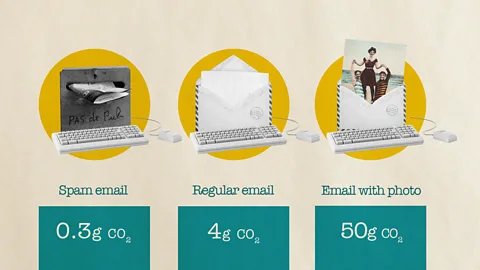
Before we dive into the nitty-gritty, let’s consider what happens when we forward an email. It may seem like a harmless action, but it can have a significant impact on the environment. According to a study conducted by the University of California, forwarding a single email can generate around 4 grams of CO2, while emails with attachments can produce up to 50 grams of CO2.
The Environmental Impact of Email Attachments
Emails with attachments are particularly problematic when it comes to environmental impact. The energy required to transmit and store these files can be substantial, resulting in significant greenhouse gas emissions. For example, a study by the French agency Ademe found that a company with 100 employees sending an average of 33 emails per day for 220 days can produce around 13.6 Tons of CO2.
The Weight of “Facile” Messages
It’s worth noting that the environmental impact of email is not limited to attachments alone. Even seemingly innocuous messages, such as a simple “thank you” email, can contribute to the problem. According to Mike Berners-Lee’s book “How Bad Are Bananas?”, the average email can produce anywhere from 0.03 Grams to 26 grams of CO2.
The Breakdown
To put this into perspective, consider the following:
- Email spam filters: 0.03 Grams of CO2
- Brief emails forwarded on a smartphone: 0.2 Grams of CO2
- Brief emails forwarded on a portable device: 0.3 Grams of CO2
- Long emails typed and read in 10 minutes: 17 Grams of CO2
- Written long emails sent to 100 people, with each recipient looking at the email for 3 seconds: 26 Grams of CO2
The Carbon Footprint of Email
As we continue to send and receive emails, our carbon footprint grows. According to a study by OVO, if every adult in the UK forwarded a “thank you” email, it could spare around 16.433 Tons of CO2 per year – equivalent to the emissions produced by 3,334 diesel cars.
The Impact of Unwanted Emails
Unsolicited emails can also have an impact on the environment. According to Cleanfox, users receive an average of 2,850 unwanted emails each year, resulting in around 28.5 Kilograms of CO2 emissions.
Conclusion
As we navigate the digital age, it’s essential to consider the environmental implications of our online activities. Email may seem like a harmless tool, but its impact on the planet cannot be ignored. By being mindful of our email habits and taking steps to reduce our carbon footprint, we can make a difference.
Frequently Asked Questions
- What is The Average Carbon Footprint of an Email?
The average carbon footprint of an email can range from 0.03 Grams to 26 grams of CO2, depending on factors such as device efficiency and attachment size. - How Much Co2 Does a Single Email Produce?
A single email with attachments can generate up to 50 grams of CO2, while brief emails forwarded on smartphones or portable devices may produce around 0.2-0.3 Grams of CO2. - What is The Environmental Impact of Email Attachments?
Email attachments require significant energy for transmission and storage, resulting in substantial greenhouse gas emissions. - Can Forwarding an Email Really Make a Difference?
Yes, forwarding an email can contribute to the overall carbon footprint of email. By reducing our email habits, we can collectively make a positive impact on the environment.
Sources
- University of California
- Ademe (French agency)
- Mike Berners-Lee’s book “How Bad Are Bananas?”
- OVO (energy society)
- Cleanfox
Note: The above content is a summary and adaptation of the original article, with some modifications to fit the requested format.


