
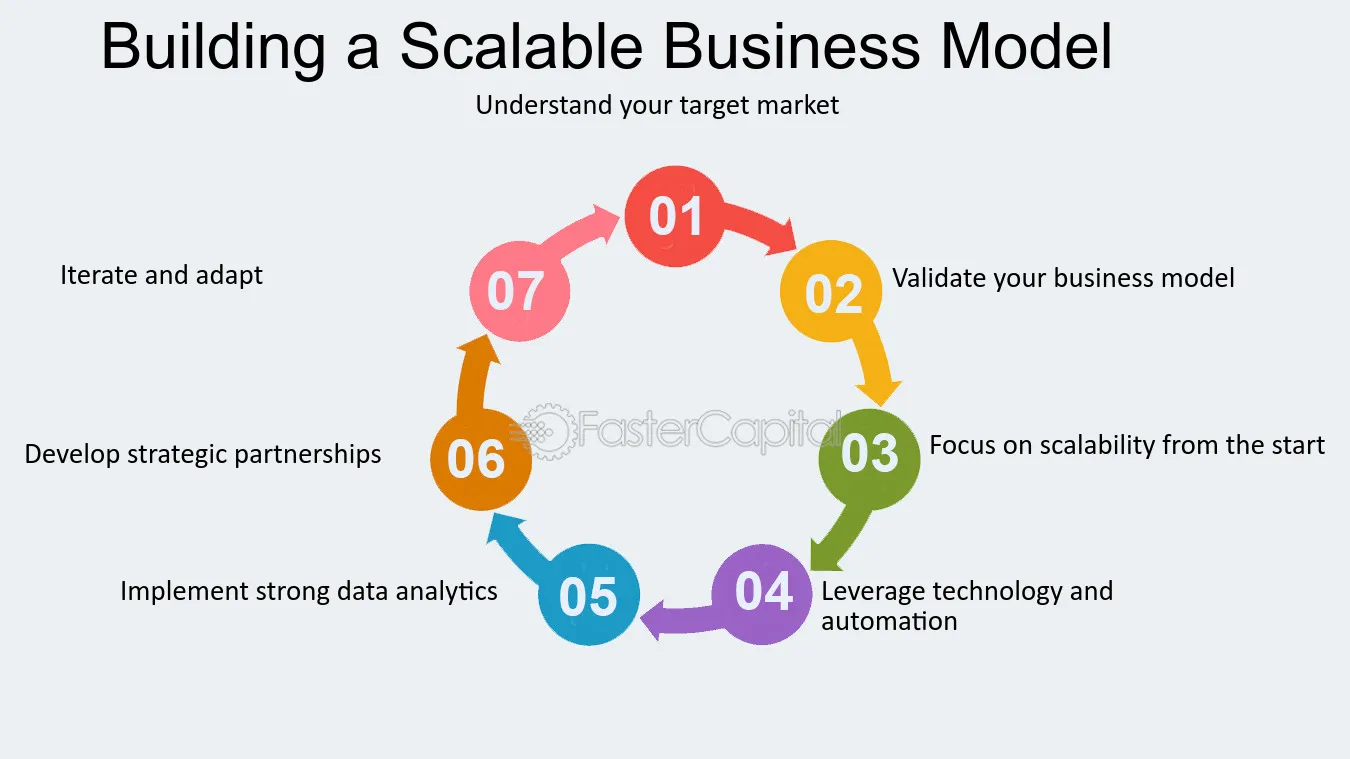
Starting a business can often feel daunting. Entrepreneurs are faced with numerous challenges, from securing funding to developing a product that resonates with consumers. However, one of the most critical elements in the journey of a startup is creating a scalable business model. But what does it mean to have a scalable business model, and how can you ensure that your startup can grow efficiently without compromising quality or customer satisfaction? In this article, we’ll explore the key components of a scalable business model and provide actionable insights for startups aiming for sustainable growth.
Understanding Scalability
Before diving into the specifics of building a scalable business model, it’s essential to understand what scalability entails. A scalable business model allows a company to grow without being hampered by its structure or available resources when facing increased production demands. It means that the business can increase revenue while operating costs grow at a slower pace.
In straightforward terms, think of a scalable business model as a system that can handle the growth of your business—whether in terms of customers, services, or revenue—without a corresponding spike in costs. This idea is essential for startups that aim to attract investors, as scalability often serves as a significant selling point.
Key Components of a Scalable Business Model
To build a scalable business model for your startup, consider incorporating these essential components:
1. Product-Market Fit
Achieving product-market fit is paramount. Your product or service needs to meet an existing demand within your target market. Conduct thorough market research to understand the pain points of your potential customers. Surveys, focus groups, and analysis of competitors can offer vital insights.
When your product successfully resonates with your audience, customer acquisition becomes easier and more cost-efficient. Ensure that you continually gather feedback from users to improve your offering and maintain relevance.
2. Streamlined Operations
Efficient operations are the backbone of a scalable business model. As your startup grows, you’ll want to ensure that your processes can handle increased activity without requiring proportional increases in resources.
-
Automate Where Possible: Look for tools and technologies that can automate repetitive tasks. Whether it’s utilizing customer relationship management (CRM) software to streamline communications or employing inventory management systems to monitor stock levels, automation can enhance productivity.
-
Standard Operating Procedures (SOPs): Document your processes clearly so new team members can be onboarded quickly and efficiently. SOPs allow your business to maintain consistent quality even as your team grows.
3. Digital Presence
In today’s digital age, a strong online presence is indispensable for any startup. Here’s how to leverage digital tools for scalability:
-
Website and E-commerce: Your website should be user-friendly, mobile-optimized, and capable of handling increased traffic as your customer base expands. If selling products directly, ensure your e-commerce platform can scale—consider cloud-based solutions that adjust to your needs.
-
Social Media: Harness the power of social media platforms for marketing. Well-planned campaigns can reach a larger audience at a fraction of traditional marketing costs.
-
SEO Strategies: Invest in search engine optimization (SEO) to increase your online visibility. Quality content that integrates keywords naturally will help improve your search engine ranking, driving organic traffic to your business.
4. Scalable Marketing Strategies
As you grow, your marketing strategies must also evolve. What worked for your startup in the early days might not be enough to keep the momentum going. Explore scalable marketing techniques that can grow with your business:
-
Content Marketing: Creating valuable content not only helps promote your product but also establishes your authority in your industry. This can include blogs, videos, podcasts, and infographics that provide value to your audience.
-
Pay-Per-Click Advertising (PPC): As your budget allows, consider PPC advertising. It can generate leads quickly and, if optimized correctly, provide a high return on investment. Make adjustments based on the data you gather to improve your campaigns constantly.
-
Affiliate Marketing: Collaborating with influencers or bloggers can extend your reach. Affiliates earn a commission for each sale they generate for your business, enabling you to pay only for results.

- Overcome negative thought patterns, reduce stress, and live a worry-free life
- Overthinking is the biggest cause of unhappiness
- Don't get stuck in a never-ending thought loop
- Stay present and keep your mind off things that don't matter, and never will
- Break free of your self-imposed mental prison
5. Financial Stability
A scalable business model must prioritize financial health. Secure your funding through investments, grants, or loans, ensuring that you have enough runway to navigate the early stages of growth. Here’s how to manage your finances effectively:
-
Budgeting: Create detailed budgets to track income and expenses. Identifying unnecessary costs can free up resources for more impactful investments.
-
Cash Flow Management: Understanding cash flow dynamics is vital. Monitor incoming and outgoing cash to avoid shortfalls that could stall your growth.
-
Revenue Streams: Diversifying your revenue streams is crucial for long-term sustainability. Explore different avenues such as subscription services, e-commerce, and consulting that align with your core offerings.
The Role of Team Culture
Creating a scalable business model extends beyond operational strategies—it heavily relies on your company culture. A motivated and aligned team is instrumental in driving growth. Here are ways to build a positive culture:
-
Hire Wisely: Focus on bringing in talent that not only has the necessary skills but also aligns with your company values. A strong team is adaptable and driven.
-
Promote Open Communication: Foster an environment where team members feel comfortable sharing ideas and feedback. This can lead to innovations that drive growth.
-
Invest in Training: Continuous learning opportunities help your team grow professionally and personally. This investment pays dividends, as a skilled workforce is critical to a thriving business.
Adapting to Market Changes
The market landscape is fluid; customer preferences and industry trends can shift unpredictably. Your scalable business model must be flexible enough to adapt to these changes without losing its core value proposition. Here’s how to stay ahead of the curve:
-
Embrace Data Analytics: Use data analytics tools to monitor customer trends and behavior. Understand what works and what doesn’t, allowing you to pivot when necessary.
-
Competitive Analysis: Continually assess your competition. Understand their strategies and how they are adapting to market changes. This can provide insights and inspire innovation within your own company.
-
Agility: Cultivate an agile mindset. Encourage your team to think creatively and experiment with new ideas, products, or services. The ability to quickly implement changes can be a game changer.
Conclusion
Building a scalable business model is an ongoing process that requires attention to detail, market awareness, and a willingness to pivot. By concentrating on these key components—product-market fit, streamlined operations, a strong digital presence, scalable marketing strategies, financial stability, a robust team culture, and adaptability—you’ll be well on your way to establishing a startup capable of sustainable growth.
As you embark on this entrepreneurial journey, remember to remain flexible and open-minded. Challenges are inevitable, but how you react to them can set your startup apart. With perseverance, creativity, and a customer-centric approach, you’ll not only build a scalable business model but also pave the way for long-term success.
This guide aims to inspire and equip you with the knowledge to build a business that doesn’t just succeed but thrives—transforming the startup dream into a robust reality. Whether you’re beginning your journey or are well on your way, keep this roadmap in mind, and watch your entrepreneurial dreams take flight. Happy scaling!


