
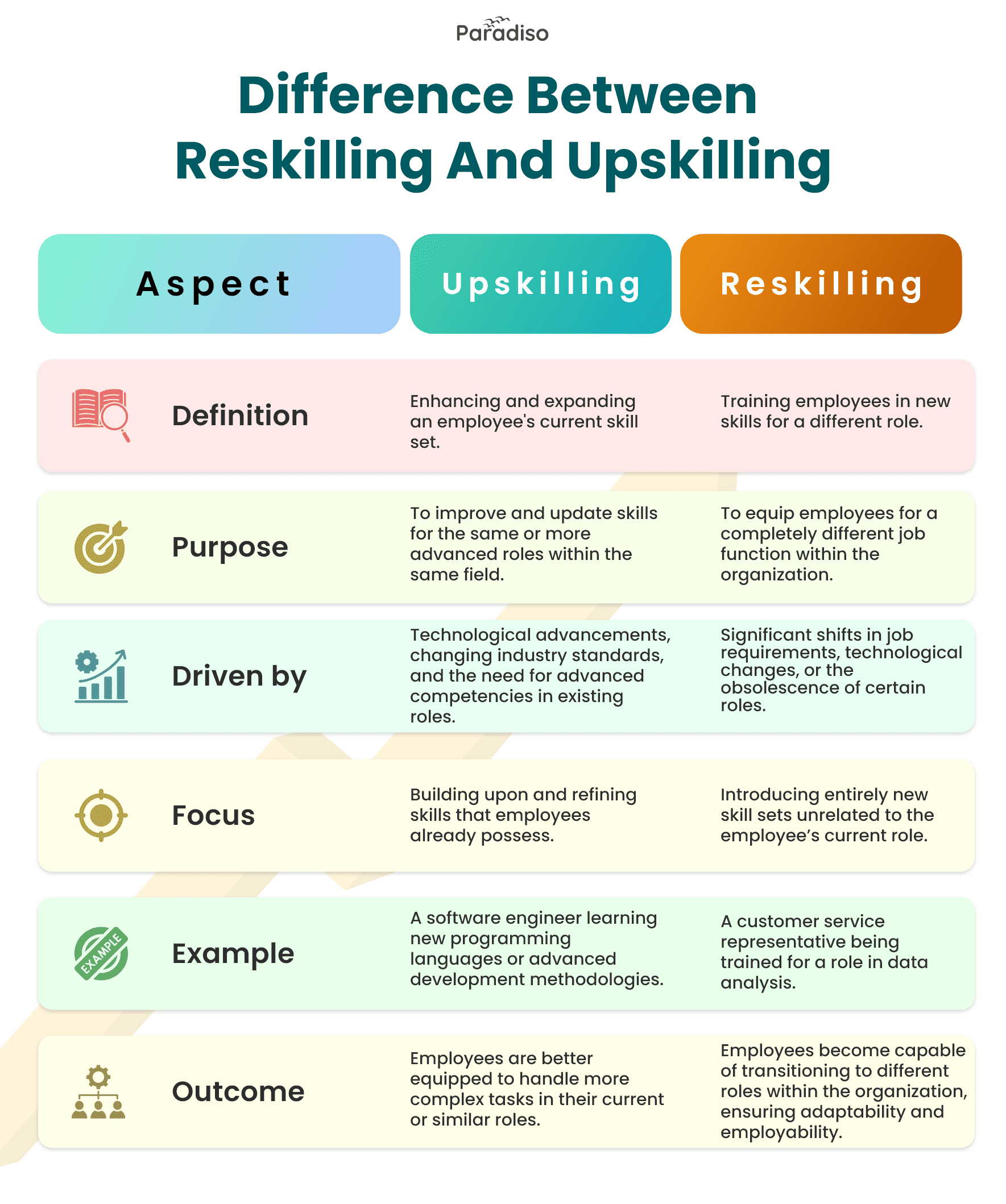
In the ever-evolving world of business, the workforce landscape is shifting at an unprecedented pace. With the arrival of new technologies, evolving consumer behaviors, and a constantly changing economy, companies must adapt to stay relevant and competitive. In this context, two terms frequently pop up in conversations about workforce development: upskilling and reskilling. While they may sound similar, understanding the differences between these two strategies is crucial for organizations looking to invest in their employees for future success. This article will delve into the definitions, advantages, and disadvantages of upskilling and reskilling, helping businesses determine which approach may be more beneficial under various circumstances.
Defining Upskilling and Reskilling
To chart the most effective strategy, it’s essential to first understand what upskilling and reskilling entail.
Upskilling
Upskilling refers to the process of teaching employees new skills that enhance their existing capabilities. This often includes advanced training in their current job roles, enabling them to take on more complex tasks or responsibilities. For example, a marketing professional might learn new data analytics tools or social media strategies to improve campaign performance. The goal of upskilling is not to change an employee’s job function but to improve their expertise within their current role.
Reskilling
In contrast, reskilling involves teaching employees new skills so they can perform a different job within the organization. Reskilling is essential when job roles become obsolete due to technological advancements or industry changes. For instance, if a company automates a manufacturing process, workers may need to be reskilled to take on different tasks, such as equipment monitoring or data analysis. Reskilling provides employees with a new career trajectory, thus enabling the business to retain experienced staff during transitional phases.
The Business Case for Upskilling
Advantages of Upskilling
-
Increased Employee Loyalty and Retention: Investing in upskilling can result in higher employee satisfaction rates. When team members see that their employer is genuinely interested in their professional development, they are likelier to stay with the organization.
-
Enhanced Productivity and Job Performance: By refining existing skills, employees become more efficient and effective at their tasks. This greater competence can lead to improved overall performance and productivity.
-
Alignment with Organizational Goals: Upskilling can ensure that the skills being taught are directly aligned with the organization’s immediate and long-term objectives, fostering growth in strategic areas.
Disadvantages of Upskilling
-
Skill Saturation: At some point, an employee may reach their maximum potential within a particular domain. If upskilling becomes stagnant, it may be more beneficial for the employee and the organization to consider reskilling them.
-
Limited Applicability: Not all employees may be suitable candidates for upskilling. For example, a worker may not possess the aptitude or interest to learn advanced skills in their area, rendering the investment inefficient.
When to Choose Upskilling
Organizations may opt for upskilling when they foresee growth in their industry and want to maintain a competitive edge by refining existing skills. If a business is launching new technology, expanding into new markets, or looking to innovate, upskilling can provide the necessary foundation.
The Business Case for Reskilling
Advantages of Reskilling
-
Retention of Valuable Talent: Reskilling allows organizations to retain experienced employees who possess institutional knowledge, which is invaluable during times of change. Letting go of seasoned workers due to skill obsolescence can be detrimental to the company culture and morale.
-
Adaptability to Industry Changes: Reskilling prepares an organization to pivot as necessary. Companies that encourage adaptability enable their workforce to stay relevant and responsive to market demands.
-
Diversity of Skill Sets: By reskilling, organizations are not only enhancing the versatility of their workforce but also fostering a culture of continuous learning and innovation. This can lead to creative problem-solving and fresh perspectives.

- Overcome negative thought patterns, reduce stress, and live a worry-free life
- Overthinking is the biggest cause of unhappiness
- Don't get stuck in a never-ending thought loop
- Stay present and keep your mind off things that don't matter, and never will
- Break free of your self-imposed mental prison
Disadvantages of Reskilling
-
Resource Intensive: Reskilling often requires significant investments—both in time and financial resources. In some cases, training can take months or even years, which may hinder short-term business objectives.
-
Risk of Underperformance During Transition: Employees who are being reskilled may need time to adjust to their new roles, which can temporarily lower productivity levels or output.
When to Choose Reskilling
Reskilling is particularly pertinent when an organization faces significant disruptions, such as industry changes, economic downturns, or technological advancements that render certain roles obsolete. Companies venturing into entirely new markets or products may also benefit immensely from this strategy.
The Intersection of Upskilling and Reskilling
While upskilling and reskilling have their distinct characteristics, they serve as complementary strategies in a workforce development plan. Businesses may find that a blended approach provides the best of both worlds. For instance, organizations can identify employees who can be upskilled while simultaneously developing reskilling pathways for those whose current roles may no longer be viable. In doing so, they can maintain a motivated and agile workforce ready to tackle the challenges of the modern business landscape.
Key Considerations for Businesses
Assessing Current Workforce Needs
Before jumping into upskilling or reskilling initiatives, businesses should conduct a thorough skills gap analysis. Identifying the existing capabilities of their workforce and comparing them to the skills required for future success is a crucial step. This assessment will serve to determine whether upskilling or reskilling—or a combination of both—would be the more effective approach.
Fostering a Learning Culture
Whether opting for upskilling or reskilling, fostering a culture of continuous learning is critical. Employers should encourage curiosity and self-improvement through robust training programs, mentorship opportunities, and accessible resources. When employees believe that learning is a vital organizational value, they are much more likely to engage with the training process.
Evaluation Metrics
To ensure the chosen strategy is impactful, businesses must have mechanisms in place for measuring outcomes. Key performance indicators (KPIs) should be set to track employee engagement, retention rates, productivity levels, and overall business performance post-upskilling or reskilling. This data will help provide valuable insights and inform future decisions.
Communicating the Change
Clear communication regarding changes in training programs is vital to ensuring employee buy-in. Stakeholders must articulate the purpose of upskilling or reskilling efforts and how they fit into the company’s vision. Employees should feel valued and understand how their development will positively impact their careers and the organization’s future.
Conclusion
In the context of rapid change, the terms upskilling and reskilling will resonate with both employees and employers alike. While both strategies are pivotal for workforce development, identifying the more suitable approach hinges on evaluating an organization’s goals, employee skill sets, and market demands.
For businesses prioritizing employee retention and optimizing existing skills, upskilling may be the best avenue. Conversely, if a company is experiencing shifts that render existing job roles unnecessary, reskilling presents an opportunity to adapt and refresh the workforce. Ultimately, a comprehensive approach integrating both strategies can offer organizations the resilience needed to thrive in the modern business landscape.
This understanding empowers businesses to elevate their workforce and embrace adaptability through thoughtful and intentional training and development strategies. By doing so, they not only future-proof their organization but also strengthen the very foundation upon which their success is built: their people.
So, whether you’re a business leader seeking to evolve or an employee contemplating your next career move, it’s time to delve deeper into the realms of upskilling versus reskilling—you may well find the key to unlocking future potential lies within these two powerful strategies.


