
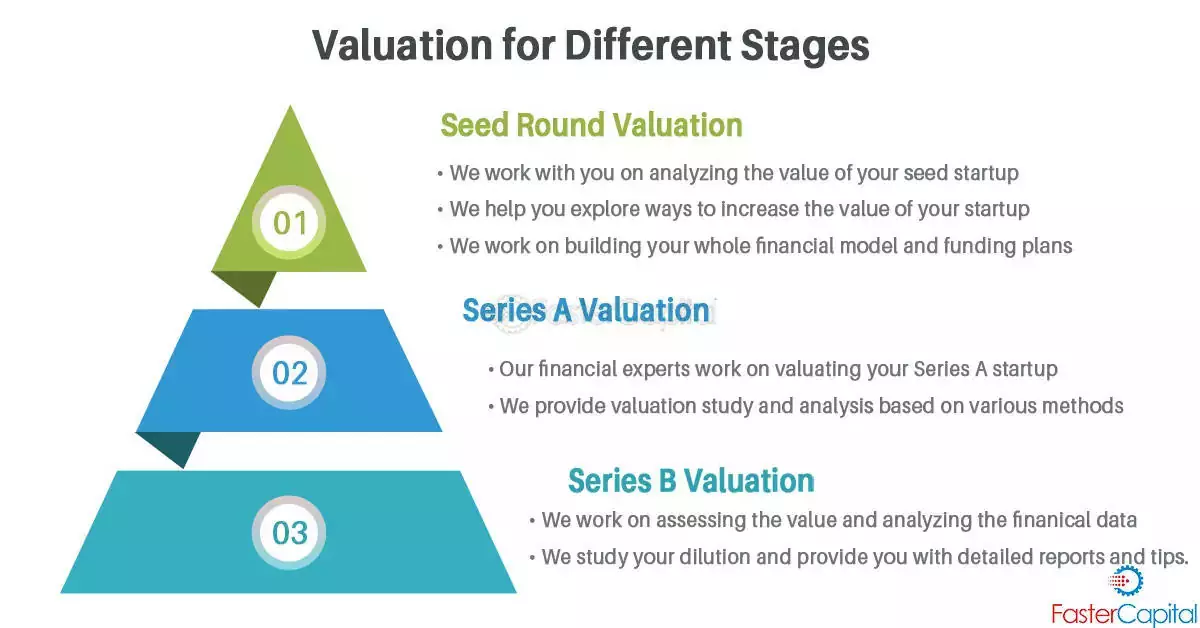
Valuating a startup for funding rounds is a critical step in the entrepreneurial journey. Whether you’re a first-time founder or a seasoned entrepreneur, understanding how to accurately determine the worth of your startup can significantly influence your ability to secure investment. This detailed guide dives into the various methods, metrics, and factors that contribute to startup valuation, ensuring you’re well-prepared for your next funding round.
Understanding Startup Valuation
Startup valuation is essentially the process of determining the current worth of a startup. This estimate can be influenced by various factors, including financial performance, market potential, intellectual property, and more. For startups, valuation isn’t just about finances—it’s about projecting future growth and potential.
Why is Valuation Important?
-
Attracting Investment: A clear and justifiable valuation can help attract potential investors by presenting a compelling case for the startup’s future potential.
-
Negotiating Terms: Valuation helps you negotiate the terms of investment, such as equity and control within the company.
-
Measuring Growth: Understanding your startup’s valuation over time can help you gauge your growth and market position.
-
Setting Expectations: A well-founded valuation sets realistic expectations for the founders and investors alike, promoting trust and transparency.
Key Factors Influencing Valuation
Before diving into the methods of valuation, it’s crucial to understand some of the key factors that influence how a startup is valued:
-
Market Size: The potential market size can significantly affect your valuation. Larger markets typically attract higher valuations due to the potential for greater revenue.
-
Revenue Model: Startups with proven, scalable revenue models often command higher valuations. Investors look for models that demonstrate predictable revenue streams.
-
Competitive Landscape: The presence of competitors can drive down valuation, while a unique position in a niche market can give a startup a competitive edge.
-
Team Experience: A strong, experienced founding team can also increase a startup’s valuation, as investors often bet on the team’s ability to execute its vision.
-
Traction: Metrics such as customer acquisition costs, user engagement, and sales growth all contribute to a startup’s perceived value.
Common Valuation Methods
There are several methods for valuing a startup, each with its own advantages and considerations. Below are the most widely used methods:
1. Discounted Cash Flow (DCF) Method
The DCF method estimates the value of a startup based on its projected future cash flows, discounted back to the present value. This method is often favored by venture capitalists because it encourages founders to present a clear financial model while taking into account the time value of money.
Steps to Calculate DCF:
-
Estimate Future Cash Flows: Make realistic projections of future revenues and expenses.
-
Determine the Discount Rate: This rate reflects the perceived risk of investing in your startup. Higher risk generally results in a higher discount rate.
-
Calculate the Present Value: Discount future cash flows back to their present value using the determined discount rate.
Pros:
- Takes into account future growth and revenue potential.
- Based on real financial data.
Cons:
- Requires accurate projections, which can be challenging for early-stage startups.
- Sensitive to assumptions about growth rates and discount rates.
2. Comparable Company Analysis (CCA)
Also known as “comps,” this method involves evaluating your startup against similar businesses in the same industry. By comparing valuation multiples—such as price-to-earnings (P/E) or enterprise value-to-sales (EV/S)—you can derive a valuation for your startup.
Steps to Perform CCA:
-
Identify Comparable Companies: Look for businesses in the same sector and of similar size.
-
Collect Valuation Metrics: Gather data on the valuation multiples of these companies.
-
Apply the Metrics to Your Startup: Use the collected metrics to derive an estimated valuation for your startup.

- Overcome negative thought patterns, reduce stress, and live a worry-free life
- Overthinking is the biggest cause of unhappiness
- Don't get stuck in a never-ending thought loop
- Stay present and keep your mind off things that don't matter, and never will
- Break free of your self-imposed mental prison
Pros:
- Provides a market-driven valuation based on real-world data.
- Useful for benchmarking against industry standards.
Cons:
- May not account for unique aspects of your startup.
- The availability of suitable comparables can be limited.
3. Precedent Transactions Analysis
This method focuses on valuing your startup based on past transactions involving similar companies. By analyzing recent funding rounds or acquisitions, you can identify valuation benchmarks that can guide your own.
Steps for Precedent Transactions Analysis:
-
Identify Relevant Transactions: Find recent acquisitions or funding rounds involving comparable companies.
-
Analyze the Valuation Metrics: Look at the multiples paid in these transactions—often based on revenue or earnings.
-
Apply the Metrics: Use these multiples to estimate your startup’s worth.
Pros:
- Reflects real market conditions and investor sentiment.
- Can provide a historical context for valuation trends.
Cons:
- Transaction data can be limited or not directly comparable.
- Market conditions can change rapidly, affecting relevancy.
4. Venture Capital Method
This method is commonly used by venture capitalists and focuses on the expected exit value of a startup. This approach has several steps:
Steps to Apply the Venture Capital Method:
-
Estimate Exit Value: Predict the future valuation at the time of an anticipated exit (e.g., acquisition or IPO).
-
Calculate Target Return on Investment (ROI): Determine the expected ROI for investors, often ranging from 10x to 30x.
-
Discount to Present Value: Discount the future value back to the present, factoring in the desired ROI.
Pros:
- Helps understand the investor’s perspective.
- Focuses on long-term growth potential.
Cons:
- Needs a well-defined exit strategy.
- Can be overly optimistic if not grounded in achievable projections.
Final Thoughts: Preparing for Your Funding Round
After considering the valuation methods, here are several final tips to ensure you are well-prepared for your funding round:
1. Craft a Robust Business Plan
Investors will want to see a solid business plan that outlines your startup’s goals, strategies, and financial forecasts. A well-prepared plan serves as a roadmap for your growth and adds credibility to your valuation.
2. Build a Strong Pitch Deck
Your pitch deck should communicate your startup’s value proposition clearly and confidently. Incorporate high-quality visuals and data to support your valuation claims and create a compelling narrative.
3. Know Your Metrics
Be knowledgeable about your key metrics and KPIs. Understand how to communicate them effectively and demonstrate their significance in relation to your valuation.
4. Practice Negotiation Skills
As a startup founder, honing your negotiation skills is essential. Be prepared to discuss your valuation, defend it with data, and remain open to feedback and negotiation from potential investors.
5. Engage Experts When Necessary
If you’re not comfortable with valuation calculations, consider engaging financial experts or consultants who specialize in startup valuations. Their expertise can provide added credibility during negotiations and funding discussions.
Conclusion
Valuating your startup for funding rounds is a nuanced process that requires a blend of analytical skills, industry knowledge, and a clear understanding of both your business and the market. By leveraging the right valuation methods and preparing adequately, you can position your startup for success in attracting investment.
With careful planning, a solid understanding of your startup’s potential, and the proper valuation techniques at your disposal, you’ll be well on your way to securing the vital funding necessary to propel your business forward. So go ahead, take these insights, and set your startup up for a more lucrative future.


