
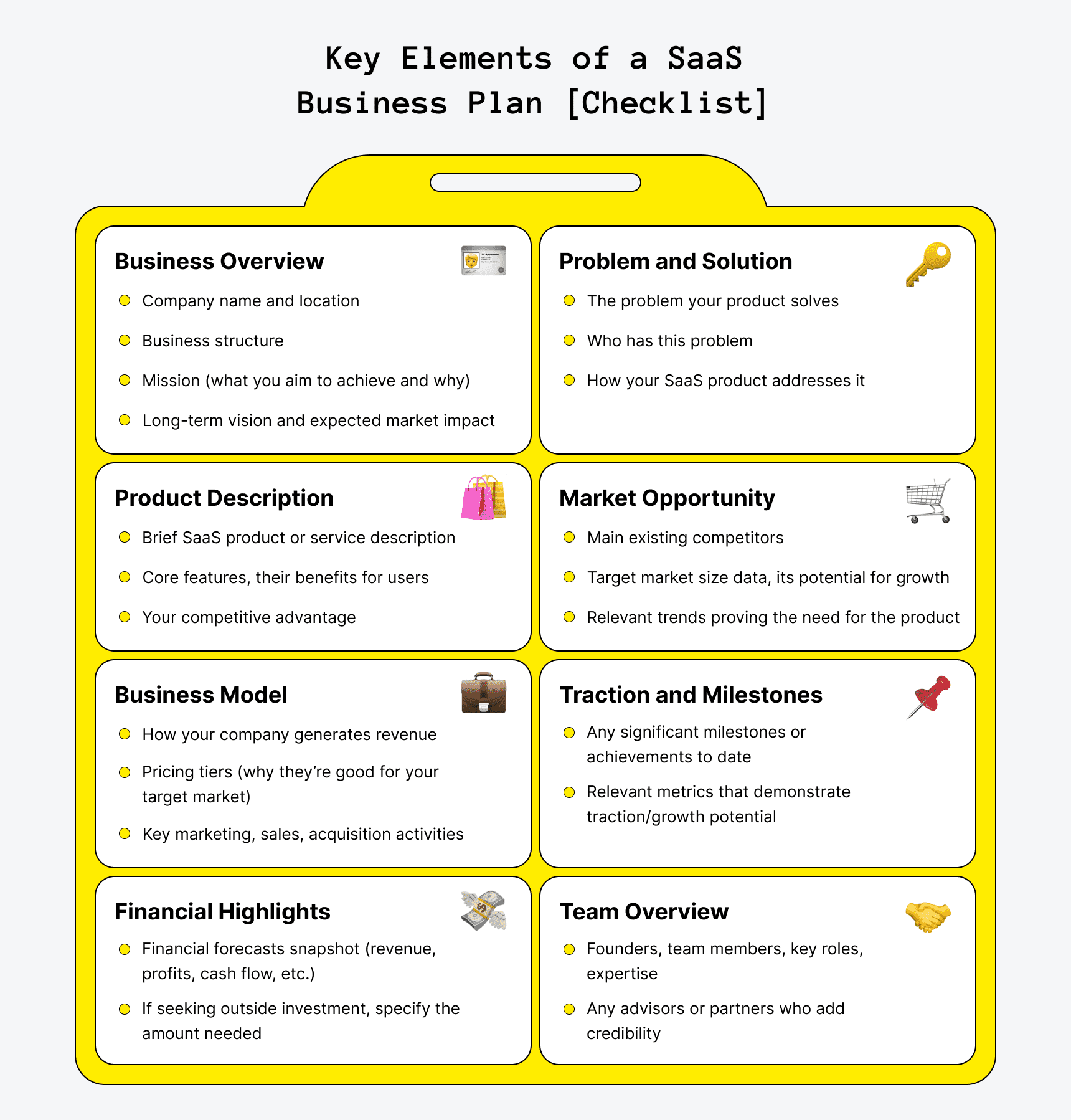
Starting a Software as a Service (SaaS) business can be one of the most rewarding journeys an entrepreneur can embark on. However, like any thriving business, a solid strategy is essential for success. A well-crafted business plan not only clarifies your vision for the future but also serves as an essential roadmap to guide your startup through its initial phases and beyond. In this comprehensive guide, we’ll walk you through the steps necessary to create an effective SaaS business plan that will position your tech startup for success.
What is a SaaS Business Plan?
A SaaS business plan is a formal document that outlines your business’s goals, strategies, financial forecasts, and market positioning specifically for a Software as a Service model. This plan is more than just a piece of paperwork; it reflects the essence of your business idea and serves multiple purposes:
- Clarity of Vision: Defines what your SaaS product is, its market, and what success looks like.
- Guideline for Execution: Offers a structured approach towards launching and growing your business.
- Attracting Investors: A well-thought-out business plan could be the key to securing funding from investors.
- Measuring Progress: Helps you assess how far you’ve come and what adjustments are necessary.
Why is a Business Plan Important for SaaS Startups?
While a business plan is useful for any startup, SaaS businesses face unique challenges, such as rapid innovation cycles, customer retention, and reliability in service delivery. Here’s why a robust business plan is especially critical for SaaS startups:
-
Market Uncertainty: The tech landscape changes exponentially. A business plan helps you identify market opportunities and shifts beforehand.
-
Customer Acquisition: Understanding how to attract customers in a saturated market is vital. A business plan outlines your marketing and sales strategies.
-
Revenue Models: Different SaaS businesses implement various pricing strategies. Your plan needs to specify your revenue model to ensure financial viability.
-
Metrics and Scalability: SaaS models rely heavily on specific metrics, such as Customer Acquisition Cost (CAC) and Lifetime Value of Customer (LTV). A business plan will map out how you plan to measure and maximize these metrics.
Key Elements of a SaaS Business Plan
1. Executive Summary
This section should be a concise overview of your SaaS business, summarizing key information that will be elaborated on later. It should include:
- Business Name: What will you name your SaaS business?
- Mission Statement: Define your company’s purpose.
- Overview of Service: Briefly describe your SaaS product and its unique selling proposition.
- Target Market: Outline who your target customers are.
- Financial Summary: Present a high-level overview of your projected financial performance.
2. Company Description
In this section, provide more detailed information about your startup:
- Founding Team: Who are the founders? Highlighting their past achievements can create credibility.
- Company Structure: Is it an LLC, corporation, or another type? Explain your business structure.
- Location: Where are you based, and does your location give you any competitive advantage?
3. Market Research
An essential component of your plan, this section involves research on industry trends, the competitive landscape, and target demographics. Here’s how to structure it:
-
Industry Analysis: Explore the current state of the SaaS industry, including growth trends.
-
Target Audience: Use key demographics and psychographics to define who your ideal customers are.
-
Competitive Analysis: Analyze your direct competitors, their market share, strengths, and weaknesses.
4. Product Description
Provide a comprehensive overview of your product, including:
-
Features: What functionalities make your product unique?
-
Technology Stack: Briefly mention the technology and platforms you’ll be using.
-
Development Timeline: Set milestones for each phase of product development and any beta testing plans.

- Overcome negative thought patterns, reduce stress, and live a worry-free life
- Overthinking is the biggest cause of unhappiness
- Don't get stuck in a never-ending thought loop
- Stay present and keep your mind off things that don't matter, and never will
- Break free of your self-imposed mental prison
5. Marketing Strategy
Your marketing strategy is crucial for attracting and retaining customers. Key elements to address include:
-
Brand Positioning: Define how you want your brand to be perceived in the marketplace.
-
Promotion Strategies: Outline planned marketing channels like content marketing, social media, email marketing, and paid ads.
-
Sales Strategy: Include methods for converting leads into customers, such as webinars or free trials.
6. Revenue Model
Detail how your business will generate income. Common SaaS revenue models include:
-
Subscription-Based: Monthly or yearly subscription fees.
-
Freemium Model: Offering a basic version for free while charging for premium features.
-
Usage-Based: Charging based on how much the service is used.
7. Financial Projections
Investors will focus heavily on this section, so clarity is key. Include:
-
Startup Costs: Outline initial costs such as software development, marketing, and operations.
-
Sales Forecasts: Project your revenue for the first 3-5 years.
-
Profit and Loss Statement: Estimate your net profit margin, including costs and revenue.
8. Implementation Timeline
A detailed timeline showcasing your critical milestones can greatly enhance your business plan. Include:
-
Development Milestones: Key dates for product development.
-
Launch Dates: Expected dates for beta and full launches.
-
Growth Metrics: Key indicators of success and how they will be measured.
9. Risks and Challenges
Acknowledging the risks and challenges your SaaS startup may face shows investors that you’ve thought critically and are prepared. Common risks might include:
-
Market Competition: The rapidly evolving landscape of SaaS.
-
Customer Retention: Strategies for maintaining user interest.
-
Technological Changes: The need to stay updated with tech advancements.
10. Appendices
The appendix allows for additional information that may support your business plan, such as:
-
Charts and Graphs: Visuals that represent your market research and financials.
-
Resumes of Founders: Backgrounds that establish expertise in the field.
-
Product Mockups: Screenshots or designs showing what your service will look like.
Tips for Writing a SaaS Business Plan
-
Keep it Concise: Aim for clarity and brevity. Be straight to the point and avoid jargon whenever possible.
-
Be Realistic: While it’s tempting to overestimate, providing realistic forecasts and timelines is crucial for credibility.
-
Use Visuals: Charts and infographics can make complex data more digestible and engaging.
-
Seek Feedback: Before finalizing your plan, share it with trusted advisors or mentors to get constructive criticism.
-
Revise Regularly: A business plan is a living document. As your business evolves, so should your plan.
Conclusion
Writing a SaaS business plan may seem like a daunting task, but it is absolutely vital for the success of your tech startup. With this comprehensive guide, you gain the structure and insights necessary to create a strong plan that effectively communicates your vision and strategy. Remember, the aim is not just to create a document, but to develop a roadmap that positions your business for growth, resilience, and long-term success.
By taking the time to forge a cohesive plan, you’ll be better equipped to navigate the complexities of the tech landscape and emerge as a leader in the SaaS industry. Happy planning!


