
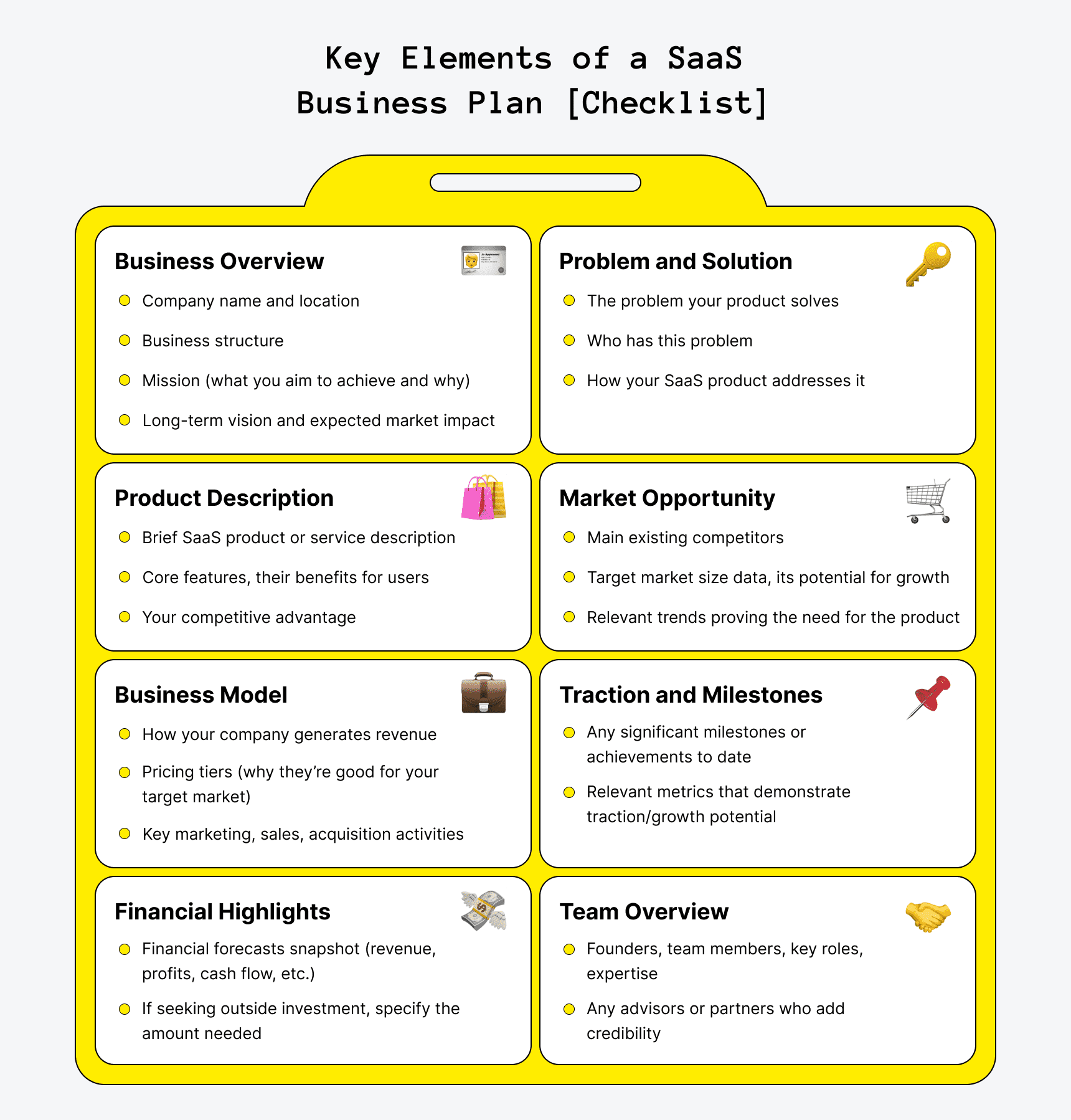
In today’s digital landscape, the adoption of Software as a Service (SaaS) platforms is skyrocketing. Entrepreneurs are eager to tap into this lucrative industry, yet many fall short due to a lack of planning and strategy. A well-structured business plan is essential for any startup, especially in the competitive SaaS market. But what exactly should this plan include? In this article, we’ll provide you with an essential SaaS business plan checklist, outlining the key elements necessary for startup success.
1. Executive Summary
The executive summary is the first section of your business plan, but you should write it last. This section should concisely summarize your entire plan, providing an overview of what your SaaS business is about, your mission, and your unique value proposition.
Key Components:
- Business name and location
- Mission statement
- Description of products/services
- Target market
- Summary of financial projections
- Highlight of funding requirements (if applicable)
2. Market Research
Understanding your market is crucial to building a successful SaaS business. Conduct thorough market research to identify your target audience, industry trends, and potential competitors.
Key Components:
- Target Audience: Define the demographics and needs of your ideal customers.
- Market Size: Estimate the size of your target market and growth potential.
- Competitive Analysis: Identify your main competitors and analyze their strengths, weaknesses, pricing strategies, and customer reviews.
3. Unique Value Proposition (UVP)
Your UVP is what differentiates your SaaS business from competitors. It communicates the unique benefits you offer and why customers should choose you.
Key Components:
- Explanation of how your product/service solves specific problems for your audience.
- Distinct features that set your SaaS solution apart from others.
- Key benefits, such as improved efficiency, cost savings, or scalability.
4. Business Model
Your business model outlines how you plan to generate revenue. Common SaaS models include subscriptions, tiered pricing, freemium, and pay-per-use.
Key Components:
- Revenue Streams: Clearly outline your primary and secondary sources of income.
- Pricing Strategy: Detail your pricing structure and any discounts or promotions.
- Sales Forecasting: Provide projections for user acquisition and revenue over the next 3-5 years.
5. Marketing Strategy
A robust marketing strategy is vital for attracting and retaining customers. Outline how you plan to build brand awareness and drive sales.
Key Components:
- Branding: Define your brand identity, including logo, colors, and messaging.
- Digital Marketing: Outline strategies for SEO, content marketing, social media engagement, and email campaigns.
- Metrics for Success: Identify key performance indicators (KPIs) that you will use to measure the effectiveness of your marketing efforts.
6. Product Development Plan
In a SaaS business, your product is your lifeline. Detail your product development plan, including timelines, tools, and technologies you’ll use.
Key Components:
- Development Timeline: A roadmap of the milestones for your product development, from MVP (Minimum Viable Product) to full-scale launch.
- Technology Stack: Identify the programming languages, frameworks, and other technologies you will use to build your platform.
- Product Features: Outline the features your SaaS product will have at launch, along with a roadmap for future updates and enhancements.
7. Operations Plan
Your operations plan outlines how your SaaS business will run on a day-to-day basis. This includes staffing, technology infrastructure, and customer service strategies.

- Overcome negative thought patterns, reduce stress, and live a worry-free life
- Overthinking is the biggest cause of unhappiness
- Don't get stuck in a never-ending thought loop
- Stay present and keep your mind off things that don't matter, and never will
- Break free of your self-imposed mental prison
Key Components:
- Team Structure: Detail your organizational structure, roles, and responsibilities of team members.
- Customer Support Plan: Describe how you will manage customer inquiries and support requests.
- Operational Processes: Outline processes related to product updates, bug fixes, and overall maintenance.
8. Financial Plan
A sound financial plan is essential for the viability of your SaaS startup. This section should detail your financial projections, funding requirements, and calculations for costs and revenues.
Key Components:
- Startup Costs: List initial expenses, including technology costs, staffing, marketing, and overhead.
- Revenue Projections: Create detailed revenue forecasts based on your pricing strategy and market analysis.
- Break-Even Analysis: Outline when you anticipate reaching profitability.
9. Risk Assessment
Every business comes with risks. Identifying potential obstacles and having a plan to address them is crucial for startup success.
Key Components:
- Market Risks: Outline risks related to market trends and fluctuations in demand.
- Operational Risks: Highlight potential challenges related to technology, staffing, and customer satisfaction.
- Regulatory Risks: Consider any compliance or legal issues that may arise in your SaaS business.
10. Appendix
The appendix provides additional information to support your business plan. This could include graphs, charts, resumes of team members, detailed market analyses, or technical specifications of your product.
Key Components:
- Supporting documents that supplement your business plan.
- Additional data regarding market research or competitor analysis.
- Resumes of key team members and advisors.
Conclusion
Creating a comprehensive business plan is critical for the success of any SaaS startup. By following this checklist and addressing each key element, you’ll be well-equipped to navigate the challenges of the SaaS market. Your business plan not only serves as a roadmap for your venture but also communicates your vision to potential investors and stakeholders. Remember, the journey of entrepreneurship is filled with ups and downs, but with a solid foundation and clear strategy, you’ll be poised for success.
Bonus Tips for SaaS Startup Founders
As you dive into creating your business plan, here are additional tips to keep in mind:
Stay Agile
The tech landscape changes rapidly. Be prepared to pivot your strategy based on new data, market feedback, and emerging technologies. Flexibility can be key to sustaining growth.
Network and Seek Feedback
Don’t hesitate to reach out to industry peers, mentors, and potential customers for feedback on your plan. They can provide valuable insights that can help refine your strategy.
Focus on Customer Experience
From the beginning, prioritize customer experience. A positive experience can lead to customer retention and word-of-mouth referrals, both of which are invaluable for a startup.
Consider a Partner
Having a co-founder can relieve some of the pressure and provide complementary skills to your venture. Whether you need technical expertise, marketing insights, or financial acumen, a partner can enhance your chances of success.
Keep Learning
The SaaS industry is continually evolving. Stay informed about market trends, customer needs, and technological advancements to keep your business relevant.
By implementing this business plan checklist and adhering to these tips, you’re setting your SaaS startup on a path toward sustainable growth and success. Now, all that’s left is to take action, execute your plan, and watch your business thrive in the digital age!


