
In today’s rapidly evolving digital landscape, Software as a Service (SaaS) has become a preferred model for many startup entrepreneurs and established businesses alike. If you’re one of those innovative minds looking to launch a SaaS venture, one crucial element will pave the road to your success: a robust SaaS business plan infused with meticulous long-term revenue projections. But how exactly do you create an effective business plan? In this guide, we will delve into the essentials of writing a SaaS business plan that not only outlines your vision but also lays the groundwork for sustainable revenue growth.
Understanding the SaaS Business Model
Before we dive into the intricacies of writing your business plan, it’s essential to understand what makes the SaaS model unique. Unlike traditional software sales, SaaS delivers applications via the internet, allowing customers to access your services on a subscription basis. This shift emphasizes the importance of recurring revenue streams, which can lead to scalable growth and customer loyalty if executed well.
Key Characteristics of SaaS:
- Subscription-Based Revenue: Instead of a one-time purchase, customers pay regularly, providing predictable income.
- Cloud Hosting: SaaS applications are hosted in the cloud, reducing the need for client-side installations.
- Scalability: It’s easy to scale up or down based on customer needs—an attractive proposition for many.
- Lower Upfront Costs: Customers can access software at a fraction of the cost compared to traditional licensing.
Structure of Your SaaS Business Plan
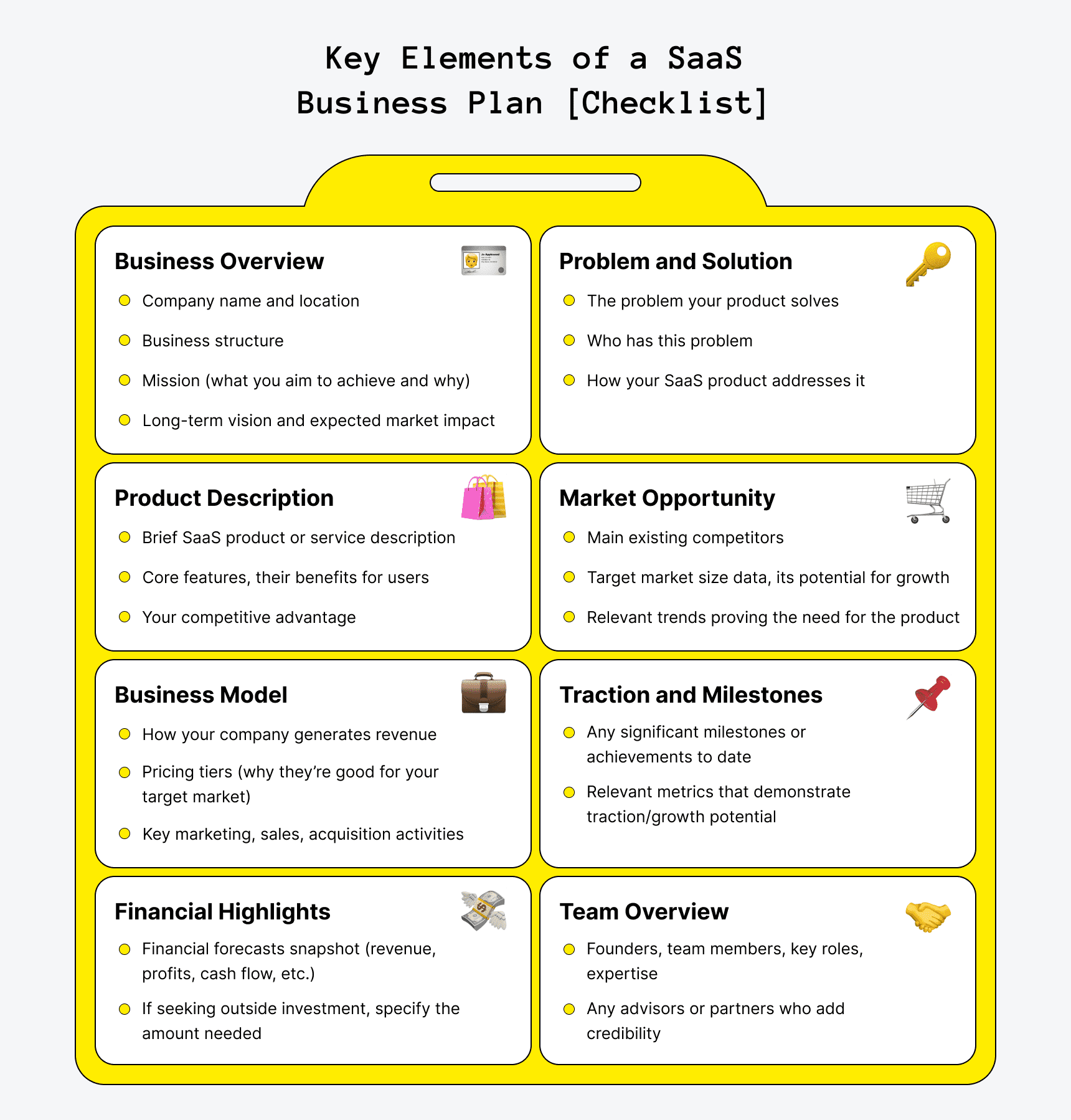
When crafting your SaaS business plan, follow a structured approach to keep it organized and easy to navigate. A comprehensive business plan typically includes the following sections:
- Executive Summary
- Company Description
- Market Analysis
- Organization & Management
- Services Offered
- Marketing Strategy
- Funding Request
- Financial Projections
- Appendices
1. Executive Summary
Your executive summary is the first section readers will encounter. Even though it appears at the top of your document, it should be written last. Summarize the critical points of your business plan to give readers a snapshot of your entire strategy. Include your business name, the services you offer, the market needs you address, and your long-term vision.
2. Company Description
In this section, delve into the core of your business. Describe the formation of your company, its mission statement, and its unique selling propositions. Highlight what makes your SaaS product distinct from competitors. Discuss your vision for the future and outline your goals for the first three to five years.
3. Market Analysis
No business plan is complete without a thorough market analysis, especially for a SaaS startup. Research the market trends, target audience, competitive landscape, and potential challenges your business may face. Consider the following components:
- Target Audience: Identify the specific customer demographics that would benefit from your software solution.
- Industry Overview: Provide insights into the SaaS industry, growth rates, and emerging trends.
- Competitor Analysis: Identify your main competitors, their strengths and weaknesses, and how you can differentiate yourself.
4. Organization & Management
This section outlines your business structure and team. Detail the roles and responsibilities of your management team. If you have significant expertise in particular areas, like technology development or sales, highlight those skills. Additionally, discuss your company’s structure—whether it will be a sole proprietorship, partnership, corporation, or LLC.
5. Services Offered
Under this section, describe the SaaS products or services you plan to offer. Provide in-depth details about features, pricing strategy, and potential future developments. Discuss how your service solves a specific problem or fills a gap in the market.

- Overcome negative thought patterns, reduce stress, and live a worry-free life
- Overthinking is the biggest cause of unhappiness
- Don't get stuck in a never-ending thought loop
- Stay present and keep your mind off things that don't matter, and never will
- Break free of your self-imposed mental prison
6. Marketing Strategy
How will you attract customers to your SaaS platform? A well-defined marketing strategy is essential for growth. Outline your approach, whether through digital marketing, social media campaigns, email newsletters, or partnerships. Be sure to include your strategies for customer retention, which is vital in the SaaS business model.
7. Funding Request
If you plan to seek funding, this section is critical. Clearly state how much funding you require, how you plan to use it, and what type of funding you’re seeking (investment, loans, etc.). Provide a clear outline of your financial needs and how they align with your business goals.
8. Financial Projections
Long-term revenue projections are vital for tracking the health of your SaaS business. This section should include:
- Revenue Model: Explain how your business will generate revenue. Will it come from monthly subscriptions, annual packages, or freemium models? Justify your pricing strategy.
- Projected Earnings: Offer a five-year projection that includes your expected income, expenses, and profits. Utilize data collected from your market analysis to support your projections.
- Break-even Analysis: Calculate how long it will take for your business to become profitable. This analysis can reassure investors about the viability of your venture.
9. Appendices
Finally, include supplementary documents and data that support your business plan. This may include resumes, legal agreements, detailed financial forecasts, and charts or graphs illustrating key market trends.
Long-term Revenue Projections: Best Practices
Creating long-term revenue projections can be a challenging task, but with the right framework, you can produce a credible forecast. Here are some best practices to consider:
1. Analyze Current Trends
Look at both historical performance and industry benchmarks. Understand how similar businesses in the SaaS sector have performed in terms of revenue growth and retention rates.
2. Utilize Data Analytics
Leverage data analytics tools to gather insights about customer behavior, such as churn rates, average revenue per user (ARPU), and customer lifetime value (CLV). These metrics will help refine your projections.
3. Consider Different Scenarios
Create multiple projections based on varying assumptions, such as conservative, realistic, and optimistic scenarios. This approach will demonstrate your awareness of business uncertainties and help you prepare for different outcomes.
4. Keep it Dynamic
Your forecast shouldn’t be static; revise it regularly based on actual performance and market shifts. This flexibility allows you to adapt quickly to changing circumstances and make informed decisions.
5. Seek Expert Feedback
Before finalizing your projections, consider seeking input from financial experts or seasoned entrepreneurs in the SaaS industry. Their insights can uncover potential blind spots and strengthen your overall plan.
Conclusion
Writing a SaaS business plan with long-term revenue projections is a crucial step toward realizing your entrepreneurial ambitions. A well-structured plan not only clarifies your goals but also equips you to navigate the complexities of the SaaS landscape. By thoroughly researching your market, providing clear financial projections, and continually refining your strategy, you’ll position yourself for success in this thriving industry.
As you embark on your SaaS journey, remember that adaptability and persistence are key. With a solid business plan in hand, you’ll be well on your way to creating a successful SaaS venture that meets market needs while generating sustainable revenue. Embrace the excitement of launching your business and the opportunities that lie ahead—your vision is closer than you think!


