
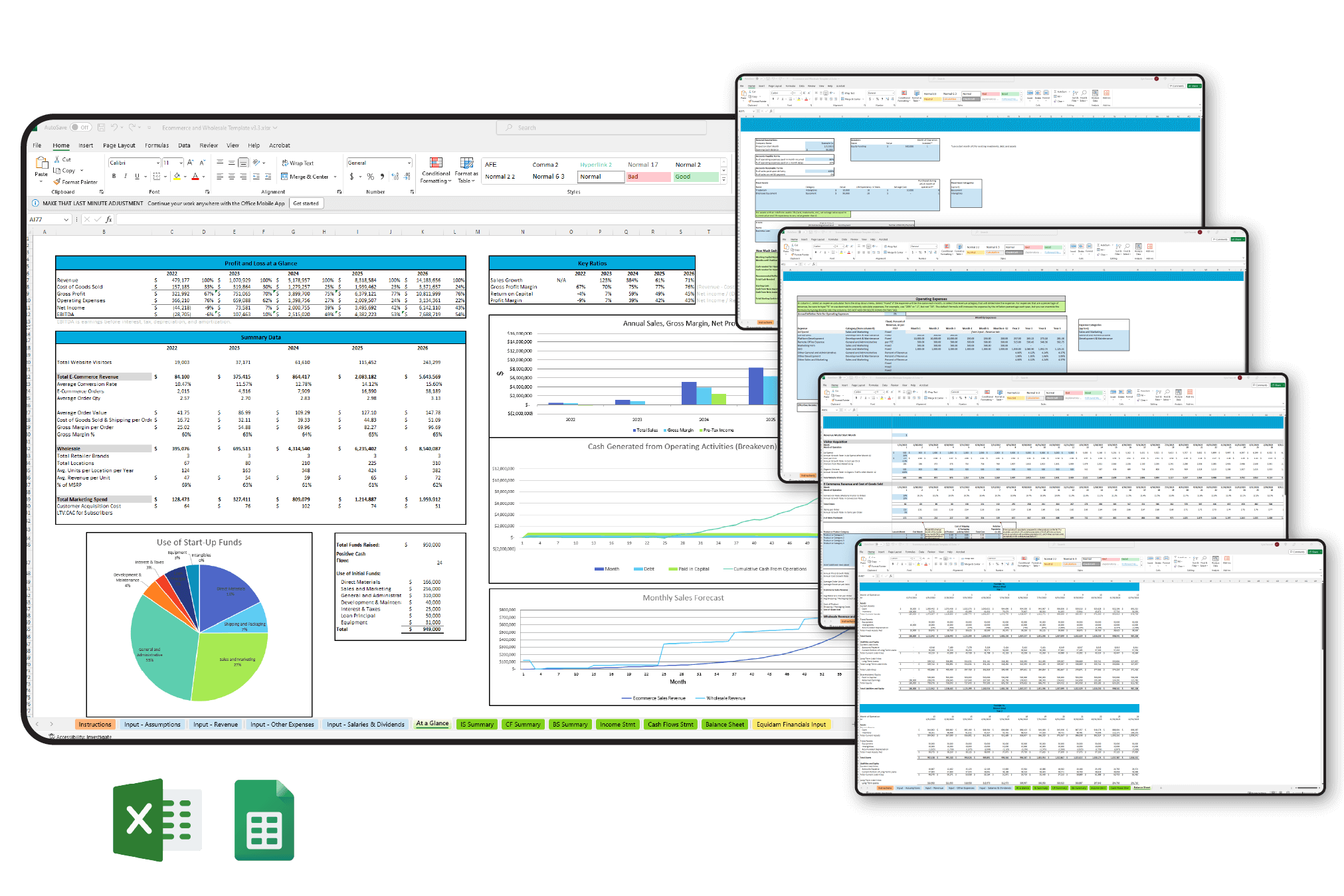
As the tech landscape continues to evolve, the Software as a Service (SaaS) model has emerged as a preferred business strategy among startups. Entrepreneurs are drawn to its subscription-based revenue model, which provides both stability and attractive growth prospects. However, to successfully lure investors, a comprehensive SaaS business plan with well-structured financial projections is essential. This article serves as a complete guide to crafting an investor-ready SaaS business plan, focusing specifically on financial projections.
Understanding the Basics of a SaaS Business Model
Before diving into the specifics of financial projections, it’s important to understand the foundational aspects of a SaaS business. SaaS companies offer software solutions that are hosted in the cloud, allowing users to access these services via the internet. This model significantly reduces the need for physical software installations, enabling businesses to deliver solutions quickly and at scale.
Key Features of SaaS Business:
- Subscription-Based Revenue: Customers pay for access to the software over a specific period, typically monthly or annually.
- Scalability: SaaS products can be effortlessly scaled to meet growing demand without significant increases in operational costs.
- Low Customer Acquisition Costs (CAC): With the proper strategies, SaaS businesses can acquire customers at a lower cost compared to traditional software sales models.
- High Customer Lifetime Value (CLTV): SaaS businesses can benefit from recurring revenue, leading to a higher CLTV.
Importance of Financial Projections
Financial projections are a crucial component of a SaaS business plan, especially when appealing to investors. These projections give potential investors a glimpse into the future of your company, demonstrating not only your understanding of the market but also your financial acumen. Properly crafted financial projections can help convey your business’s sustainability and growth potential.
Components of Financial Projections
Creating effective financial projections for a SaaS business involves a few key components. Here’s a breakdown of the fundamental elements to include in your projections:
1. Revenue Model
Identifying and articulating your revenue model is critical. Common SaaS pricing strategies include:
- Freemium: Offering a basic version for free while charging for premium features.
- Tiered Pricing: Different pricing levels based on feature sets or usage levels.
- Per-User Pricing: Charging based on the number of users accessing the software.
2. Customer Acquisition Costs (CAC)
Calculate how much it costs to acquire each customer. This metric often includes marketing and sales expenses divided by the number of new customers gained in a given period. A lower CAC is preferable as it indicates efficient customer acquisition strategies.
3. Customer Lifetime Value (CLTV)
The CLTV metric estimates the total revenue expected from a customer throughout their engagement with your business. It includes the revenue from subscriptions minus the costs to serve that customer. A high CLTV, combined with a low CAC, is a strong indicator of business health.
4. Monthly Recurring Revenue (MRR)
MRR indicates the total predictable revenue earned from subscriptions per month. For instance, if your SaaS product is priced at $100 per month and you have 50 customers, your MRR would be $5,000.
5. Churn Rate
Churn rate measures the percentage of customers that cancel their subscriptions over a given timeframe. A high churn rate can severely compromise your financial projections and indicates problems with customer satisfaction or product-market fit.
Drawing Up a Financial Projection Model
A solid financial projection model will typically extend over three to five years. This model will contain monthly or quarterly projections for the first year, transitioning to yearly projections for subsequent years. Here’s a concise breakdown of what to include:
Year 1: The Onboarding Phase
- Define Targets: Set realistic goals for customer acquisition, focusing on MRR.
- Project CAC: Estimate your marketing and sales expenses to determine your CAC.
- Monitor Churn Rate: Integrate strategies to minimize churn, as retention is more cost-effective than acquisition.

- Overcome negative thought patterns, reduce stress, and live a worry-free life
- Overthinking is the biggest cause of unhappiness
- Don't get stuck in a never-ending thought loop
- Stay present and keep your mind off things that don't matter, and never will
- Break free of your self-imposed mental prison
Year 2: Growth Expansion
- Increase MRR: Focus on upselling and cross-selling to existing customers to increase MRR.
- Refine Customer Acquisition: Implement more targeted marketing campaigns to reduce CAC.
- Expand Product Offerings: Consider releasing add-ons or higher-tier service options.
Year 3: Scale and Optimize
- Evaluate Pricing Strategy: Analyze customer feedback and market research to adjust your pricing model if necessary.
- Leverage Metrics: Use data to enhance sales forecasting and operational decisions.
- Focus on Profitability: Shift some focus to net profit margins as growth stabilizes.
Tips for Crafting Investor-Ready Financial Projections
Making your financial projections attractive to investors is an art in itself. Here are a few tips to consider:
-
Make Assumptions Clear: Include rational and concise assumptions for your forecasts. Avoid overly optimistic projections without clear justification.
-
Use Visuals: Utilize charts and graphs to present your financial data visually. Investors often appreciate graphical representation, making it easier to digest complex data.
-
Highlight Milestones: Point out key milestones in your financial projections, including product releases or expected market entry points.
-
Attend to Detail: Ensure your projections are thorough and free from errors. An investor’s trust is earned through accuracy and transparency.
-
Prepare for Questions: Anticipate inquiries regarding your projections. Be ready to justify your numbers and explain how you will achieve them based on market conditions.
Example Financial Projections Overview
Let’s walk through a hypothetical example. Suppose you are launching a CRM SaaS platform priced at $50/month with an initial focus on small businesses.
Year 1:
- Customers Targeted: 400
- CAC: $100
- Monthly Recurring Revenue (MRR): $20,000
- Churn Rate: 5%
Year 2:
- Customers Targeted: 1,000
- CAC: $85
- Monthly Recurring Revenue (MRR): $50,000
- Churn Rate: 4%
Year 3:
- Customers Targeted: 2,500
- CAC: $70
- Monthly Recurring Revenue (MRR): $125,000
- Churn Rate: 3%
This example serves to illustrate how projecting customer growth can impact overall business revenue, supporting the need for a focus on improving CAC and managing churn.
Creating financial projections isn’t without its challenges. Market volatility and unexpected expenses can disrupt even the most carefully planned projections. Here are a few strategies to mitigate these challenges:
-
Regularly Review and Update: Financial projections should evolve with your business. Revisit your assumptions and adjust your projections as necessary to reflect current market realities.
-
Consult Industry Benchmarks: Keep an eye on industry standards for CAC, CLTV, churn rate, and MRR. Use these metrics to compare your performance and adjust your expectations accordingly.
-
Work with Advisors: Consider engaging financial experts who can bring insights and data analytics to fine-tune your projections and improve your rationale.
Conclusion
An investor-ready SaaS business plan, fortified by solid financial projections, can mark the difference between securing funding and losing out to the competition. By comprehensively mapping out your revenue model, customer acquisition strategies, and financial outlook, you put forth a compelling case to potential investors.
Remember, the art of crafting effective financial projections combines analytical acumen with an understanding of market dynamics and customer behavior. As you prepare your SaaS business plan, focus on clarity, transparency, and realistic outlooks. By doing so, you’ll not only attract investment but also build a solid foundation for long-term growth.
With innovation and determination, your journey toward creating an investor-ready SaaS business plan is just beginning. Embrace the challenges, refine your strategies, and watch as you navigate the path toward tech entrepreneurship effectively. Happy planning!


