
In the dynamic world of Software as a Service (SaaS), having a solid business plan is crucial for success. One of the most vital components of that plan is the break-even analysis. But what exactly is a break-even analysis, and how can it benefit your SaaS business? In this article, we’ll explore break-even analysis in detail and guide you through the process of creating one tailored specifically for your SaaS business plan.
Understanding Break-even Analysis
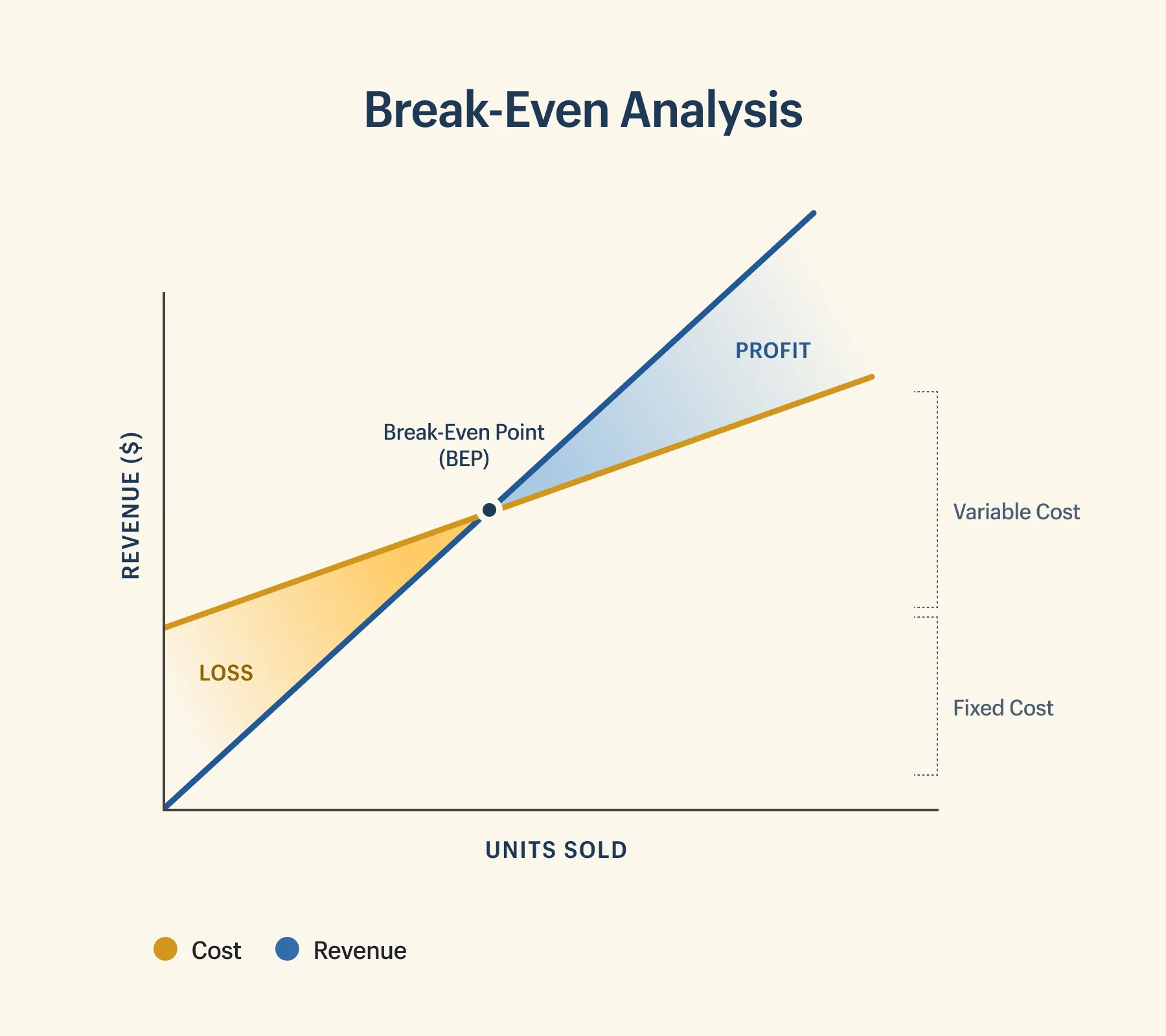
A break-even analysis is a financial calculation that helps entrepreneurs determine the point at which their business will cover its costs and begin to make a profit. This point, known as the break-even point, is essential for any business, particularly for SaaS companies that often grapple with unique cost structures and pricing models.
In the context of SaaS, the break-even point can be affected by a range of factors, including customer acquisition costs, subscription pricing, and ongoing operational expenses. By understanding these elements, you can make more informed decisions about your business model and growth strategy.
Why is Break-even Analysis Important for SaaS Businesses?
-
Financial Clarity: Knowing your break-even point provides clarity on how much revenue you need to generate to cover your costs. This can guide your pricing strategy and financial planning.
-
Resource Allocation: By understanding your costs and revenues, you can allocate resources more efficiently, ensuring that financial investments are targeting growth areas.
-
Investor Confidence: If you plan to seek funding, a detailed break-even analysis can instill confidence in potential investors, demonstrating that you have a clear understanding of your business model and financial landscape.
-
Strategic Planning: A break-even analysis helps in strategic decision-making by identifying when you can expect to start making a profit, allowing you to plan for future investments and expansion.
Key Components of a Break-even Analysis for SaaS
To create a break-even analysis for your SaaS business, you’ll need to gather and analyze several key components:
- Fixed Costs: These are the expenses that do not change with the level of sales or production. For SaaS businesses, fixed costs might include:
- Salaries for employees
- Rent for office space
- Software development and maintenance
- Marketing costs
-
Insurance
-
Variable Costs: Unlike fixed costs, variable costs fluctuate based on production levels or sales volumes. For a SaaS company, this could include:
- Customer support (staff or outsourced)
- Cloud hosting fees (which can vary based on usage)
-
Payment processing fees per subscription
-
Average Revenue per User (ARPU): This is the average amount of money that you earn from each customer. Calculating ARPU is essential as it helps you understand how many customers you need to reach your break-even point.
-
Customer Acquisition Cost (CAC): This is the total cost of acquiring a new customer, including marketing, sales, and other related expenses. In a SaaS business, this metric is crucial since it directly impacts your profitability.
Steps to Creating a Break-even Analysis for Your SaaS Business Plan
Now that you understand the components necessary for your break-even analysis, let’s break down the process step-by-step.
Step 1: Calculate Your Fixed Costs
Start by listing all fixed costs associated with your business. This should include every expense that doesn’t fluctuate monthly. For a SaaS company, this might involve:
- Salaries: For developers, marketing, and sales teams.
- Rent: If you maintain a physical office.
- Software expenses: Tools necessary for development, project management, etc.
- Insurance: Any policies you maintain to protect your business.
After listing all expenses, sum them up to calculate your total fixed costs.
Step 2: Determine Your Variable Costs
Next, calculate your total variable costs. These costs might change depending on the number of customers or usage levels. Common variable costs in the SaaS realm include:
- Cloud hosting fees: So many cloud providers offer tiered pricing based on usage.
- Customer service: The cost to support each user.
- Payment processing fees: Typically a percentage of sales.
Summing these costs yields your total variable costs.

- Overcome negative thought patterns, reduce stress, and live a worry-free life
- Overthinking is the biggest cause of unhappiness
- Don't get stuck in a never-ending thought loop
- Stay present and keep your mind off things that don't matter, and never will
- Break free of your self-imposed mental prison
Step 3: Calculate Your ARPU
To determine your Average Revenue per User, divide your total revenue by the total number of customers over a given period. For instance, if you have $500,000 in revenue and 1,000 customers, your ARPU is $500.
Step 4: Determine Your Break-even Point
The break-even point can be calculated using the following formula:
[
\text{Break-even Point (in units)} = \frac{\text{Fixed Costs}}{\text{ARPU} – \text{Variable Cost per User}}
]
This formula represents the number of customers you need to achieve to cover costs. For example, if your fixed costs are $200,000, your ARPU is $500, and your variable cost per user is $200, the calculation would look like this:
[
\text{Break-even Point} = \frac{200,000}{500 – 200} = \frac{200,000}{300} \approx 667 \text{ customers}
]
This means you need around 667 customers to break even.
Step 5: Visualize Your Break-even Analysis
Creating a graph can be an effective way to visualize your break-even analysis. You can plot your fixed costs, total revenue, and variable costs over different customer volume levels. The point at which the total revenue line intersects with your total costs line is your break-even point.
Additional Factors to Consider
While calculating your break-even point is critical, there are other considerations that may affect your SaaS business and its viability:
-
Market Conditions: Economic downturns or shifts in market demand can affect customer acquisition and retention, ultimately impacting your break-even analysis.
-
Churn Rate: High customer churn can impact long-term profitability. Understanding your churn rate gives insight into how many customers you may need to replace regularly.
-
Pricing Strategy: Experimenting with different pricing models, such as tiered pricing or freemium models, can also impact your break-even analysis.
Using Break-even Analysis for Strategic Decision Making
Once you’ve completed your break-even analysis, it serves as a strategic tool rather than a one-time exercise.
-
Refining Business Strategy: If you see that your break-even point is too high, you might need to adjust your pricing strategy, cut costs, or increase marketing efforts to acquire more customers.
-
Forecasting: You can use historical data and market trends to forecast future revenues and adjust your break-even analysis accordingly. This can help in making informed decisions for scaling your operations.
-
Planning for Growth: Understanding your break-even point helps you set realistic goals for customer acquisition, revenue growth, and financial sustainability as you look to expand your business.
Conclusion
Creating a break-even analysis for your SaaS business plan is essential for understanding your financial landscape. By diving deep into your costs, revenue per user, and acquisition strategies, you can determine the break-even point that will help you navigate your journey toward profitability.
Whether you’re just starting or looking to refine your existing strategy, a well-executed break-even analysis can be an invaluable tool in ensuring your SaaS business thrives in a competitive landscape. Embrace this analytical approach, and you’ll set the stage for long-term success and growth.
This article offers a comprehensive insight into break-even analysis, tailored for SaaS. By following these steps, you’ll gain clarity on your financial goals and establish a strong foundation for your business plan. Make informed decisions, strategize effectively, and watch your SaaS business flourish!


