
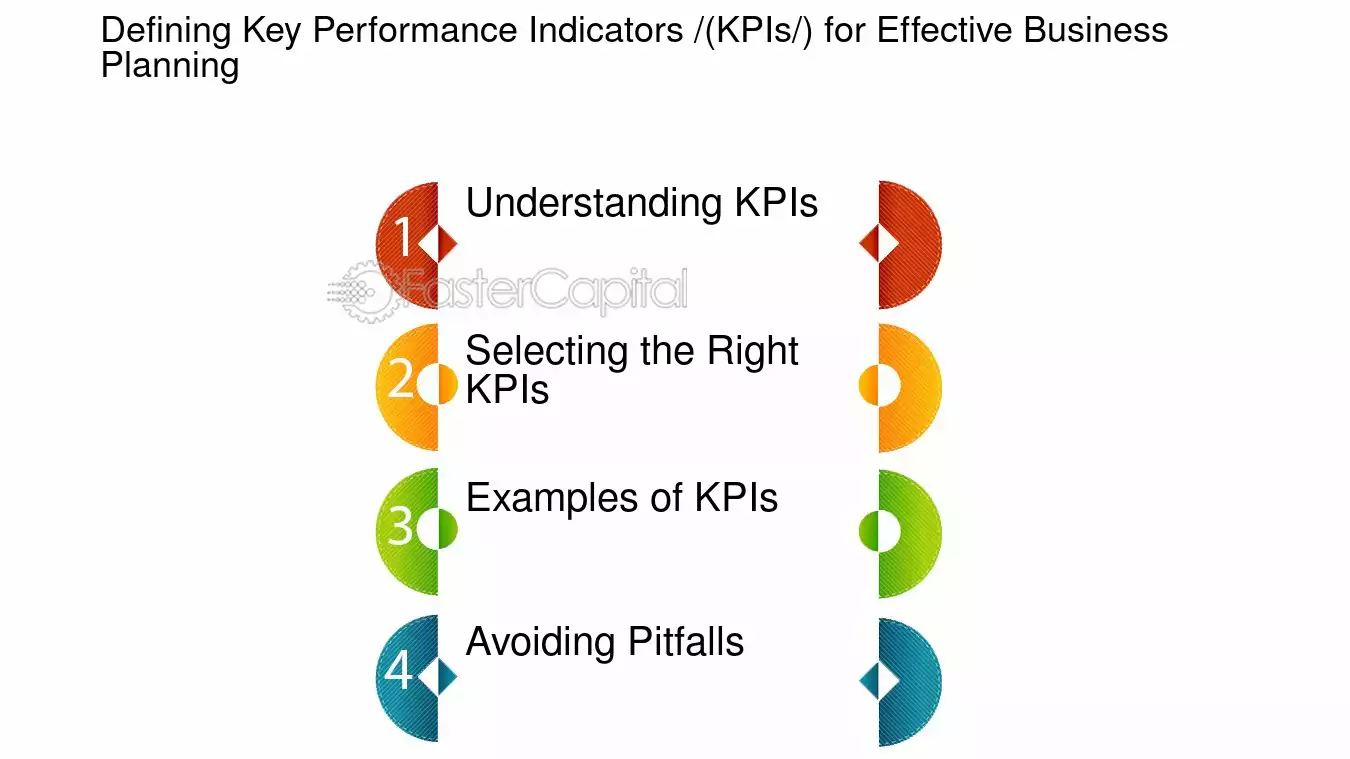
In recent years, the Software as a Service (SaaS) model has revolutionized how businesses manage their operations. As more companies transition to this model, understanding the critical components that drive operational efficiency becomes essential for sustained success. One element that businesses cannot overlook is the strategic use of Key Performance Indicators (KPIs). But what exactly are KPIs, and how can they be defined to enhance operational efficiency in SaaS business planning?
In this article, we will dive deep into the world of KPIs, discuss their significance in SaaS companies, and provide practical examples to help you craft an effective framework for operational efficiency.
What are KPIs?
Key Performance Indicators, or KPIs, are quantifiable measures that help organizations evaluate their success in achieving specific objectives. Specifically, in a SaaS environment, KPIs can range from user engagement metrics to financial indicators. By clearly defining and measuring these metrics, businesses can gain insights into their operational performance, identify potential areas for improvement, and ultimately foster growth.
Why KPIs Matter for SaaS Companies
1. Alignment with Business Goals
KPIs serve as benchmarks that align operational activities with overarching business goals. By measuring the right metrics, SaaS businesses can ensure that their daily operations contribute directly to desired outcomes, such as increased revenue, customer satisfaction, or reduced churn rates.
2. Informed Decision-Making
Using KPIs enables data-driven decision-making. Instead of relying solely on intuition or anecdotal evidence, business leaders can turn to concrete data to understand trends, customer behaviors, and overall operational efficiency. This approach minimizes risks and enhances the likelihood of successful outcomes.
3. Accountability
KPIs create accountability within teams. When each team member understands the metrics they are responsible for and how their performance impacts the company’s overall efficiency, they are more likely to stay motivated and focused. This shared responsibility fosters a culture of excellence in the workplace.
4. Identification of Improvement Areas
Tracking KPIs over time allows businesses to identify patterns and deviations in performance. By analyzing this data, SaaS organizations can pinpoint inefficiencies and address them proactively, leading to improved operational efficiency.
Key KPIs to Consider in SaaS Business Planning
Now that we understand the importance of KPIs, let’s explore which indicators are most crucial for measuring operational efficiency in a SaaS context.
1. Monthly Recurring Revenue (MRR)
Definition: MRR is the predictable revenue that a company expects to receive every month from its subscribers.
Why it matters: Monitoring MRR helps SaaS businesses understand their cash flow and growth trajectory. A steady increase in MRR indicates operational efficiency and effective customer retention strategies.
How to Track: Analyze aggregate subscriber numbers and average revenue per user (ARPU) monthly to calculate MRR.
2. Customer Acquisition Cost (CAC)
Definition: CAC represents the total cost associated with acquiring a new customer, including marketing expenses, sales team salaries, and other related costs.
Why it matters: Understanding CAC allows companies to measure the effectiveness of their marketing strategies. A decreasing CAC indicates improved efficiency in attracting new clients.
How to Track: Divide total sales and marketing costs by the number of new customers acquired during a specific period.
3. Customer Lifetime Value (CLV)
Definition: CLV estimates the total revenue a business can expect from a single customer throughout their relationship.
Why it matters: A high CLV combined with a low CAC suggests that a SaaS company is operating efficiently and maximizing its resources. Focusing on increasing CLV through improved customer relationships can yield significant benefits.
How to Track: Use the formula: CLV = Average Revenue Per User (ARPU) x Average Customer Lifespan.
4. Churn Rate
Definition: Churn rate measures the percentage of customers who discontinue their subscription within a given timeframe.
Why it matters: A low churn rate signals that customers are satisfied and engaged, while a high churn rate can highlight operational weaknesses, such as unmet customer needs or poor onboarding experiences.
How to Track: Churn Rate = (Number of Customers Lost during a Period) / (Total Customers at the Start of the Period) x 100.
5. Daily Active Users (DAU) and Monthly Active Users (MAU)

- Overcome negative thought patterns, reduce stress, and live a worry-free life
- Overthinking is the biggest cause of unhappiness
- Don't get stuck in a never-ending thought loop
- Stay present and keep your mind off things that don't matter, and never will
- Break free of your self-imposed mental prison
Definition: DAU and MAU measure the number of unique users interacting with your product daily and monthly, respectively.
Why it matters: These metrics are vital for assessing user engagement and overall satisfaction. A growing number of active users often leads to higher retention rates and increased revenue.
How to Track: Implement analytics tools to monitor user activity and engagement patterns over time.
6. Net Promoter Score (NPS)
Definition: NPS assesses customer loyalty and satisfaction by asking customers how likely they are to recommend your service to others.
Why it matters: A high NPS indicates strong customer satisfaction, which typically correlates with greater retention and operational efficiency. Monitoring NPS can provide insights into areas requiring improvement.
How to Track: Use surveys to ask customers to rate their likelihood of recommending your service on a scale of 0 to 10. Calculate the percentage of promoters minus detractors.
7. Sales Conversion Rate
Definition: Sales conversion rate refers to the percentage of leads that successfully convert into paying customers.
Why it matters: A high conversion rate means more leads are successfully being turned into paying customers, indicating efficiency in the sales process and marketing efforts.
How to Track: Divide the number of converted leads by the total number of leads and multiply by 100.
Tips for Defining Effective KPIs for Your SaaS Business
With the essential KPIs identified, here are some practical steps for defining and implementing them effectively within your SaaS business planning.
1. Start with Clear Objectives
Before you define KPIs, establish what your key business objectives are. Whether it’s increasing revenue, improving customer satisfaction, or reducing operational costs, defining clear goals will guide you in choosing relevant KPIs.
2. Keep It Simple
It can be tempting to track numerous KPIs; however, keeping it simple is essential. Focus on a manageable number of KPIs that directly relate to your objectives. This prevents teams from becoming overwhelmed and allows for clearer communication.
3. Involve Your Team
Collaborating with different departments when defining KPIs fosters a sense of ownership and accountability. Involving your team ensures that everyone is on the same page regarding performance expectations.
4. Use Technology
Leverage data analytics tools and software to track and visualize your KPIs. These tools will help you gather data more efficiently and provide insights that inform decision-making.
5. Review & Adjust Regularly
KPIs are not static; they should evolve alongside your business. Schedule regular reviews to assess whether your KPIs remain aligned with your goals and make necessary adjustments.
Real-World Examples of SaaS Companies Utilizing KPIs Effectively
1. Slack
As a leading group communication platform, Slack places significant emphasis on user engagement metrics like DAU and MAU. By tracking these indicators, Slack can assess user retention and satisfaction, utilizing data to refine features and enhance the user experience continually.
2. Salesforce
Salesforce employs a range of KPIs, including MRR, CLV, and NPS, to evaluate not only growth but also customer satisfaction. Salesforce’s data-driven approach informs both its marketing strategies and product development, ensuring they meet user needs effectively.
3. Zoom
During the pandemic, Zoom experienced unprecedented growth. The company effectively tracked CAC and churn rate to guide their marketing strategy and product offerings. By understanding customer acquisition and retention metrics, Zoom sustained its rapid expansion while ensuring a positive user experience.
Conclusion
In the fast-paced world of SaaS, operational efficiency is a cornerstone of success. By defining and leveraging the right KPIs, SaaS companies can align their operations with business goals, make informed decisions, and foster a culture of accountability and improvement. Whether you’re a startup or an established player in the SaaS market, clearly defined KPIs will help you navigate the complexities of business planning and position your company for long-term growth.
Implementing these insights into your operational framework can ultimately lead to greater efficiency, increased customer satisfaction, and improved bottom lines. Remember, the path to operational excellence is a continuous journey—engaging with data, nurturing a culture of accountability, and adapting to change are all vital parts of that expedition. Embrace the power of KPIs, and watch your SaaS business thrive!


