
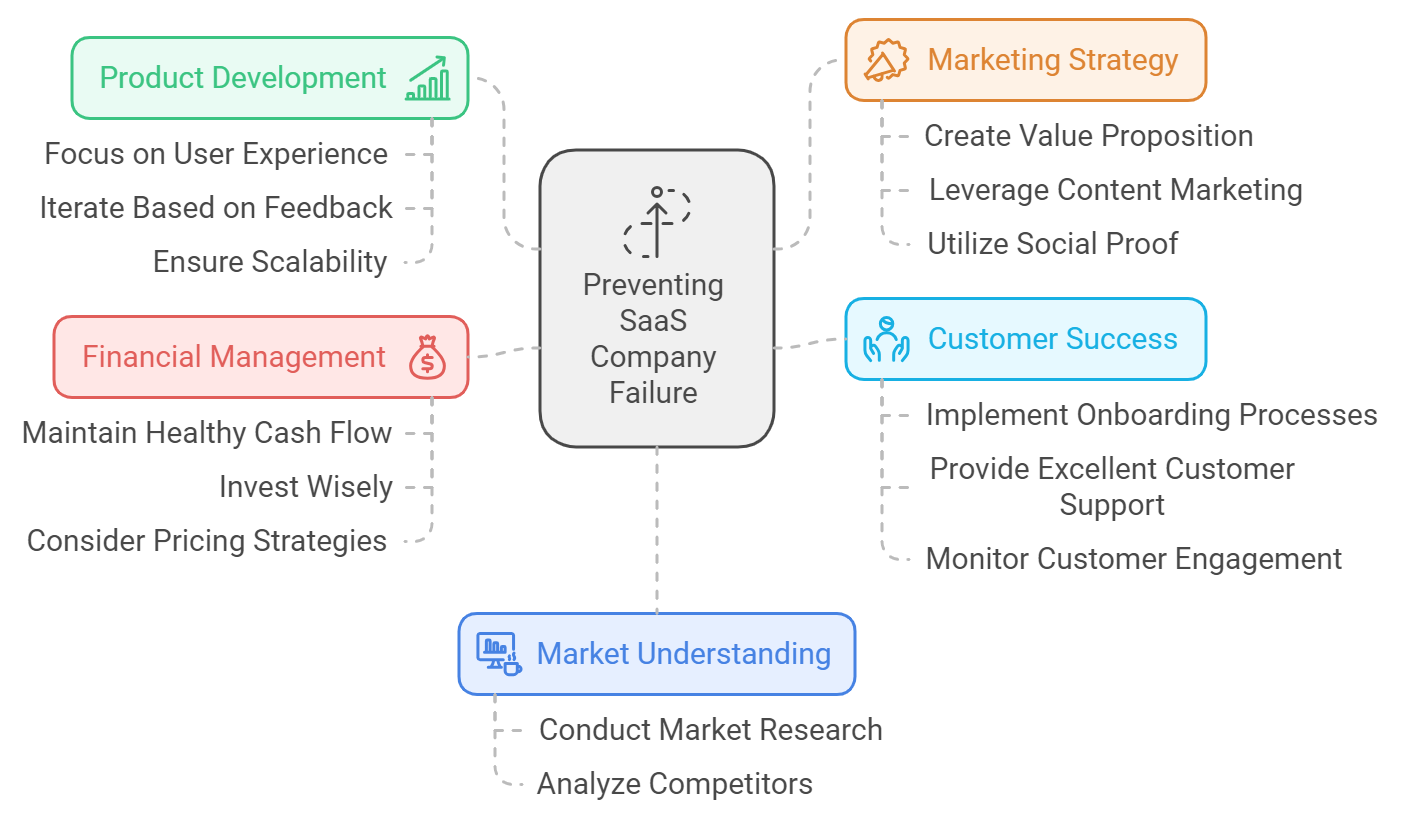
In the vibrant and ever-evolving world of technology startups, Software as a Service (SaaS) businesses often promise rapid growth and the ability to scale quickly. But while the prospects can be enticing, the path to success is riddled with complexities and challenges. One of the critical factors that can dictate whether a startup flourishes or falters is the alignment of business goals. In this case study, we explore how misaligned goals led to the downfall of a promising SaaS startup.
The Genesis of a SaaS Startup
Founded in 2020, CloudSolve, a SaaS startup, entered the market with a vision to streamline project management for creative teams. The founders, having previously worked in tech companies, believed they could leverage their experience to create a product that would not only be intuitive and user-friendly but also cater to the specific needs of creative professionals. With a unique value proposition and ample funding, CloudSolve was poised to make a significant impact in the crowded SaaS landscape.
However, even with a stellar product, CloudSolve faced challenges that stemmed from misaligned goals within its management team. As the company scaled operations, it became apparent that internal divisions existed regarding the strategic direction of the business, leading to a series of decisions that ultimately contributed to its collapse.
The Initial Misalignment
Different Visions Among Founders
The founders of CloudSolve each had a different vision for the company’s future. While one founder was passionate about expanding the product’s capabilities to serve a broader audience, another was focused on refining the existing features for peak performance and user satisfaction. This divergence in visions led to confusion over the company’s primary objective—should CloudSolve strive for rapid expansion, or should it prioritize perfecting its core offerings?
This misalignment in vision trickled down through the organization, affecting key areas such as product development, marketing strategies, and customer service. Each department operated under a different set of priorities, resulting in an incohesive approach that left employees feeling frustrated and uncertain of their roles.
Poor Communication
One of the key indicators of misaligned goals is poor communication. In CloudSolve’s case, as teams formed around individual priorities, communication between departments suffered. The product development team pursued features that were in line with one founder’s vision, while the marketing team focused on campaigns that catered to a different audience. This disconnect meant that the customer experience was inconsistent, ultimately leading to customer dissatisfaction and churn.
Resourcing Challenges
With no clear goal or plan in place, resourcing became a challenge for CloudSolve. The development team was structured to support a wide range of features, yet without a focused initiative, resources were spread too thin. Teams were overworked, leading to burnout and high turnover rates. New hires struggled to find their footing in a company where the strategic direction fluctuated from week to week.
Investors also became frustrated as a result of CloudSolve’s internal chaos. An early round of funding had been predicated on the company’s promise to innovate rapidly and capture market share. However, this promise was rendered meaningless when it became clear that the team was not aligned on how to achieve those ambitious goals.
Marketing and Brand Identity Crisis
With internal struggles reaching a boiling point, CloudSolve’s marketing efforts suffered as well. The multiple visions led to an identity crisis; the company could not clearly articulate who it was or what value it provided to its customers. Marketing campaigns became misaligned with the product, leading to mixed messages being delivered to their target market.
This confusion created a negative brand perception among consumers. Surrounded by a sea of competitors in the SaaS space—each with a clear identity and strong messaging—CloudSolve struggled to gain traction. Potential customers would visit their website, only to leave without a compelling reason to stay.

- Overcome negative thought patterns, reduce stress, and live a worry-free life
- Overthinking is the biggest cause of unhappiness
- Don't get stuck in a never-ending thought loop
- Stay present and keep your mind off things that don't matter, and never will
- Break free of your self-imposed mental prison
The Breaking Point
Financial Instability
As the cracks in CloudSolve’s strategy deepened, financial instability began to rear its ugly head. The initial funding was quickly burned through when the various departments engaged in uncoordinated projects. Despite cash flow issues, the founders insisted on maintaining their respective visions, refusing to realign goals or take a step back to reassess the situation.
Potential clients noticed that the company was disjointed. Sales slowed dramatically, and with no real growth trajectory in sight, investors began pulling back. CloudSolve’s financial model was based on subscription revenue, and as customer churn escalated alongside skyrocketing operational costs, the company found itself in a precarious situation.
Missed Opportunities
The SaaS world moves quickly, and missed opportunities can often mark the difference between success and failure. CloudSolve failed to pivot in response to an emerging trend in remote project management tools. Competitors who had aligned their goals efficiently recognized the rising demand for features like integration with popular video conferencing services and collaborative creative workflows. They quickly adapted their offerings to capitalize on this shift, while CloudSolve remained mired in its internal struggles.
As competitors gained visibility and traction in the market, CloudSolve’s existing customer base began to wane. Employing tactical marketing campaigns, other SaaS firms positioned themselves as thought leaders and innovators—further cementing CloudSolve’s struggles.
The Collapse
Ultimately, CloudSolve’s misalignment proved insurmountable. In early 2023, just three years post-launch, the company abruptly shut its doors. Developers and marketers scattered to competitors, soaking up valuable knowledge but leaving behind a hard lesson: in the fast-paced world of SaaS, aligning business goals is not just advisable; it is imperative.
Lessons Learned
Importance of Unified Vision
The downfall of CloudSolve highlights the critical importance of a unified vision within a startup. All employees—from the C-suite to entry-level hires—must have an understanding of the company’s objectives and how their roles contribute to those goals. Regular discussions about strategic direction and any necessary pivots can keep the team collaborative and focused.
The Power of Effective Communication
Open communication channels are vital for success in any organization. Ensuring that there is constant dialogue between departments can prevent the misalignment of goals and clarify priorities. Regular meetings, updates, and collaborative projects can help align the interests of different departments.
Customer-Centric Approach
In the SaaS landscape, aligning business goals with customer needs is crucial. Understanding how user preferences are changing—and adapting to those changes—can create opportunities for engagement, retention, and growth. CloudSolve’s failure to focus on customer feedback led to its inability to evolve.
Flexibility and Adaptation
Startups must remain flexible in the face of market changes. Aligning business goals doesn’t mean sticking to an original idea regardless of circumstances; rather, it’s about being agile and shifting the mission to capitalize on emerging trends. SaaS businesses must be committed to continual learning and adaptation.
Conclusion
CloudSolve’s story serves as a cautionary tale for startups entering the SaaS industry. The challenges of misaligned goals, poor communication, and incongruous branding led to a tragedy that could have been avoided. By placing emphasis on unified vision, open communication, customer-centric approaches, and adaptability, other startups can steer clear of similar pitfalls. The journey of a startup is fraught with challenges, but with the right focus and alignment, the potential for success is limitless.


