
In the fast-paced world of Fintech, Software as a Service (SaaS) startups must continue innovating while efficiently managing their business strategies. One critical aspect that can make or break a fintech startup journey is crafting an investor-ready business plan. A well-constructed plan not only serves as a roadmap for the startup but also plays a pivotal role in attracting the right investors. In this article, we will explore how Fintech SaaS startups can develop these compelling business plans, breaking down the essential components and offering actionable insights.
Understanding the Importance of a Business Plan
The Foundation for Growth
A business plan is more than just a financing tool; it’s the blueprint for your startup’s future. It’s vital for defining your vision, outlining your objectives, and establishing how you plan to achieve those goals. For Fintech SaaS startups, a robust business plan is crucial given the competitive landscape and regulatory intricacies in financial technology.
The Investor’s Perspective
Investors are looking for more than just innovative ideas; they want to see a clearly articulated strategy that includes market analysis, competitive positioning, financial projections, and risk management strategies. A well-prepared business plan provides potential investors with the confidence that you understand your market, can execute on your strategy, and are capable of navigating challenges effectively.
Key Components of an Investor-Ready Business Plan
Building an investor-ready business plan requires careful consideration of several essential components. Let’s dive deeper into each section that should be included.
1. Executive Summary
Your executive summary is like a headline for your business plan. It should encapsulate the essence of your startup in a few succinct paragraphs. Investors often scan through various business plans quickly, so a compelling executive summary can grab their attention.
Key Elements:
– A brief overview of your startup, including the product or service offered.
– Your unique value proposition and how you differentiate from competitors.
– The target market and market need you’re addressing.
– Financial highlights, such as projected revenue and funding needs.
– A sneak peek into your growth strategy.
2. Company Description
The company description will provide a deeper insight into your startup, including its history, mission, and vision. This section should convey your passion for the Fintech industry and your company’s purpose.
Key Elements:
– Founding story: How and why did you start this business?
– Mission statement: What guiding principles shape your company’s culture?
– Vision: What long-term impact do you hope to achieve in the Fintech world?
– Current status and any milestones you’ve accomplished so far.
3. Market Analysis
Understanding your market landscape is crucial for positioning your Fintech SaaS startup effectively. This section should include thorough market research backed by data.
Key Elements:
– Industry Overview: What are the trends, growth rates, and challenges in the financial technology sector?
– Target Market: Who are your potential customers? Segment them by demographics, needs, and behaviors.
– Competitive Analysis: Who are your direct and indirect competitors? Outline their strengths and weaknesses, and identify market gaps that your startup can fill.
4. Organizational Structure
Investors want to know who is at the helm of your startup. This section focuses on your team and organizational structure, showcasing their experience and capabilities.
Key Elements:
– Founder and team bios: Highlight relevant experiences, skills, and successes in the Fintech space.
– Organizational structure: Provide a visual representation or description of your team and how different roles contribute to your startup’s goals.
– Advisory Board: If applicable, mention any industry experts who provide guidance and insights.
5. Product or Service Line
In this section, you’ll elaborate on the products or services your Fintech SaaS startup offers. Investors need to understand what you’re providing and why it’s valuable.
Key Elements:
– Description of products/services: Clearly define what you offer, including features and benefits.
– Unique Selling Proposition (USP): Why would customers choose your product over others in the market?
– Roadmap: What future features or services are you planning, and what additional customer needs do you aim to address?
6. Marketing and Sales Strategy
Detailing your marketing and sales strategy will illustrate to investors how you plan to acquire and retain customers. This section should reflect an understanding of your target audience and effective methodologies to reach them.

- Overcome negative thought patterns, reduce stress, and live a worry-free life
- Overthinking is the biggest cause of unhappiness
- Don't get stuck in a never-ending thought loop
- Stay present and keep your mind off things that don't matter, and never will
- Break free of your self-imposed mental prison
Key Elements:
– Marketing Channels: Describe the platforms you will use for outreach (e.g., social media, SEO, partnerships).
– Sales Strategy: Explain how you plan to convert leads into paying customers. Will you use inside sales, field sales, or perhaps a self-service model?
– Customer Retention: What strategies will you employ to keep customers and promote loyalty?
7. Funding Request
Investors will want to see your understanding of the financial aspects of your startup. This section outlines your funding needs, how you plan to use the capital, and your expectations for future funding rounds.
Key Elements:
– Amount Request: Clearly state how much funding you need.
– Use of Funds: Explain how every dollar will be spent (development, marketing, personnel, etc.).
– Future Funding: If applicable, provide a roadmap for subsequent funding rounds and potential exit strategies.
8. Financial Projections
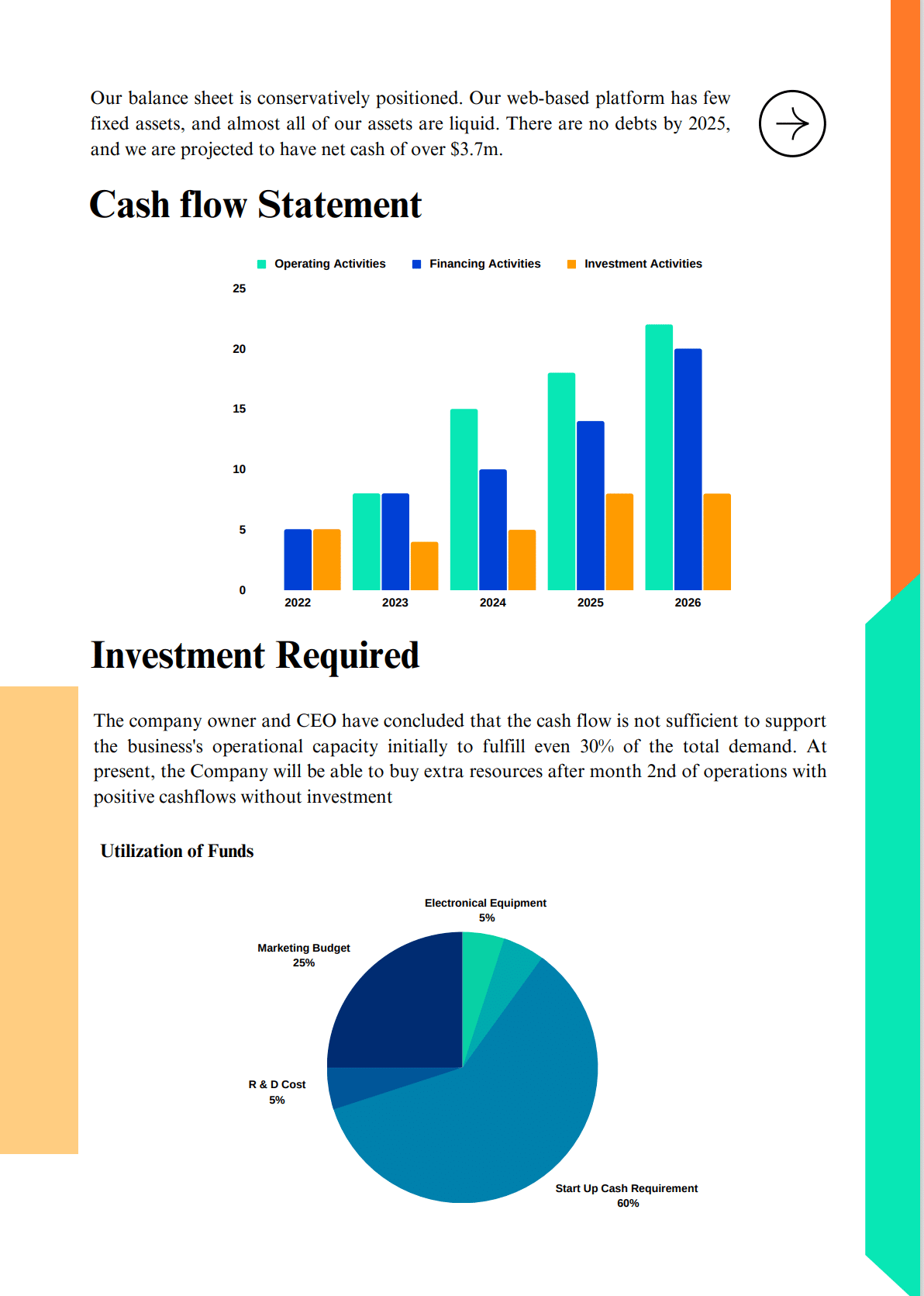
Offering realistic financial projections reassures investors that you have a good grasp of your business’s financial future. This section should include charts, forecasts, and analyses that give a snapshot of your startup’s financial viability.
Key Elements:
– Revenue Model: Is it through subscriptions, transaction fees, or something else? Clearly define how you will generate revenue.
– Forecasted Income Statement: Provide projections for the next 3-5 years, highlighting expected revenue, expenses, and profitability.
– Break-even Analysis: When do you anticipate reaching profitability?
– Cash Flow Statement: Provide insights into how much cash you will have on hand at key stages.
9. Appendix
The appendix serves as the supporting section for your business plan. It can include any additional charts, graphs, credentials, or legal documents that back up the information presented throughout the plan.
Key Elements:
– Citations: Reference for research data in the market analysis.
– Resumes: Detailed resumes for key team members.
– Additional Financial Statements: Expanded financial documents for transparency.
Best Practices for Developing an Investor-Ready Business Plan
Clarity is Key
While preparing your business plan, keep in mind that clarity matters. Avoid jargon and overly technical language that may alienate potential investors. Instead, strive for concise and straightforward communication that captivates the reader’s interest.
Be Realistic and Honest
Investors appreciate transparency. Avoid inflating your projections or overstating your market presence. Instead, present a balanced view of opportunities and possible challenges, showcasing your research and critical thinking.
Visuals Matter
Incorporate visuals like charts, graphs, and infographics to break up text and provide clear representations of your market analysis, financial projections, and growth plans. Visual aids can help make your business plan more engaging and easier to digest.
Review and Revise
Your first draft is just that—a draft. Iterative refinement of your business plan will help you identify areas for improvement and clarify your ideas. Seek feedback from mentors, peers, or industry professionals before finalizing your document.
Prepare for Questions
Anticipate questions that investors may have concerning your business plan. Building a list of potential inquiries can help you prepare for formal meetings, pitch presentations, or investor discussions. This not only demonstrates your comprehensive understanding but also builds trust with potential backers.
Conclusion
Creating an investor-ready business plan for your Fintech SaaS startup is crucial in the journey toward achieving financial success and growth. A well-thought-out business plan not only provides a roadmap for your startup but also serves as a compelling narrative that can attract and persuade investors.
By focusing on critical components, maintaining clarity, demonstrating financial viability, and preparing for investor inquiries, you can build a business plan that resonates with potential investors. In a competitive landscape where time and resources are often limited, your business plan can be the differentiating factor that drives your fintech startup toward its goals.
Remember, your business plan isn’t just a document—it’s a story about your vision, dedication, and potential within the ever-evolving Fintech landscape. With the right approach, your startup can stand out, catch the interest of investors, and pave the way for a successful future.


