
Investing is one of the most effective ways to grow your wealth over time. However, if you’re new to the investment game—or even if you’ve been involved for a while—you may be wondering about the different strategies you can adopt. One of the most significant decisions you’ll face is whether to pursue active or passive investing for your portfolio. In this article, we’ll break down the differences between these two approaches, their advantages and disadvantages, and how to choose the best one for your individual needs and goals.
Understanding Active Investing
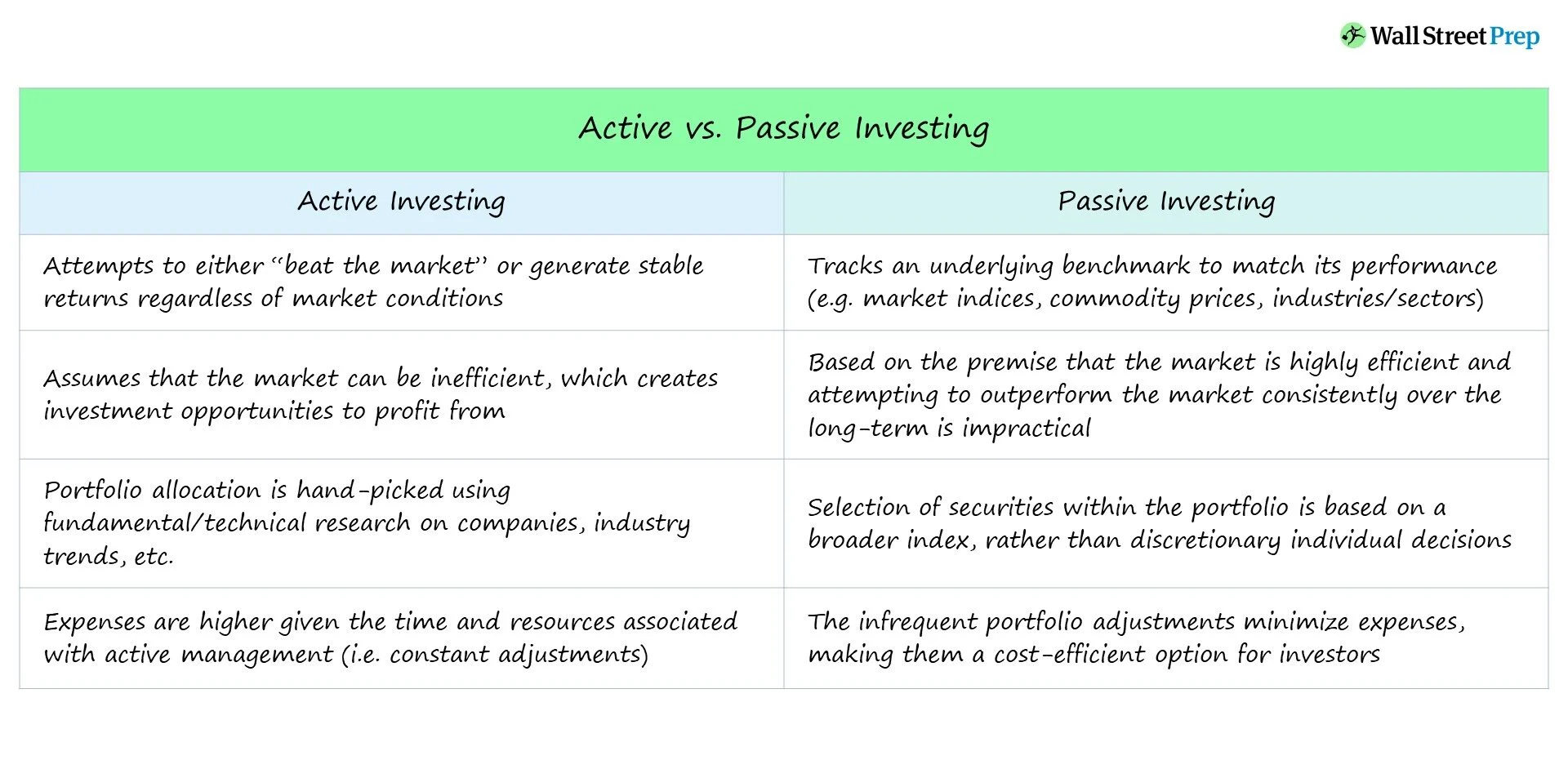
Active investing involves a hands-on approach to investing where the investor or a portfolio manager makes specific investment decisions with the aim of outperforming a particular benchmark or index. This strategy typically includes frequent buying and selling of securities to capitalize on market fluctuations.
Key Characteristics of Active Investing:
-
Frequent Trading: Active investors monitor market trends and economic indicators to make timely trades. This could involve buying a stock when they believe it is undervalued and selling it when it reaches a target price.
-
Research-Driven: Active investing requires extensive research and analysis, including financial forecasting, trend analysis, and rigorous due diligence on individual securities.
-
Higher Costs: Due to the frequent trading and active management, the costs associated with active investing can be significantly higher compared to passive strategies. This includes brokerage fees, management fees, and potential capital gains taxes.
-
Potential for Higher Returns: While active investing comes with its risks, the potential reward is that investors can outperform the market if they make the right decisions. A skilled investor can capitalize on inefficiencies in the market to achieve better returns.
Pros and Cons of Active Investing:
Pros:
- Flexibility: Active investors can adjust their strategies quickly based on market conditions or unexpected events.
- Opportunity for Higher Returns: If executed well, active investing can yield returns that exceed market averages.
- Unique Investment Opportunities: Active investors can explore niche sectors and invest in companies that may be overlooked by those using a passive strategy.
Cons:
- Higher Costs: As mentioned earlier, active investing often incurs more fees, which can eat into your overall returns.
- Time-Consuming: This strategy requires constant monitoring and analysis, which may not be feasible for many investors.
- Risk of Underperformance: Many studies have shown that a large percentage of active managers fail to outperform their benchmarks over the long term.
Understanding Passive Investing
Passive investing, on the other hand, is a strategy that involves less frequent trading. Investors aim to replicate the performance of a specific index or benchmark, such as the S&P 500, often through index funds or exchange-traded funds (ETFs).
Key Characteristics of Passive Investing:
-
Buy-and-Hold Strategy: Passive investing typically relies on a longer investment horizon, where assets are bought and held for the long term, regardless of short-term market fluctuations.
-
Lower Costs: Since passive investors do not frequently buy and sell securities, they incur lower fees associated with management and trading.
-
Market Tracking: Assessing the performance of passive investments is straightforward as they track a specific market index, making performance evaluation easier.
-
Diversification: Many passive investment strategies include a diverse range of assets, which can help mitigate risk.
Pros and Cons of Passive Investing:
Pros:
- Lower Fees: Since passive investing usually involves fewer transactions and less active management, fees are often considerably lower.
- Less Time-Consuming: This strategy requires far less maintenance than active investing, making it ideal for busy investors.
- Consistent Performance: Studies show that passive investment strategies often outperform actively managed portfolios over the long run due to lower fees and consistent tracking of the market.
Cons:
- Lack of Flexibility: Passive investors are at the mercy of market fluctuations and cannot make quick adjustments to their portfolios.
- Market Risk: If the overall market experiences a downturn, passive investors will feel the brunt of the decline without an opportunity to pivot their strategies.
- Limited Return Potential: While passive investing is designed to match market returns, it does not offer opportunities for significant outperformance.

- Overcome negative thought patterns, reduce stress, and live a worry-free life
- Overthinking is the biggest cause of unhappiness
- Don't get stuck in a never-ending thought loop
- Stay present and keep your mind off things that don't matter, and never will
- Break free of your self-imposed mental prison
How to Choose the Right Investment Strategy for You
Now that we’ve outlined the key characteristics, advantages, and disadvantages of active and passive investing, let’s focus on how you can choose the right strategy based on your individual needs and goals.
1. Determine Your Investment Goals
Before making a decision between active and passive investing, it’s essential to identify your investment goals. Are you looking for long-term growth, short-term gains, or perhaps retirement savings? Your objectives will significantly influence your choice of investment strategy.
- Long-Term Growth: If your goal is to build wealth over time and you’re comfortable with market volatility, passive investing may be suited to your needs.
- Short-Term Gains: If you’re looking to capitalize on market inefficiencies or if you require quick returns, active investing might be the way to go.
2. Assess Your Risk Tolerance
Understanding your risk tolerance is crucial in deciding between active and passive investing. Risk tolerance is the degree of variability in investment returns that an investor is willing to withstand.
- Aggressive Investors: Those with a high risk tolerance may prefer active investing strategies that could yield higher returns, albeit with increased volatility.
- Conservative Investors: If you prefer consistent, stable growth and are uncomfortable with significant market swings, passive investing may suit you better.
3. Consider Your Time Commitment
A significant factor in choosing between active and passive investing is the amount of time you are willing to dedicate to managing your investments.
- Time-Intensive Strategies: If you have the time and interest in actively monitoring your investments or if you’re collaborating with an experienced advisor, active investing might be a good fit.
- Limited Time: If you have a busy lifestyle and prefer to take a more hands-off approach to investing, passive investing offers an easier path.
4. Evaluate Your Knowledge and Expertise
Your level of investment knowledge and expertise may also dictate your choice of strategy.
- Experienced Investors: If you have a strong understanding of financial markets, economic trends, and securities, active investing may provide opportunities to leverage your knowledge for potentially better returns.
- New Investors: For those who are new to investing or lack the time to conduct extensive research, passive investing is often the more straightforward and accessible option.
5. Review Your Investment Time Horizon
Finally, consider your investment time horizon—how long you plan to keep your money invested.
- Short Time Horizon: If you have a short investment horizon, you may want to consider the risks associated with active or even passive strategies. Short-term investing often increases volatility, which can be riskier.
- Long Time Horizon: If you’re investing for the long term, passive strategies can be an excellent choice as they tend to provide stable growth and lower costs.
Combining Active and Passive Investing
You don’t necessarily have to choose one strategy over the other. A balanced portfolio that combines both active and passive investing strategies can allow you to enjoy the benefits of each while mitigating risks.
-
Core-Satellite Approach: This strategy involves establishing the core of your portfolio with passive investments (such as index funds) and using active investments (like specific stocks or sector-focused funds) as satellites to achieve additional growth.
-
Market Conditions: Consider the current state of the financial markets. In bearish or downward-trending markets, passive investments may provide stability, while in bullish markets, active management can help capitalize on upward trends.
Conclusion
Choosing between active and passive investing is not a one-size-fits-all decision. Factors such as your investment goals, risk tolerance, available time for monitoring your investments, investment knowledge, and horizon all play vital roles in determining the best approach for you.
By taking the time to thoroughly assess your individual circumstances and understanding the strengths and weaknesses of both strategies, you can make a more informed decision that sets you on the path to achieving your long-term financial objectives. Remember, investing is a journey, and finding the right balance between active and passive strategies can lead to a more resilient and diversified portfolio, tailored to your unique needs. Happy investing!


