
Navigating the world of investing can feel like traversing a dense forest—overwhelming, complex, and sometimes daunting. If you’re a budding investor or a seasoned one looking to refine your strategy, you’ve likely come across the terms “growth stocks” and “value stocks.” Each represents a different investment philosophy, and understanding their characteristics and potential can make a significant difference in your portfolio’s performance. In this article, we will dissect the intricacies of these two investment styles and help you strategize which might lead to maximum returns based on your financial goals.
Understanding Growth Stocks
Growth stocks are shares in companies that are expected to grow at an above-average rate compared to their industry or the broader market. These companies typically reinvest their earnings back into the business to fuel further expansion, often paying little to no dividends. Think of tech giants like Amazon or NVIDIA; they are prime examples of growth stocks that have transformed the market landscape.
Characteristics of Growth Stocks:
1. High Price-to-Earnings Ratio (P/E): Growth stocks generally have higher P/E ratios, reflecting investors’ expectations for future earnings growth.
2. Strong Earnings Growth: These companies frequently show rapid growth in revenue and profits, often driven by innovation or a competitive edge.
3. Reinvestment of Profits: Instead of returning money to shareholders through dividends, growth companies often reinvest earnings to develop new products, enter new markets, or enhance their infrastructure.
Pros and Cons of Investing in Growth Stocks
Pros:
– Potential for High Returns: If a growth company performs as expected, investors can see significant gains, particularly if they enter before the stock price surges.
– Innovation and Market Leadership: Many growth companies are at the forefront of innovation, positioning them to lead within their industries.
Cons:
– Increased Volatility: Growth stocks can be more volatile and subject to sharp price fluctuations, often influenced by market sentiment.
– Higher Risk: There’s always the risk of the company failing to meet ambitious growth targets, which can lead to substantial losses.
Understanding Value Stocks
On the opposite end of the spectrum are value stocks. These are shares in companies that trade for less than their intrinsic value. Value investors believe that the market has mispriced these stocks, presenting an opportunity to buy low and capitalize on the eventual correction.
Characteristics of Value Stocks:
1. Low P/E Ratio: Value stocks tend to have lower P/E ratios compared to the broader market, indicating that they are undervalued.
2. Established Businesses: These companies are often well-established, with stable earnings and a history of paying dividends.
3. Strong Fundamentals: Value investors look for companies with solid fundamentals—robust balance sheets, consistent cash flow, and strong management.
Pros and Cons of Investing in Value Stocks
Pros:
– Lower Risk: Value investing is often perceived as less risky, as you’re investing in fundamentally sound companies that are temporarily undervalued.
– Income Generation: Many value stocks pay dividends, providing a steady income stream while you wait for the stock price to appreciate.
Cons:
– Longer Time Horizon: It may take time for the market to realize the true value of the stock, and investors may have to be patient.
– Stagnation Potential: Some value stocks can be stuck in a rut for extended periods, leading to missed opportunities elsewhere.
Comparing Growth and Value Stocks
Now that we have dissected both growth and value stocks, it’s vital to compare them to determine which may offer maximum returns.
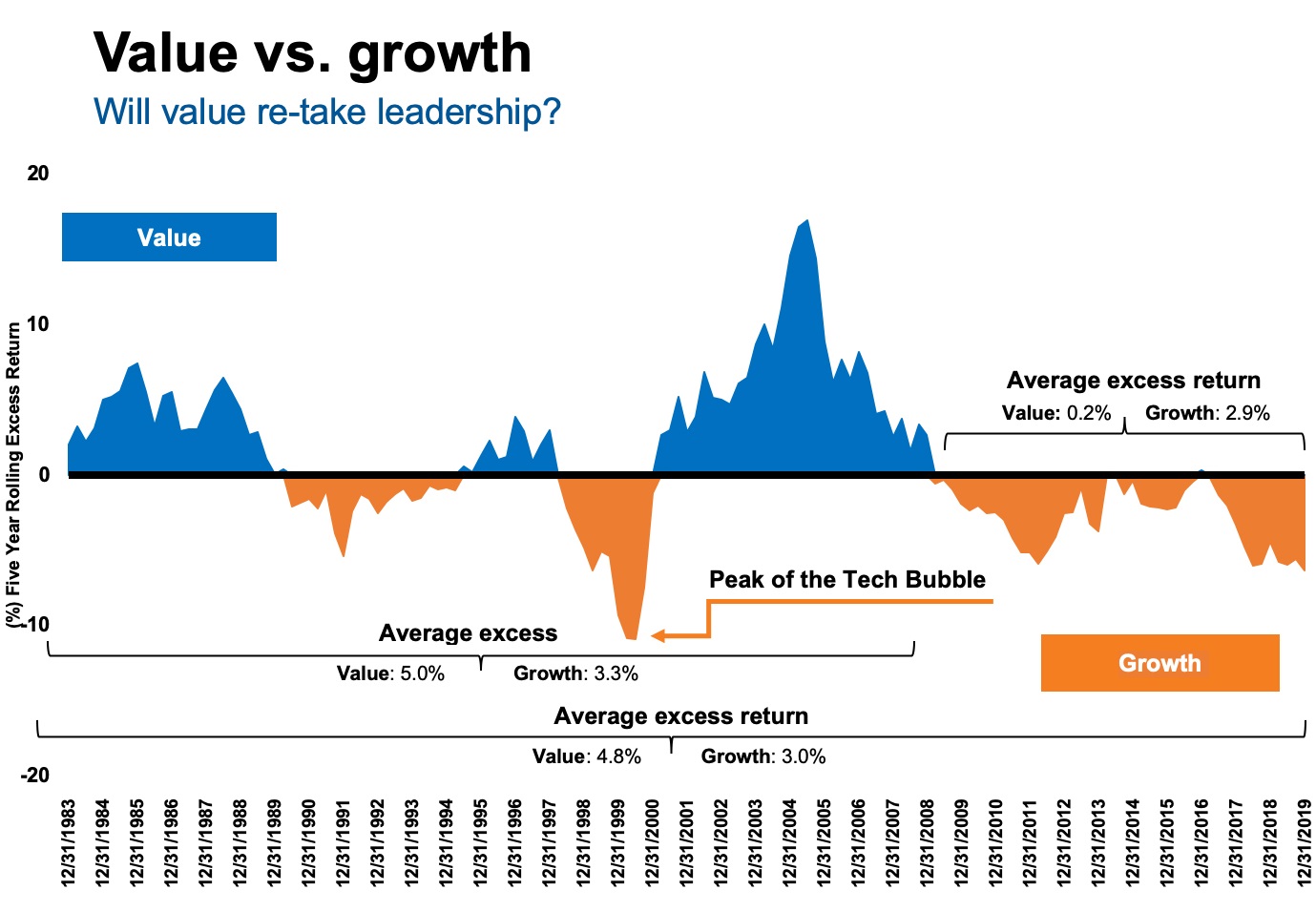
Historical Performance: Historically, growth stocks have outperformed value stocks during bull markets, while value stocks have held up better during bear markets. According to historical data, growth stocks have been the best performers, particularly from the late 1990s to the 2000s; however, value stocks saw significant rebounds during market corrections.

- Overcome negative thought patterns, reduce stress, and live a worry-free life
- Overthinking is the biggest cause of unhappiness
- Don't get stuck in a never-ending thought loop
- Stay present and keep your mind off things that don't matter, and never will
- Break free of your self-imposed mental prison
Market Conditions Matter: The economy’s prevailing conditions significantly influence which category performs better. During periods of economic expansion, growth stocks usually thrive because companies can easily expand their operations and improve profitability. Conversely, in economic downturns, value stocks often outperform due to their inherent stability and cash flow.
Personal Investment Strategy: Your personal investment strategy also plays a critical role in determining whether to focus on growth or value stocks. How risk-averse are you? What’s your investment horizon? Understanding your risk tolerance and financial goals can guide your decision-making process.
Finding a Balanced Approach
For most investors, a balanced approach incorporating both growth and value stocks might be the ideal strategy. By diversifying your portfolio, you can leverage the benefits of both categories while mitigating risks. Here’s how:
-
Diversification: Allocate a portion of your portfolio to growth stocks for the potential of high returns and another portion to value stocks for stability and dividends.
-
Review and Adjust: Market conditions change, and so should your strategy. Regularly review your portfolio and be prepared to adjust your allocation depending on market trends and your personal financial situation.
-
Education: Stay informed about market conditions, economic indicators, and company performance. Continuous education will help you make informed decisions.
Real-World Examples
To illustrate the impact of these strategies, let’s look at some notable examples.
-
Growth Stock: Consider Tesla, an exemplar of a growth stock. The company invested heavily in research and development and modernized electric vehicle technology, which resulted in meteoric stock price growth over the last decade.
-
Value Stock: On the value side of things, look at Coca-Cola. With a history of steady dividends and a well-established brand, Coca-Cola represents a more traditional value investment. Although its growth may not match that of tech stocks, its stability can provide reliable returns.
The Final Verdict: Which Should You Invest In?
Ultimately, the answer to whether growth or value stocks will yield maximum returns depends on various factors, including market conditions, your financial goals, and risk tolerance.
-
If You Favor Stability: If you’re more risk-averse and seeking consistent returns, value stocks may be the way to go. Their lower volatility and ability to provide dividends can give you peace of mind while still allowing for capital appreciation.
-
If You’re a Risk-Taker: If you’re open to high risk for the potential of high reward, growth stocks might be your best bet. The allure of emerging technologies and innovative companies can offer remarkable returns, albeit with more inherent risk.
Conclusion
In conclusion, both growth and value stocks present unique opportunities for investors. The key is to strike a balance that aligns with your financial objectives and risk tolerance. The world of investing is not one-size-fits-all; it requires thoughtful consideration and continuous education to navigate effectively.
As you embark on your investment journey, consider leveraging both strategies. By doing so, you may find a pathway that not only maximizes returns but also suits your individual investment personality. Whether you lean towards growth or value investing, remember that the financial landscape is ever-changing, and staying informed is your best tool for success.
So, which path will you choose for maximum returns: growth or value? The choice, as they say, is yours!


