
As we approach retirement, many individuals find themselves wondering how to secure their financial future. One of the most significant components of retirement income for many Americans is Social Security. However, understanding how to maximize these benefits can be a complex task, especially in a financial landscape that is ever-changing. Fortunately, through strategic investments and careful planning, it is possible to enhance your Social Security benefits. In this article, we’ll explore various ways to optimize your Social Security income, alongside practical investing strategies that can help you achieve a financially stable retirement.
Understanding Social Security Benefits
Before diving into strategies for maximizing your Social Security benefits, it’s essential to have a clear understanding of how these benefits work. Social Security is a government program designed to provide financial support to retired workers, disabled individuals, and their survivors. The benefits you receive depend on your earnings history, the age at which you start taking benefits, and your overall work history.
Most Americans can begin receiving Social Security benefits as early as age 62. However, the amount you receive will be reduced if you claim early. The full retirement age (FRA) varies depending on when you were born but generally ranges from 66 to 67 years old. Opting to delay benefits beyond your FRA can increase your monthly payments significantly, allowing you to enhance your financial stability in your later years.
The Importance of Timing
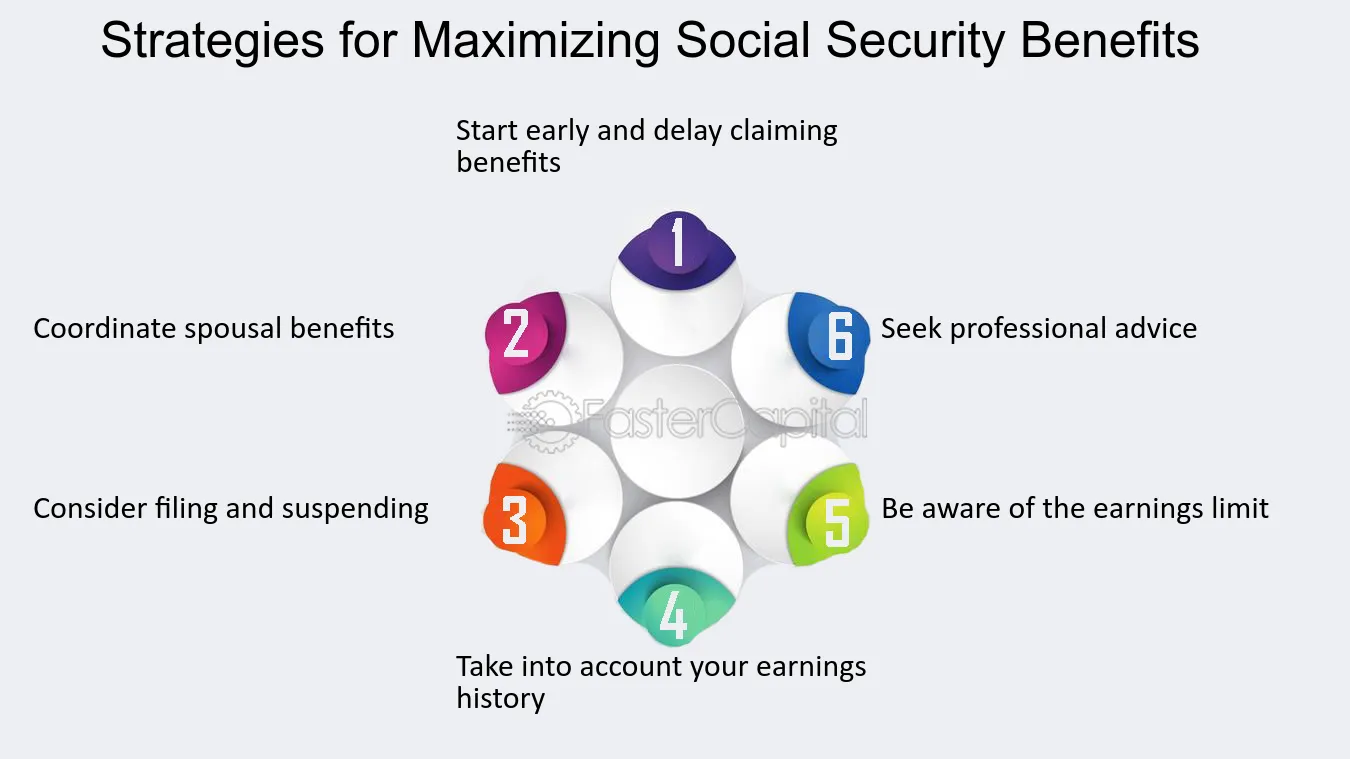
One of the simplest yet most powerful strategies to maximize Social Security benefits is to carefully consider when to begin claiming. By delaying your benefits until after your FRA, you can earn delayed retirement credits. This effectively increases your benefit amount by 8% for each year you delay claiming benefits until age 70.
Example:
Let’s say your full retirement age benefit is $2,000 per month. If you decide to start claiming benefits at age 62, your monthly payment will be reduced to approximately $1,500. However, if you wait and start claiming at age 70, your benefit could increase to about $2,640. By carefully calculating this option, you can make an informed decision that aligns with your financial goals and needs.
Strategic Investment Planning
In addition to timing your Social Security claims, integrating investment strategies into your financial plan can further increase your overall retirement income. Here are some key investment strategies to consider:
1. Diversify Your Investments
A diversified portfolio can hedge against market volatility and inflation while fostering growth in your retirement savings. Consider dividing your investments across various asset classes, including stocks, bonds, and real estate. By maintaining a balanced portfolio, you can reduce risk and potentially increase your long-term returns.
2. Invest in Tax-Advantaged Accounts
Utilizing accounts like a 401(k), IRA, or Roth IRA can be a significant step in maximizing your retirement income. Contributions to these accounts may offer tax deductions or grow tax-free, allowing for an increased compound effect over time. As a result, these savings can bolster your retirement fund, providing extra cash flow alongside your Social Security benefits.
3. Consider Dividend Stocks
Investing in dividend-paying stocks can be an effective way to generate a steady income stream that can supplement your Social Security benefits. Companies that regularly distribute dividends tend to be more stable, providing the opportunity to earn regular income while also maintaining the potential for growth in your portfolio.
4. Look Into Annuities
Annuities are insurance products that can provide a steady income stream in retirement. By investing a lump sum, you can receive regular payments for a specified period or even for life. This can be particularly helpful in managing your expenses during retirement, allowing you to delay claiming Social Security benefits and potentially increasing your monthly payouts.
5. Real Estate Investments
Owning rental properties can be another valuable income source during retirement. If managed wisely, these investments can offer recurring rental income while building equity over time. Moreover, real estate can serve as a hedge against inflation, preserving your purchasing power as costs rise.

- Overcome negative thought patterns, reduce stress, and live a worry-free life
- Overthinking is the biggest cause of unhappiness
- Don't get stuck in a never-ending thought loop
- Stay present and keep your mind off things that don't matter, and never will
- Break free of your self-imposed mental prison
Understanding Social Security and Your Spouse
For couples, understanding how Social Security benefits interact can lead to further maximization. Married couples can choose to take advantage of spousal benefits, allowing one spouse to claim a benefit based on the other partner’s work record. This is essential when one spouse has significantly lower lifetime earnings.
Additionally, if one spouse passes away, the surviving spouse can inherit the larger of the two benefits. This makes it increasingly important for married couples to strategize their claiming methods. Often, delaying benefits for the higher-earning spouse can provide substantial long-term benefits for both partners.
It’s important to stay informed about potential changes to Social Security, as government policy can influence benefit calculations, eligibility, and tax implications. Programs and proposals aimed at reforming Social Security may affect future benefits, so maintaining awareness of these developments is critical.
As of now, the program is primarily funded through payroll taxes collected from current workers, but ongoing discussions around its long-term solvency could lead to adjustments that may affect individuals in years to come. Regularly reviewing your retirement plan and investment strategy in light of these changes can help you stay proactive.
The Role of Financial Advisors
While it’s helpful to understand the intricacies of Social Security and investment strategies, you don’t have to navigate this complex landscape alone. Working with a certified financial advisor can provide tailored strategies that fit your specific situation. Advisors can help you assess your current finances, establish realistic goals, and develop an investment portfolio that complements your Social Security benefits. They can also assist in tax planning, ensuring you make the most of your retirement savings.
Practical Steps to Implementation
Knowing the strategies is only half the battle; here are some actionable steps to begin maximizing your Social Security benefits through strategic investments:
-
Create a Retirement Budget: Assess your current expenses and project future needs in retirement. Understanding your financial landscape will help you determine how much you need from Social Security and supplemental income.
-
Evaluate Your Claiming Age: Consider your unique circumstances, including your health and income needs, when deciding when to claim Social Security benefits.
-
Build an Investment Strategy: Based on your risk tolerance and retirement goals, develop an investment strategy that encompasses asset allocation, diversification, and tax-advantaged accounts.
-
Consult a Professional: Meet with a financial advisor to discuss your retirement goals and adjust your investment strategy as needed.
-
Stay Informed: Keep an eye on changes to Social Security policies and the financial market. Staying informed will enable you to adjust your strategy as necessary.
-
Review Regularly: It’s key to revisit your financial plan regularly, making adjustments as needed based on changes in your personal circumstances and the overall economic climate.
Conclusion
Maximizing your Social Security benefits is not just about making informed decisions regarding when to claim; it’s also about employing strategic investments that complement your retirement income. By understanding the timing of your benefits, diversifying investments, utilizing tax-advantaged accounts, and possibly leveraging real estate and annuities, you can effectively enhance your financial stability in retirement.
While navigating these complexities can be daunting, taking concrete steps and seeking professional guidance can lead you to a successful financial future. Remember, retirement might be the most rewarding phase of life; ensure you’re taking the necessary steps to enjoy it to the fullest. So, start planning today to secure your future and maximize your Social Security benefits while setting the stage for a comfortable and enjoyable retirement.


