
When it comes to retirement planning, one phrase that often comes up is “compound interest.” You may have heard it tossed around in financial discussions or read it in articles about saving for the future, but what exactly does it mean? More importantly, why should you care about compound interest when it comes to your retirement investment plans? In this comprehensive guide, we will delve into the essence of compound interest, explore its immense power, and discuss how you can leverage it to secure your financial future.
Understanding Compound Interest: The Basics
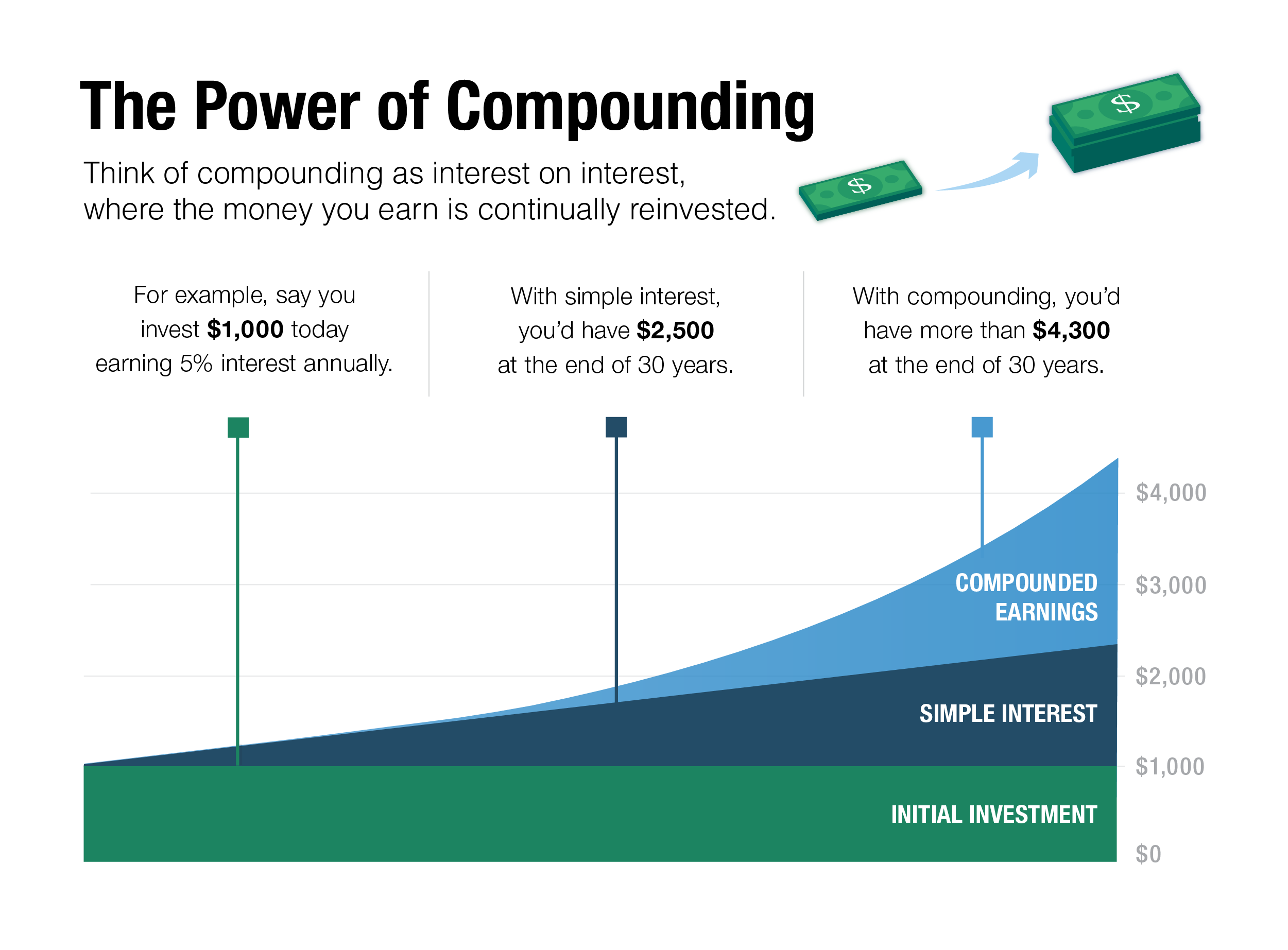
At its core, compound interest is the interest on a loan or deposit calculated based on both the initial principal and the accumulated interest from previous periods. In simpler terms, it’s the interest earned on interest. This creates a snowball effect, where your investment grows exponentially over time.
For example, let’s say you invest $10,000 in a retirement account with an annual return of 5%. After the first year, you’ll earn $500 in interest, bringing your total to $10,500. In the second year, that 5% interest is calculated on the new total of $10,500, which results in $525 in interest, thus leading to a total of $11,025. Over the years, this compounding effect can lead to significant growth in your retirement savings.
Why Compound Interest is Crucial for Retirement
1. Time is Your Best Ally
One of the most compelling reasons to understand and utilize compound interest is the time factor. The earlier you start investing, the more time your money has to grow. This is why it’s often recommended to start saving for retirement as early as possible, even if you can only contribute a small amount initially. The power of compound interest becomes increasingly evident the longer your money is invested.
For example, if you start investing $5,000 at age 25 and achieve an annual return of 7%, by the time you’re 65, you’ll have about $1.1 million. However, if you wait until age 35 to start investing the same amount under the same conditions, you’ll only accumulate around $550,000 by retirement age.
2. The Exponential Growth Factor
Compounding allows your investments to grow at an exponential rate. While linear growth may yield consistent returns year-over-year, compounding has the potential to truly accelerate your wealth. This is particularly beneficial in retirement accounts adorned with tax advantages, such as 401(k)s and IRAs, where your money can compound without being diminished by taxes along the way.
A simple visualization helps make this concept clearer: imagine your investment as a tree. As the years go by, not only does the initial trunk (the principal) grow, but branches (the interest) begin to sprout. With each passing year, those branches grow leaves (additional interest), contributing to the tree’s overall height—this represents your growing portfolio over time.
3. Inflation and Compound Interest
When it comes to retirement, inflation is a key player that can’t be ignored. The purchasing power of your money decreases over time due to inflation; however, compound interest can help offset these effects. While inflation might reduce the value of fixed income, investments that benefit from compounded growth can help you stay ahead of inflation’s eroding impact.
Let’s say the average inflation rate is around 3%. If you rely solely on traditional savings, your money will lose value over time. However, if you put that money into a compound interest earning investment, you have the potential to gain more than you would lose to inflation. It’s essential to choose investments wisely and look for opportunities to maximize your compounding returns.
How to Make Compound Interest Work for You
Start Early and Be Consistent
As mentioned earlier, starting your retirement savings as early as possible gives you the best chance of capitalizing on the power of compound interest. Even if you can only contribute a small amount each month, consistency is crucial.
Automating your contributions can be a valuable strategy. Set up automatic deposits into your retirement account, allowing you to benefit from dollar-cost averaging. Over time, you’ll likely see your investment grow while minimizing the impact of market volatility.

- Overcome negative thought patterns, reduce stress, and live a worry-free life
- Overthinking is the biggest cause of unhappiness
- Don't get stuck in a never-ending thought loop
- Stay present and keep your mind off things that don't matter, and never will
- Break free of your self-imposed mental prison
Diversify Your Investments
Not all investments are created equal, which is why diversification is vital when it comes to compound interest. Combining different asset classes—stocks, bonds, real estate, and others—can help balance your portfolio and optimize your returns.
Equities generally yield higher returns than other asset classes over the long run, which makes them a smart choice for retirement accounts aimed at compounding. However, diversifying across various asset categories can help mitigate risks and enhance overall returns.
Take Advantage of Tax-Advantaged Accounts
Tax-advantaged retirement accounts are often your best bet when it comes to maximizing compound interest. 401(k)s, IRAs, and HSA accounts allow your money to grow tax-deferred or even tax-free. This means you won’t owe taxes on any capital gains, interest, or dividends earned until you withdraw the money in retirement (or in the case of Roth accounts, you may never owe taxes on those gains).
Here’s a quick comparison of two options:
- A traditional IRA might allow you to put away $6,000 annually, growing without immediate tax penalties.
- A Roth IRA allows you to invest the same $6,000, but taxes are paid upfront. When you withdraw during retirement, the money is tax-free.
Both options can provide significant compounding benefits, but Roth IRAs may hold an advantage due to the tax-free growth and withdrawals.
Reinvest Your Earnings
Another way to amplify the power of compound interest is to reinvest your earnings. Instead of taking dividends or interest as cash, consider reinvesting them back into your retirement account or investment portfolio. This approach accelerates growth, allowing you to take advantage of the compounding effect even further.
For instance, if your investment generates $1,000 in dividends, instead of cashing out, reinvest it into more shares of that asset. Your future earnings will now be based on a larger principal, further enhancing the compounding effect.
Review and Adjust Your Investment Strategy
Your retirement plan isn’t a “set it and forget it” venture. As your life circumstances change, so should your investment strategy. Regularly reviewing your portfolio ensures that you remain on target to meet your retirement goals.
Consider your age, risk tolerance, and financial needs when reviewing your investments. You may wish to take on more risk when you’re young, as you have time to recover from potential market downturns. As you age, gradually shifting your portfolio towards safer, more stable investments may be a prudent course of action.
The Bottom Line: Harnessing the Power of Compound Interest
Understanding and utilizing compound interest can profoundly impact your retirement savings. By starting early, being consistent, diversifying your investments, taking advantage of tax-advantaged accounts, reinvesting your earnings, and regularly reviewing your strategy, you can set yourself up for a financially secure retirement.
In today’s world, making informed financial decisions is more critical than ever. With life expectancy rising and retirement no longer that far-off destination, the time to act is now. The earlier you invest, the more your money can work for you, thanks to the magic of compound interest.
So, as you contemplate your financial future, remember that small actions today can lead to sensational outcomes tomorrow. Embrace the power of compound interest and watch your retirement savings flourish over time. Your future self will surely thank you.
By understanding and applying the principles outlined in this article, you can harness the power of compound interest, ensuring peace of mind for a comfortable retirement. Whether you’re just starting your career or are nearing retirement, it’s never too late to take charge of your financial destiny. The clock is ticking—let your money work for you!


