
Starting a business is a thrilling venture, filled with passion, creativity, and a dash of risk. However, amidst the excitement of launching a new enterprise, it’s crucial for entrepreneurs to consider the financial implications of their chosen business structure. For many, the S-corporation (S-corp) structure not only provides an efficient way to operate but also brings a suite of tax benefits that can significantly impact an entrepreneur’s bottom line. In this article, we’ll explore the tax benefits of starting your business as an S-corp and why this structure might be the right fit for you.
What Is an S-Corp?
Before we dive into the tax benefits, it’s important to understand what an S-corp actually is. An S-corp is a special type of corporation created through the IRS tax election. Unlike a traditional corporation (C corporation), where profits are taxed at both the corporate and personal levels, S-corps allow income, losses, deductions, and credits to pass through to shareholders, avoiding double taxation. This means that S-corps can benefit from corporate features while enjoying pass-through taxation, making them a popular choice among small business owners.
Key Features of S-Corps
-
Pass-Through Taxation: As mentioned earlier, S-corps are not subject to federal income tax at the corporate level. Instead, the income is reported on the individual tax returns of the shareholders, which can lead to potential tax savings.
-
Limited Liability Protection: Like traditional corporations, S-corps provide limited liability protection, meaning that personal assets are generally protected from business debts and lawsuits.
-
Ownership Restrictions: To qualify as an S-corp, there are certain restrictions. For instance, the entity can have no more than 100 shareholders, and shareholders must be U.S. citizens or residents.
-
Stock Structure: S-corps can only issue one class of stock, which can be advantageous for maintaining control over the company.
Tax Benefits of Starting Your Business as an S-Corp
Now, let’s delve into the specific tax benefits of forming an S-corp.
1. Avoiding Double Taxation
One of the most significant benefits of operating as an S-corp is the avoidance of double taxation. In a C-corp, profits are taxed at the corporate level, and then dividends distributed to shareholders are taxed again at the individual level. With an S-corp, income is only taxed once, at the shareholder’s individual tax rate, resulting in significant tax savings.
2. Salary and Dividend Distribution Strategy
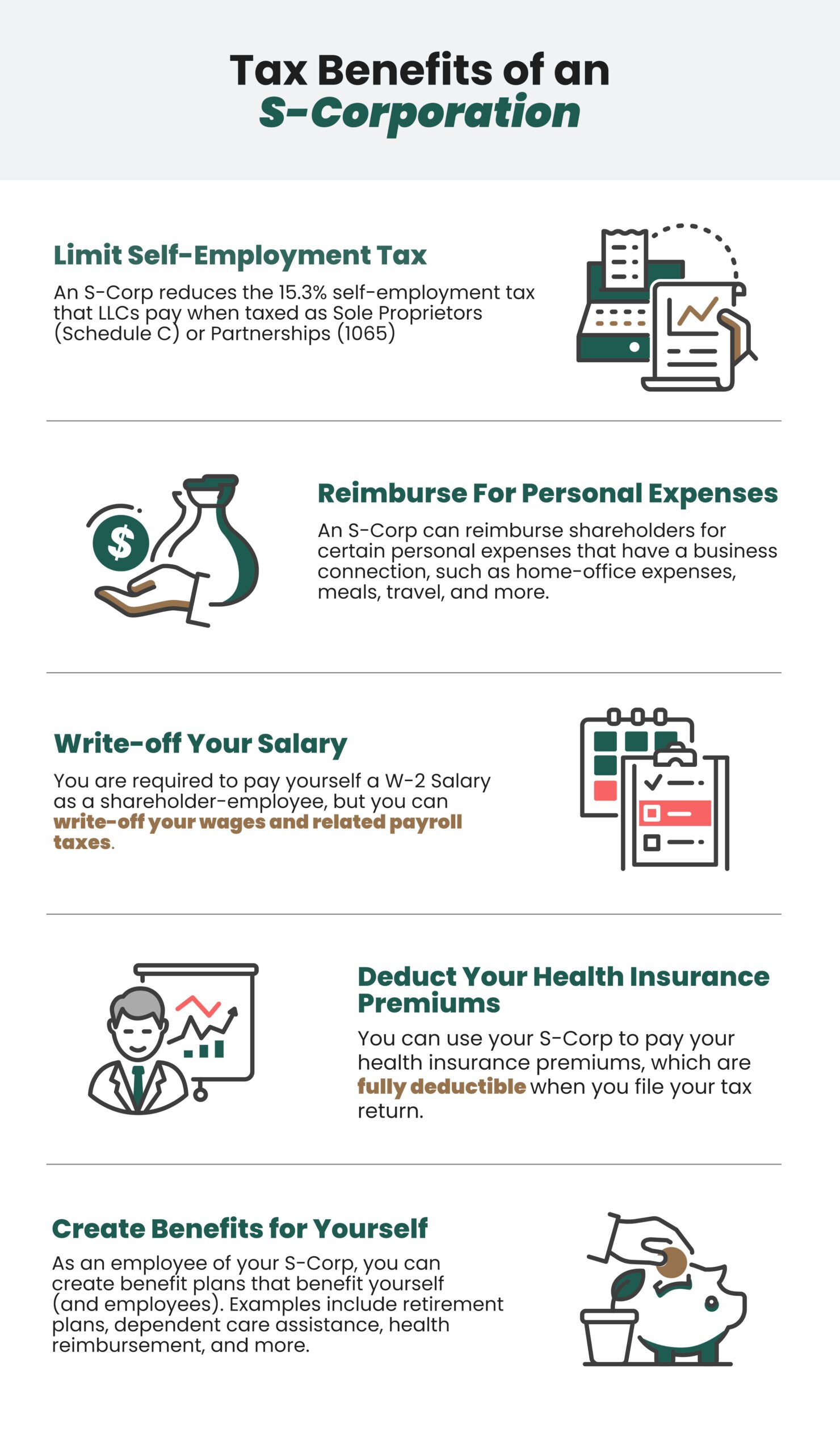
As a business owner, you may choose to pay yourself a reasonable salary and take additional profits as dividends. This dual compensation structure allows you to potentially lower your overall tax burden. Since only your salary is subject to self-employment taxes (Social Security and Medicare taxes), you can save on these taxes by distributing a portion of your profits as dividends, which are not subject to self-employment tax.
3. Deductible Business Expenses
S-corps can deduct various business expenses before passing the income onto shareholders. This can include salaries, health insurance premiums, retirement plan contributions, and other necessary operating expenses. By maximizing deductions, you can effectively lower your taxable income.
4. Self-Employment Tax Savings
One of the most appealing aspects of an S-corp is the potential for self-employment tax savings. Sole proprietors and partners in a partnership are generally subject to self-employment taxes on their entire income. However, as an S-corp owner, only your salary (which must be reasonable) is subject to these taxes. The remaining profit can be distributed as dividends, which are not subject to self-employment taxes.
5. Qualified Business Income Deduction
If your S-corp qualifies, you may be eligible for the Qualified Business Income (QBI) deduction under the Tax Cuts and Jobs Act. This allows eligible S-corp shareholders to deduct up to 20% of their business income on their personal tax returns, further reducing the taxable income and overall tax liability.
6. Losses Can Offset Other Income
If your S-corp incurs a loss, shareholders can use that loss to offset other income on their personal tax returns. This can be particularly beneficial in the early stages of a business when expenses may exceed income. Individual shareholders may be able to deduct business losses from their personal income, lowering their overall tax bill.

- Overcome negative thought patterns, reduce stress, and live a worry-free life
- Overthinking is the biggest cause of unhappiness
- Don't get stuck in a never-ending thought loop
- Stay present and keep your mind off things that don't matter, and never will
- Break free of your self-imposed mental prison
7. Enhanced Credibility
Operating as an S-corp can add a level of credibility and professionalism to your business. Many clients and vendors may feel more comfortable dealing with a corporation than with a sole proprietorship or partnership. This perception can lead to more business opportunities and potentially higher income.
8. Future Tax Planning Advantages
Forming an S-corp presents opportunities for future tax planning. Business owners can change their compensation strategy or take advantage of tax credits as their business grows. The flexibility and structure of S-corps allow owners to adapt to changing financial situations and tax laws, optimizing tax strategies over time.
9. Retirement Contributions
As an S-corp owner, you can set up a retirement plan (such as a 401(k) or SEP IRA) and contribute as an employee, potentially allowing for significant tax-deductible contributions. These contributions can aid in retirement savings while reducing taxable income, benefiting business owners both now and in the future.
10. Health Insurance Premiums
S-corp owners can deduct their health insurance premiums as business expenses, which can further reduce taxable income. To qualify for this deduction, the S-corp must pay the premiums directly, or the business owner must be an employee of the corporation. This is particularly beneficial for self-employed individuals who may otherwise struggle to find affordable health insurance.
Potential Drawbacks of S-Corps
While there are numerous tax benefits to choosing an S-corp structure, it’s essential to be aware of potential drawbacks.
-
Limited Ownership: S-corps can have no more than 100 shareholders, and all must be U.S. citizens or residents. This can restrict growth potential when compared to C corporations.
-
Strict Operational Procedures: S-corps must follow specific formalities, such as holding annual meetings, maintaining corporate minutes, and adhering to specific reporting requirements. Failing to maintain these can jeopardize S-corp status.
-
Reasonable Compensation Requirement: The IRS requires S-corp owners to pay themselves a reasonable salary for the work they perform. This can be subjective, and improperly classifying compensation can raise red flags during audits.
-
State Taxes: While S-corps are designed for federal tax benefits, some states do impose franchise taxes or other business entity taxes on S-corps, which could impact overall savings.
Conclusion: Is an S-Corp Right for You?
The S-corp structure offers many attractive tax benefits for entrepreneurs looking to maximize their savings and streamline their business operations. From avoiding double taxation to providing essential liability protection, an S-corp can be an excellent choice for small business owners.
However, like any business structure, it comes with its own set of regulations and potential drawbacks. Before making any decisions, it’s advisable to consult with tax professionals or legal advisors to weigh the benefits and challenges of forming an S-corp in your specific situation. Assess your business goals, income expectations, and tax planning strategies to determine the best fit for your entrepreneurial journey.
Whether you’re just starting or looking to optimize an existing business, understanding the nuances of an S-corp can make a significant difference in your financial success. Embrace the potential benefits of an S-corp and position your business for a prosperous future.
By thoroughly exploring the tax benefits of starting your business as an S-corp, you can make informed decisions that not only impact your business’s financial health but can also provide peace of mind as you venture into the entrepreneurial landscape. With every step towards establishing your business, remember that knowledge is power, and understanding the implications of your choices is key to long-term success.


