
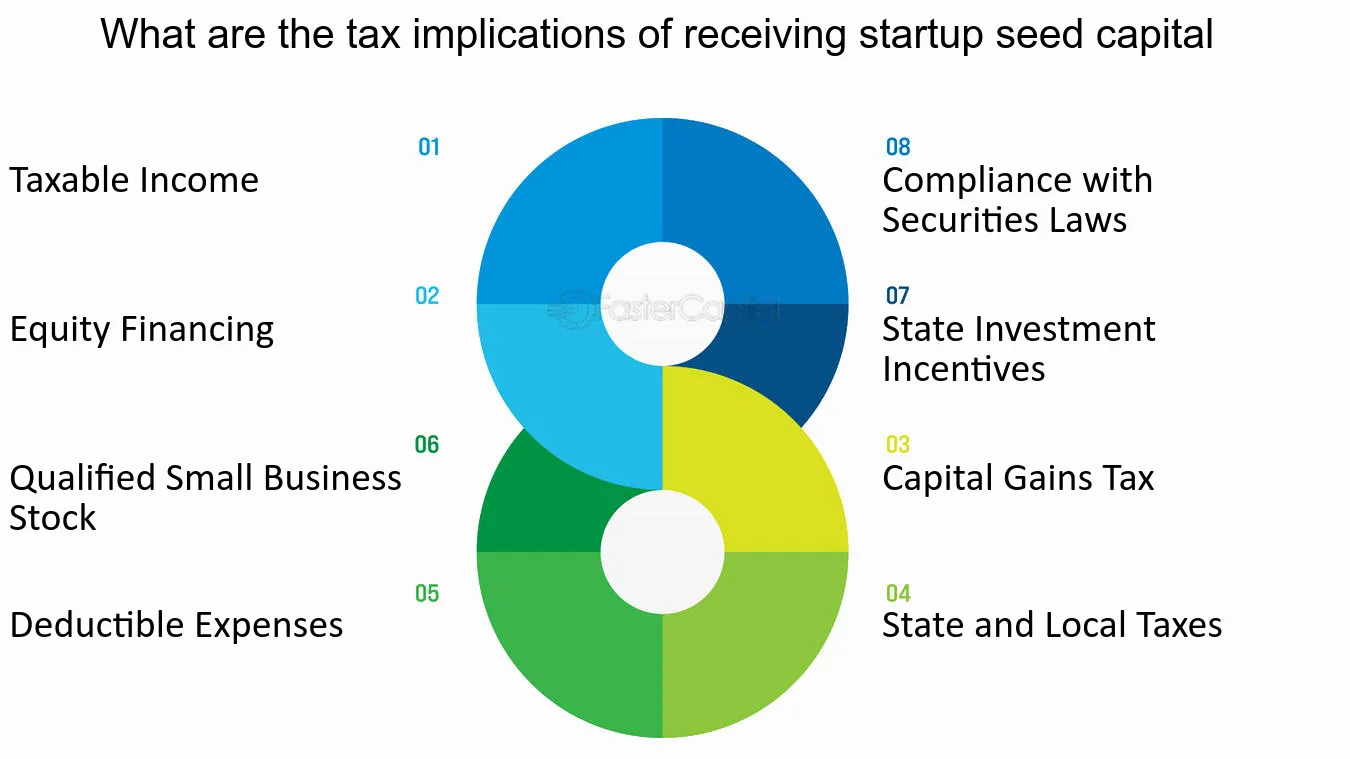
Starting a business is an exhilarating journey filled with innovation, creativity, and the potential for financial success. For many entrepreneurs, securing venture capital (VC) funding is a crucial step toward turning ideas into reality. However, while VC funding can provide the necessary resources to scale, it also introduces a complex array of tax considerations that startups must navigate. In this article, we’ll dive deep into the tax implications of receiving venture capital funding, ensuring you’re prepared to tackle any challenges that may arise as you embark on this exciting venture.
Understanding Venture Capital Funding
Venture capital is a form of private equity financing aimed primarily at early-stage, high-potential growth companies. In exchange for their investment, venture capitalists typically expect equity in the company, often targeting sectors like technology, healthcare, and consumer goods. However, while the financial boost that VC funding provides can be significant, entrepreneurs must also consider how it impacts their overall tax situation.

The Basics of Taxation for Startups
Before discussing venture capital specifics, it is essential to understand the fundamental aspects of taxation that startups face. Most startups are categorized as either C-Corporations or S-Corporations, which have different tax obligations.
-
C-Corporations: These entities are taxed separately from their owners at a corporate tax rate. Any dividends paid to shareholders are also subject to taxation at the individual level, a phenomenon referred to as “double taxation.”
-
S-Corporations: S-Corps are pass-through entities, meaning income is only taxed at the individual level. This can be advantageous, as it avoids double taxation, but there are restrictions on S-Corp eligibility.
Knowing where your startup fits in this tax landscape will help you make informed decisions as you begin to attract venture capital.
Tax Implications of Receiving Venture Capital Funding
1. Equity Dilution and Ownership Structures
When you receive venture capital funding, your ownership stake in the startup typically dilutes. This occurs because venture capitalists require equity in your company in exchange for their investment. As an entrepreneur, it’s essential to understand how this dilution can affect your tax situation.
While a dilution of ownership itself isn’t a taxable event, it can impact your capital gains tax when you eventually sell the company or your shares. The calculations become more complex as your startup grows, and the stakes increase. Understanding the implications of this dilution upfront will help you plan for future tax consequences.
2. Tax Credits and Incentives
Many states and localities offer tax credits and incentives aimed at encouraging startup businesses to establish themselves and grow within their jurisdictions. Depending on where your startup is located, seek out available tax benefits, such as:
-
R&D Tax Credits: If your startup is engaged in the development of new technologies or products, you may qualify for research and development tax credits. These can significantly offset the cost of innovation and lessen your tax burden.
-
Investment Tax Credits: Some areas provide tax incentives for investors who support local businesses. These investments can sometimes be structured to benefit both the investor and the startup, providing further funding opportunities.
Investing time in understanding the incentives available to your startup can lead to significant financial benefits, particularly when coupled with VC funding.
3. Employee Stock Option Plans (ESOP)
Offering equity compensation through employee stock option plans (ESOPs) can be an effective way to attract and retain talent. With venture capital funding, you may seek to establish an ESOP to motivate your employees and build company loyalty.
However, it’s crucial to understand the tax implications of such plans. Generally, employees are not taxed when they receive stock options. Taxes become due when they exercise their options and when they eventually sell the stock. Both situations are subject to different tax rates (ordinary income tax vs. capital gains tax). Consulting with tax professionals can help you design an ESOP that aligns with your startup’s objectives while optimizing for tax efficiency.
4. Corporate Tax Rate Changes
The Tax Cuts and Jobs Act enacted in late 2017 lowered the corporate tax rate for C-Corporations to 21%. This substantial change in the tax landscape means that if your startup is structured as a C-Corporation, it will benefit from a reduced federal tax burden, crucial for startups with limited cash flow.
However, as tax laws continue to evolve, keeping abreast of any changes is crucial. Future tax reforms could impact your startup’s tax rate and overall financial health, especially once you secure VC funding and scale operations.

- Overcome negative thought patterns, reduce stress, and live a worry-free life
- Overthinking is the biggest cause of unhappiness
- Don't get stuck in a never-ending thought loop
- Stay present and keep your mind off things that don't matter, and never will
- Break free of your self-imposed mental prison
5. Carryover Losses
One advantage for startups is the ability to use net operating losses (NOLs) from past years to offset taxable income in future years. If your startup is operating at a loss initially, you may be able to carry those losses forward to reduce taxable income in profitable years later on.
When seeking venture capital funding, it is essential to properly account for these carryover losses, as they can significantly impact your tax position and investment strategy. Understanding how to manage these losses can also be a selling point when negotiating with potential investors.
6. Capital Gains Taxation
As your startup grows and attracts VC funding, you may eventually consider selling your business or going public. If successful, these moves can yield substantial capital gains. Understanding the nature of capital gains taxation is critical as it can impact your overall financial outcome.
There are two types of capital gains – short-term and long-term – and they are taxed at different rates. Short-term capital gains (from the sale of assets held for less than one year) are taxed as ordinary income, while long-term capital gains (from assets held for over one year) benefit from preferential tax rates.
7. Distribution of Profits
Distributions of profits from your startup can have different tax implications depending on your entity type. For C-Corporations, distributions are taxable to shareholders as dividends, which can create the aforementioned double taxation problem.
In contrast, any distributions from an S-Corporation are generally not subject to tax at the corporate level, which can result in potential tax savings for shareholders. Assessing how profits will be distributed as you secure VC funding can help you minimize tax implications.
Creating a Tax Strategy for Your Startup
Given the complexities of tax considerations when receiving venture capital funding, it is advisable to develop a coherent tax strategy. Here are some key components to include:
1. Consult with Tax Professionals
Engaging with tax advisors experienced in startup ventures is crucial. They can provide insights tailored to your business model, helping you make sense of tax regulations, available credits, and optimal structures. A knowledgeable tax planner will assist you in identifying potential liabilities and creating strategies to mitigate them.
2. Keep Accurate Financial Records
Staying organized and meticulous regarding your financial records can streamline tax preparation and ensure you maximize potential benefits. This practice can also prepare you for audits or further scrutiny, which can be common for venture-backed startups.
3. Stay Informed on Tax Changes
Tax regulations are constantly evolving, and keeping updated can be challenging. However, being proactive and informed will empower you to adjust your strategies and maintain compliance.
4. Structure Your Funding Efficiently
Consider the various structures available for venture capital funding and their tax implications. Whether equity financing, convertible notes, or traditional loans, understanding how each option affects your business’s tax obligations can have long-term benefits.
5. Monitor Your Business Growth
As your startup scales and attracts more funding, your tax situation will change. Regularly review and adapt your tax strategy to account for new challenges and opportunities that arise as you push toward further financial growth.
Conclusion
Starting and growing a successful business takes dedication, resilience, and a keen understanding of various factors, including taxation. For entrepreneurs seeking venture capital funding, recognizing the associated tax considerations is vital to crafting a viable business structure.
From understanding equity dilution to capital gains taxation, every facet can influence your startup’s trajectory. By educating yourself on pertinent tax issues and engaging with qualified professionals, you can navigate venture capital funding smartly and efficiently, ensuring your startup thrives in this competitive landscape.
So, if you’re ready to take the leap into the world of venture capital, make sure your tax strategy is as robust as your business plan. With proper planning, your startup can soar to new heights without getting tangled in the complexities of tax obligations along the way. Embrace the journey, and let the adventure begin!


