
Reflation is one of the most discussed macroeconomic forces shaping investment decisions in 2025. After years of aggressive monetary tightening by the Federal Reserve, markets are watching for signs that the U.S. economy is entering a reflationary phase—where growth picks up and inflation stabilizes at moderate, sustainable levels. For investors, understanding reflation is crucial because it changes how equities, bonds, and commodities behave.
Reflation describes the intentional effort by policymakers to stimulate economic activity after a slowdown or deflationary period. It sits between two extremes—deflation and inflation—and often signals the start of a new business cycle.
Reflation reflects a return to healthy inflation levels and renewed economic growth, influencing how investors allocate across sectors and asset classes.
Key Insights
- Reflation occurs when prices and economic activity rise after a period of stagnation or deflation.
- It’s typically driven by monetary easing and fiscal stimulus.
- U.S. reflation cycles often lead to higher corporate earnings and rising commodity prices.
- It can benefit cyclical sectors such as industrials, materials, and financials.
- However, bond yields usually increase, putting pressure on long-duration assets like growth stocks and Treasuries.
What Reflation Really Means
Reflation differs from general inflation. Inflation refers to a persistent rise in prices that may harm purchasing power, while reflation represents a policy-driven recovery aimed at lifting prices back to target levels after deflationary pressure.
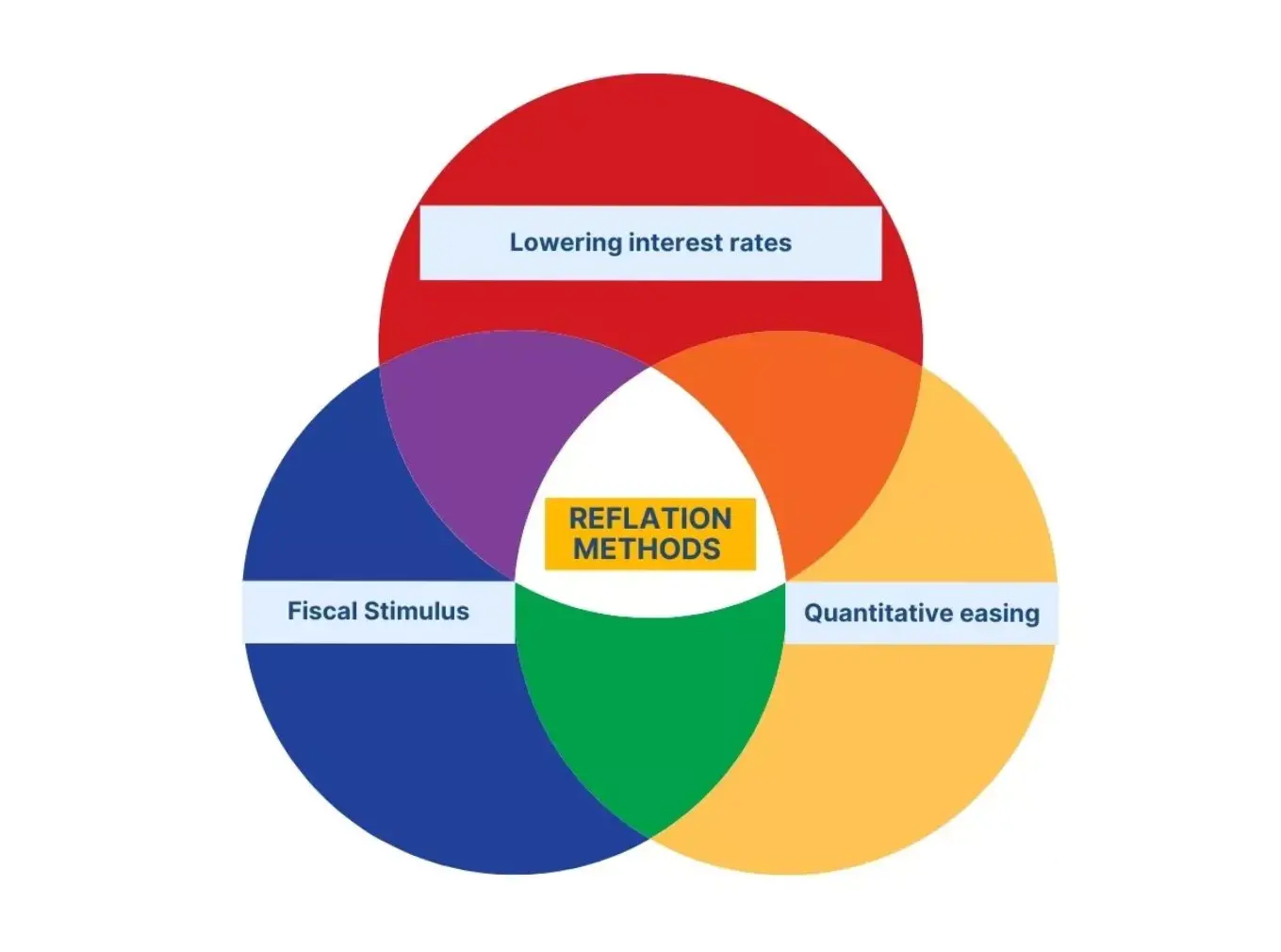
In the U.S., reflation is often associated with Federal Reserve policy shifts—for example, lowering interest rates or expanding liquidity to spur borrowing and spending. Fiscal measures, such as infrastructure spending or tax cuts, can amplify the effect.
The Federal Reserve’s Financial Stability Overview notes that moderate inflation in the 2–2.5% range is generally consistent with stable long-term growth. Reflationary periods typically occur when inflation rises from below target toward that range without sparking runaway price increases.
Historical Examples of Reflation in the U.S.
Reflation is not new to the American economy. Several key moments illustrate how policy and markets interact:
- Post-2008 Financial Crisis: The Fed’s quantitative easing programs and near-zero interest rates triggered a multi-year reflation period, lifting asset prices and corporate profits.
- 2020–2021 Pandemic Response: The combination of fiscal stimulus and monetary expansion created one of the strongest reflationary waves in decades, though it later evolved into broader inflation.
- 2024–2025 Outlook: As the Fed begins cutting rates after taming high inflation, economists from Goldman Sachs and JPMorgan expect moderate reflation to return, supporting growth sectors.
How Reflation Affects Asset Classes
1. Equities
During reflation, corporate revenues and profits rise as consumer demand improves. Historically, cyclical sectors—like energy, industrials, and financials—outperform defensive ones.
Technology stocks may also benefit if interest rates stabilize, improving earnings multiples.
According to Morningstar’s market data, the S&P 500’s average annual return during mild reflation periods (inflation between 2–3%) has exceeded 8%, compared to about 4% during deflationary phases.
2. Bonds
Rising inflation expectations push Treasury yields higher, lowering bond prices. Long-duration bonds are the most sensitive. Investors often shorten duration or rotate toward inflation-protected securities (TIPS) to preserve real returns.
3. Commodities
Reflation tends to lift prices of oil, copper, and agricultural goods. Gold can rise modestly in early reflation stages but often lags once growth accelerates and real yields increase.
4. The Dollar
The U.S. dollar may initially weaken as investors anticipate easier policy but can strengthen again if growth outpaces global peers.
The Federal Reserve’s Role in Reflation
The Fed’s primary tool for managing reflation is interest rate policy. After aggressive rate hikes between 2022 and 2024, the central bank is expected to maintain a “neutral-to-accommodative” stance.
By keeping borrowing costs moderate, the Fed aims to:
- Support employment growth
- Encourage business investment
- Prevent deflationary pressures from re-emerging
The SEC’s guidance on market risk underscores how changes in monetary policy can influence asset volatility, credit spreads, and investor sentiment—core elements of reflationary dynamics.
How Reflation Impacts U.S. Investors
Equity Investors
Reflation generally rewards value and cyclical stocks over defensive or high-duration growth names.
Sectors that historically gain include:
- Energy (rising demand, higher oil prices)
- Financials (steeper yield curve benefits lending margins)
- Industrials (infrastructure and manufacturing expansion)
Investors seeking exposure can consider diversified ETFs such as the Vanguard Value ETF (VTV) or the Industrial Select Sector SPDR (XLI).
Bond Investors
Reflation poses challenges for fixed-income investors. Long-term Treasuries and corporate bonds lose value as yields rise. To mitigate risk, many rotate into short-duration instruments or inflation-linked securities like iShares TIPS Bond ETF (TIP).
Commodities and Alternatives
Commodities offer a hedge against inflationary pressure and benefit from increased demand. Exposure through diversified funds such as the Invesco DB Commodity Index Tracking Fund (DBC) can provide balance in reflationary environments.
Reflation and Portfolio Strategy
To navigate a reflationary environment, U.S. investors should:
- Rebalance portfolios toward cyclical sectors and real assets.
- Shorten bond duration and consider inflation-protected securities.
- Increase international diversification to capture regions earlier in the cycle.
- Monitor policy signals from the Federal Reserve and Treasury Department.
For investors new to active portfolio positioning, our How to Invest in U.S. Stocks: Beginner’s 2025 Guide provides an accessible framework for building balanced exposure during changing macro conditions.
Risks and Misinterpretations
While reflation sounds positive, it can also trigger volatility:
- Premature optimism can lead to asset bubbles if markets price in growth too quickly.
- Policy missteps—such as excessive stimulus—can overheat the economy.
- Supply shocks (energy or commodities) can shift reflation into stagflation.
Understanding these dynamics helps investors manage timing risk and avoid overexposure to sectors that might reverse once inflation expectations rise too sharply.
Measuring Reflation in Real Time
Analysts use several U.S. indicators to track reflation:
- CPI (Consumer Price Index) — published monthly by the Bureau of Labor Statistics.
- PCE Index — the Fed’s preferred inflation gauge.
- 10-Year Treasury Yield — rising yields often confirm reflation expectations.
- Breakeven Inflation Rate — the difference between nominal and TIPS yields.
As Morningstar notes, combining these data points with corporate earnings trends helps identify when markets transition from disinflation to reflation.
Example: 2025 U.S. Outlook
The Federal Reserve’s September 2025 report projected real GDP growth of 2.1% and inflation near 2.4%—a classic reflation scenario. Energy and industrial production are rebounding, and household savings rates have normalized after pandemic-era extremes.
Goldman Sachs analysts forecast the S&P 500 could reach new highs if reflation remains controlled and wage growth continues without reigniting inflationary pressures.
Conclusion
Reflation marks a return to equilibrium after economic tightening, signaling renewed opportunity for long-term investors. For U.S. portfolios, it’s a shift that rewards active management, cyclical rotation, and diversification.
“Reflation is not the return of inflation—it’s the return of confidence,” as one Federal Reserve economist put it in 2025.
Understanding reflation’s mechanics helps investors position intelligently across equities, bonds, and commodities—balancing growth potential with inflation awareness.
The SEC’s market risk brief and the Federal Reserve’s financial stability assessments both emphasize that reflation is a delicate phase: necessary for expansion but easily destabilized by excessive liquidity or fiscal overreach.
Disclaimer:
The information in this article is for educational and informational purposes only and does not constitute financial advice. Always consult a qualified financial advisor before making investment decisions. Past performance is not indicative of future results, and all investments carry risk. TheMarketCapitalist.com assumes no responsibility for losses resulting from use of this information.


