
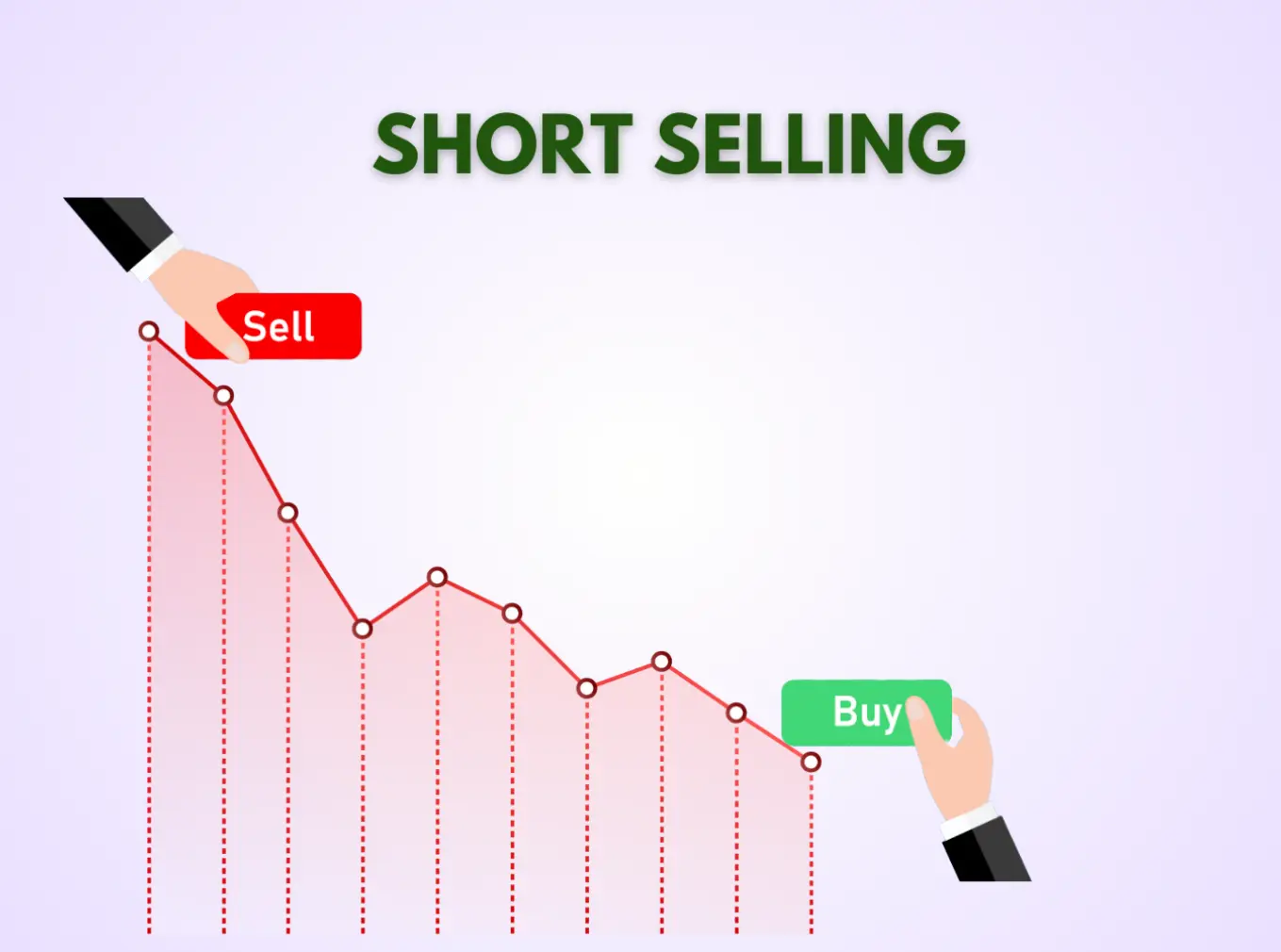
Short selling—often called shorting—is a trading strategy that profits from a decline in a stock’s price. In the U.S. financial markets, it’s both powerful and controversial. While it helps maintain price efficiency and expose overvalued companies, it also carries unlimited risk for investors who misjudge market direction.
In 2025, as volatility returns to U.S. equities following Federal Reserve rate changes and shifting tech valuations, understanding how short selling works is critical for traders, portfolio managers, and retail investors alike.
Short selling allows traders to profit from falling prices—but exposes them to unlimited losses if prices rise instead.
Key Insights
- Short selling means borrowing shares, selling them, and later buying them back at (ideally) a lower price.
- It is regulated by the U.S. Securities and Exchange Commission (SEC) and subject to strict margin requirements.
- Short interest data can reveal market sentiment about specific stocks.
- Short squeezes can occur when rising prices force short sellers to cover positions quickly.
- Used carefully, shorting can hedge portfolios against market downturns.
How Short Selling Works
Short selling involves three key steps:
- Borrow Shares: The trader borrows shares of a stock from a broker.
- Sell at Market Price: The shares are sold immediately in the open market.
- Repurchase (Cover) Later: When the stock’s price falls, the trader buys back the same number of shares and returns them to the lender, pocketing the difference.
Example:
A trader shorts 100 shares of Tesla at $250 per share. If Tesla drops to $200, the trader buys back the shares and earns $5,000 in profit (before fees).
If the stock instead rises to $300, the trader loses $5,000—and the potential loss is theoretically unlimited if the price keeps climbing.
The Mechanics Behind Short Selling
Short selling requires a margin account, regulated by the SEC’s Regulation T, which mandates minimum equity requirements. Typically, brokers require 150% of the short position’s value as collateral.
Borrowing costs and margin interest rates depend on:
- The stock’s availability (hard-to-borrow shares are more expensive).
- Market volatility and borrow demand.
- The broker’s internal risk model.
In the U.S., margin rates are linked to the Federal Reserve’s benchmark rate, meaning borrowing costs rise during tightening cycles.
Short Selling in Practice: Example Breakdown
| Action | Share Price | Transaction | Result |
|---|---|---|---|
| Borrow & Sell | $250 | Sell 100 shares | +$25,000 cash |
| Repurchase | $200 | Buy 100 shares | -$20,000 |
| Return to Broker | — | — | Profit: $5,000 |
If the stock rises instead to $300 before covering:
| Borrow & Sell | $250 | Sell 100 shares | +$25,000 |
| Repurchase | $300 | Buy 100 shares | -$30,000 |
| Loss | — | — | -$5,000 |
The Role of Short Selling in Market Efficiency
According to the Federal Reserve’s Financial Stability Overview, short selling plays a stabilizing role in financial markets by:
- Exposing overvalued securities.
- Enhancing liquidity.
- Enabling price discovery.
The SEC permits short selling under Regulation SHO but enforces “locate” and “close-out” requirements to prevent naked shorting—selling shares that have not been properly borrowed.
However, regulators monitor large short positions to ensure market integrity, particularly during crises when shorting can amplify panic.
What Is a Short Squeeze?
A short squeeze occurs when a heavily shorted stock’s price rises rapidly, forcing short sellers to buy back shares to cover losses. This sudden buying pressure can send prices sharply higher.
Recent U.S. examples:
- GameStop (GME) in 2021, when retail traders on Reddit’s r/WallStreetBets triggered massive short covering.
- AMC Entertainment (AMC), which rose over 800% in weeks due to speculative short squeezes.
- Tesla (TSLA), which burned billions in short positions before becoming one of the market’s most valuable companies.
These cases illustrate that short selling, while rational in theory, can spiral unpredictably when crowd behavior and social media sentiment collide.
Short Interest and Market Sentiment
Short interest measures the percentage of a company’s float that has been sold short.
High short interest (>20%) suggests bearish sentiment, while low levels (<5%) indicate confidence.
Data is published twice monthly by the Financial Industry Regulatory Authority (FINRA) and tracked by services like Morningstar and MarketWatch.
Investors often use short interest ratios to anticipate potential squeezes or trend reversals.
Advantages of Short Selling
- Profit from Declines: Enables gains when stock prices fall.
- Hedging Tool: Offsets long exposure in turbulent markets.
- Price Discovery: Helps correct overvalued stocks.
- Portfolio Diversification: Reduces correlation by including market-neutral strategies.
Hedge funds commonly employ short selling within long/short equity strategies, where long positions capture upside while shorts protect against downturns.
Risks of Short Selling
- Unlimited Loss Potential: Unlike traditional investing, losses can exceed initial capital.
- Margin Calls: Rising prices can trigger forced liquidation.
- Borrowing Costs: Fees can erode profits, especially in illiquid stocks.
- Regulatory Halts: Temporary bans or uptick rules can disrupt execution.
- Short Squeezes: Rapid reversals can cause steep, immediate losses.
The SEC’s Market Risk Guidance warns retail traders against shorting without understanding margin requirements and liquidity risks.
Short Selling vs. Put Options
| Strategy | Capital Requirement | Maximum Loss | Expiration |
|---|---|---|---|
| Short Selling | High (margin-based) | Unlimited | None |
| Buying Put Options | Limited (option premium) | Premium paid | Fixed date |
Many investors prefer put options as a less risky alternative for betting on price declines. However, short selling remains favored by institutional players for its direct exposure and flexibility.
Regulatory Framework in the U.S.
Short selling is governed by:
- SEC Regulation SHO — Ensures short locates and prompt delivery.
- FINRA Rule 4560 — Mandates short position reporting.
- The Uptick Rule (Rule 201) — Restricts new short sales when a stock drops more than 10% in one day.
These safeguards aim to maintain orderly markets while preserving short selling’s legitimate role.
Strategic Uses of Short Selling
1. Hedging Portfolios
Fund managers short index ETFs or overvalued stocks to offset long exposure in the same sector.
Example: Shorting SPDR S&P 500 ETF (SPY) to hedge gains in high-beta growth names.
2. Relative Value Trades
Pairs trading involves going long one stock and short another within the same industry to profit from valuation gaps.
3. Event-Driven Shorting
Traders short companies facing legal, regulatory, or earnings pressures—like weak guidance or accounting issues.
Understanding market risk metrics such as beta (see Understanding the Beta Coefficient: How U.S. Investors Measure Market Risk and Volatility) helps calibrate how aggressive short exposure should be.
Example: 2025 Short Activity Snapshot
| Stock | Short Interest (%) | Notes |
|---|---|---|
| Tesla (TSLA) | 3.5 | Persistent short pressure from valuation concerns |
| Rivian (RIVN) | 14.8 | High borrow cost, speculative risk |
| AMC (AMC) | 18.2 | Ongoing meme-trader volatility |
| Bank of America (BAC) | 1.2 | Low short interest, stable fundamentals |
Data: FINRA Short Interest Report, September 2025.
Conclusion
Short selling is a legitimate, sophisticated trading mechanism that contributes to market balance—but it’s not for the unprepared.
Its potential for high reward comes with commensurate risk, especially in volatile U.S. markets driven by momentum and macro policy shifts.
“Markets can remain irrational longer than you can remain solvent.” — John Maynard Keynes
Understanding the mechanics, regulations, and behavioral dynamics behind short selling allows investors to use it responsibly—as a hedge, a tactical play, or a warning signal when sentiment turns.
The SEC’s official market risk resources and the Federal Reserve’s stability analyses remain essential reading for anyone using leverage or short exposure in modern U.S. markets.
Disclaimer:
The information in this article is for educational and informational purposes only and does not constitute financial advice. Always consult a qualified financial advisor before making investment decisions. Past performance is not indicative of future results, and all investments carry risk. TheMarketCapitalist.com assumes no responsibility for losses resulting from use of this information.


