
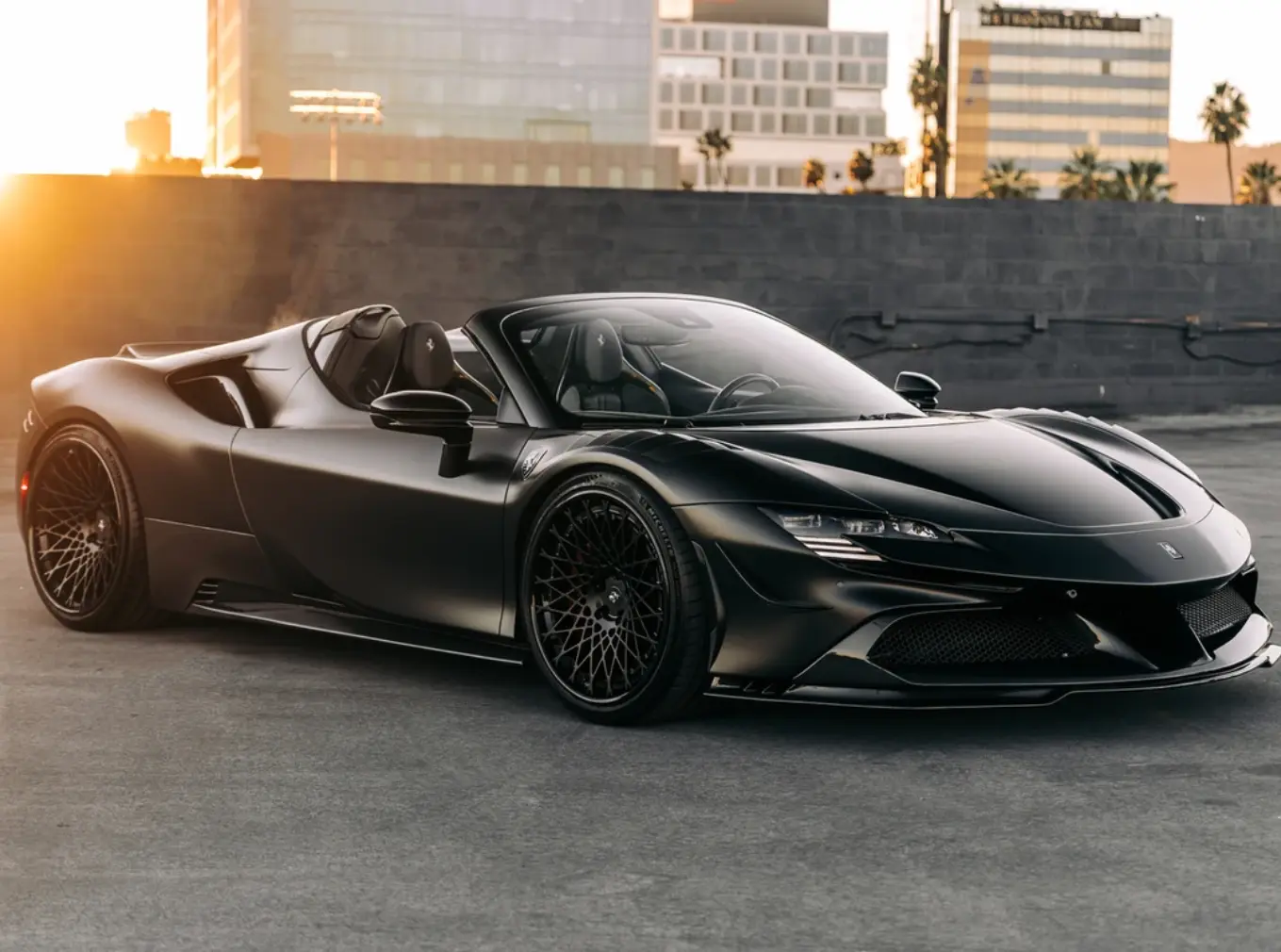
Ferrari’s stock has fallen sharply—about 15% from its all-time high—after a mix of softer luxury demand in Europe and cautious guidance from management. For long-term investors, the question isn’t whether the stock will bounce in a few weeks, but whether Ferrari (NYSE: RACE) still deserves a place in a disciplined portfolio.
This analysis examines valuation, financial strength, growth prospects, and the risks behind the pullback.
Key Takeaways
- Ferrari’s stock declined ~15% in Q3 2025 but fundamentals remain strong.
- Margins above 25% and limited production support pricing power.
- Electrification program and new models will sustain growth through 2030.
- Current valuation near 38× earnings is lower than its 2023 peak.
- Attractive long-term buy for patient investors seeking premium exposure.
Ferrari’s Q3 2025 results showed slightly lower deliveries in Europe and a strong euro hurting export profits. Revenue reached €1.6 billion, up just 2% year-over-year, while net income dipped 4%.
Analysts also reacted to rising R&D spending tied to its upcoming hybrid and full-electric lineup. Short-term traders saw margin compression; long-term investors should view it as reinvestment for future dominance.
“Ferrari doesn’t chase volume—it chases legacy.” — Luca Cordero di Montezemolo
The Business Model Remains Exceptional
Ferrari’s model differs from any other automaker: intentionally limited supply keeps resale values high and maintains luxury exclusivity. Even with slower macro conditions, waiting lists stretch up to 18 months for most models.
- EBITDA margin: 38% (vs BMW’s 18% and Porsche’s 27%)
- Free cash flow margin: 20%+
- Net debt/EBITDA ratio: below 1.0, indicating financial strength
Ferrari earns money not just from cars but also from racing, brand licensing, and personalization—creating multiple income streams with high margins.
Electrification Strategy
Ferrari plans to launch its first full-electric supercar in 2026 at its new facility in Maranello. Hybrids already make up over 40% of sales.
While competitors race to electrify entire fleets, Ferrari’s gradual transition preserves sound economics. Management targets carbon neutrality by 2030 without compromising performance or exclusivity.
Valuation After the Drop
| Metric (2025 E) | Ferrari (RACE) | Porsche AG (P911) | Aston Martin (AML) |
|---|---|---|---|
| P/E Ratio | 38× | 24× | 16× |
| Operating Margin | 26% | 18% | 9% |
| Debt/Equity | 65% | 115% | 180% |
| 5-Year EPS Growth (Est.) | 10–12% | 7% | 5% |
Ferrari’s valuation premium remains justified by profitability, brand strength, and low cyclicality. The 15% correction merely resets the multiple closer to historical averages.
Ferrari pays an annual dividend yielding about 0.8%, modest but sustainable. In 2024 it also executed €500 million in buybacks. With stable free cash flow above €1.2 billion, management has room to keep rewarding shareholders while funding R&D.
Market Context
Luxury demand remains healthy in the U.S. and Middle East but weaker in Europe. Meanwhile, U.S. interest rates near 5% temporarily weigh on discretionary spending.
However, the top 1% of global consumers—Ferrari’s core base—tends to be less rate-sensitive. Historical data show that even during recessions, Ferrari deliveries drop far less than mass-market automakers.
Analyst Outlook
- Morgan Stanley: “Buy,” target $410 (current ≈ $355).
- Goldman Sachs: “Outperform,” sees 20% upside on hybrid margin recovery.
- UBS: “Neutral,” awaiting clarity on EV rollout costs.
Consensus 12-month price target: $395, implying +12% upside from current levels.
Investment Case
- Brand moat: Ferrari’s heritage and exclusivity create demand that no marketing can replicate.
- High margins: Best in the industry, insulating profits from volume swings.
- Electrification optionality: Transition plan protects margins while expanding customer reach.
- Limited cyclicality: Ultra-luxury buyers remain active even in slowdowns.
- Lower entry point: Recent correction offers rare opportunity to accumulate.
Example Return Scenario
Assuming 10% annual EPS growth and a constant 38× P/E:
| Year | EPS (USD) | Projected Price |
|---|---|---|
| 2025 | 9.3 | $355 (current) |
| 2026 | 10.2 | $387 |
| 2027 | 11.3 | $430 |
| 2028 | 12.4 | $472 |
| 2029 | 13.7 | $520 |
Five-year potential return: ≈46%, excluding dividends.
Risks
- Execution risk in EV development could affect margins.
- Luxury demand slowdown in China or Europe.
- Currency fluctuations (euro vs USD).
- Regulatory costs for emissions and battery sourcing.
Despite these risks, Ferrari’s scarcity model limits downside volatility relative to peers.
FAQ
Is Ferrari still a growth stock?
Yes. Earnings and cash flow are expanding at high single digits through 2030.
Will the electric Ferrari hurt its brand image?
Unlikely. Management emphasizes performance first; early prototypes have met enthusiast expectations.
Does Ferrari face EV competition from Tesla or Rimac?
Not directly. Ferrari’s market targets ultra-high-net-worth customers seeking exclusivity, not mass EV buyers.
What’s a good entry price?
Many analysts consider $340–$350 an attractive long-term entry zone.
Conclusion
Ferrari’s 15% decline reflects short-term sentiment, not structural weakness. With unmatched profitability, disciplined supply, and strong product innovation, Ferrari remains a unique long-term compounder in the luxury sector.
For investors seeking stable growth and brand-driven resilience, Ferrari stock after its pullback looks like a calculated buy—not a gamble.
Related reading on TheMarketCapitalist.com
- Luxury Stocks in 2025: How to Invest in Timeless Brands
- EV Transition and Profit Margins: Winners and Losers in the Auto Industry
- How to Value Iconic Brands: The Economics of Scarcity
External references:
- SEC Filings – Ferrari N.V.
- European Automobile Manufacturers Association (ACEA)
- Goldman Sachs Equity Research – Luxury Outlook 2025
Disclaimer:
The information contained in this article is provided for educational and informational purposes only and does not constitute financial, investment, or other advice. Before making any investment decisions, readers should consult a qualified financial advisor. Past performance is not indicative of future results, and all investments carry risk. TheMarketCapitalist.com is not responsible for any losses resulting from the use of the information provided.


