
The global investment map is shifting, and the United States is now the gravitational center. After years of fragmented supply chains, geopolitical instability, and competition for technological dominance, America in 2025 is attracting capital at a scale not seen since the post-war industrial boom.
This isn’t just a trend—it’s a structural realignment. From semiconductors to clean energy, from AI infrastructure to advanced manufacturing, the U.S. is pulling production, talent, and investment back within its borders. The result is a new geography of global capital flows where America leads, and the rest of the world adapts.
The Drivers Behind America’s New Investment Dominance
Three forces are behind this shift:
1. Strategic Re-industrialization
The U.S. has poured billions into reshoring key industries. Incentives for semiconductor fabrication, battery manufacturing, renewable energy, and grid infrastructure have accelerated domestic production. Companies that once relied heavily on overseas facilities now see the U.S. as a strategic necessity.
2. Geopolitical fragmentation
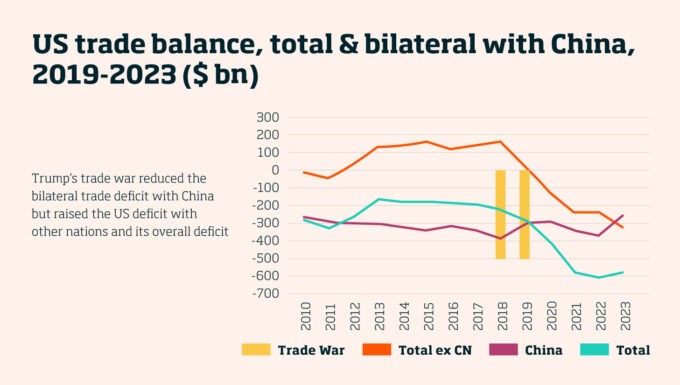
Tensions in global trade have pushed corporations to move operations closer to political stability and legal predictability. America’s combination of deep capital markets, supply-chain security, and legal protections makes it the preferred destination for long-term investments.
3. Technological concentration
Artificial intelligence, cloud computing, robotics, aerospace, and biotech are dominated by U.S. companies. When innovation clusters geographically, capital follows. In 2025, the bulk of high-value R&D spending is flowing into U.S. hubs.
The New Investment Corridors Inside the United States
America’s internal investment geography is changing too. Three regions are becoming the backbone of this transformation:
The Silicon Crescent
Stretching from California to the Pacific Northwest, this region remains the nucleus of AI, semiconductors, and cloud infrastructure. Large data-center expansions and AI-hardware development continue to anchor the U.S. technology lead.
The Battery Belt
Running through the Midwest and Southeast, this corridor hosts most of the country’s battery factories, EV manufacturing plants, and critical-materials processing centers. Government incentives and proximity to auto supply chains have turned these states into industrial powerhouses.
The Clean Energy Corridor
Texas, New Mexico, and Arizona dominate the shift to solar, wind, and hydrogen production. These states are also home to massive transmission-line projects and energy storage facilities designed to support national grid modernization.
Where Foreign Capital Is Going
International investors are following America’s domestic shift. Sovereign wealth funds, pension funds, and multinationals are increasing allocations to:
- U.S. infrastructure projects
- Renewable energy assets
- Advanced manufacturing sites
- AI and semiconductor supply chains
- Commercial real estate tied to logistics and industrial growth
In previous decades, capital flowed heavily into emerging markets. In 2025, the flow is reversing—back to stability, innovation, and security.
Why the U.S. Is Pulling Ahead of Europe and Asia
Regulatory flexibility
The U.S. regulatory framework, while complex, is faster and more business-friendly for large-scale projects than many European counterparts.
Energy security
With abundant natural gas production and rapidly expanding renewables, America offers one of the most stable energy environments globally.
Talent concentration
U.S. universities, research institutions, and technology clusters continue to attract global talent, reinforcing the innovation cycle.
Capital depth
The U.S. financial system remains unmatched in size, liquidity, and ability to fund high-risk, high-reward ventures.
Risks Investors Should Still Consider
No macro shift is without challenges.
High valuations
Some sectors—especially AI, cloud, and advanced manufacturing—are priced for perfection. Investors must be selective.
Political polarization
Policy changes can alter tax incentives, subsidies, or regulatory frameworks, affecting long-term projects.
Infrastructure bottlenecks
Demand for energy transmission, skilled labor, and permitting capacity sometimes outpaces supply, delaying execution.
Regional inequalities
Some states attract massive investment while others lag, creating imbalanced economic growth.
Despite these risks, the U.S. remains the most compelling long-term destination for global capital.
How Investors Can Position Themselves in 2025
Focus on real assets
Infrastructure, energy, and logistics assets offer stable returns and benefit from federal investment programs.
Prioritize sectors with structural tailwinds
Semiconductors, clean energy, robotics, aerospace, and cybersecurity will shape America’s next decade.
Look beyond the coasts
Midwest and Southern states offer lower costs, stronger incentives, and faster growth in manufacturing and energy projects.
Mix defensive stability with growth
A blend of high-quality U.S. equities, mid-duration Treasuries, and real assets provides both resilience and upside.
Long-Term Implications
America’s dominance in global investment is not a short-term phenomenon. It reflects structural changes in energy, technology, geopolitics, and supply chains. Over the next decade:
- More manufacturing will return to U.S. soil
- R&D hubs will deepen around AI and semiconductors
- Infrastructure investment will reshape regional economies
- Global capital flows will increasingly favor political stability over low-cost labor
The real winners will be investors who spot these shifts early and position themselves accordingly.
Conclusion
The United States is rewriting the geography of global investment. Supply chains are moving home, innovation is clustering locally, and foreign capital is following the momentum. For investors, this shift creates one of the most attractive environments in years—an opportunity to align portfolios with the world’s most dynamic economic engine.
The next wave of global growth may not be evenly distributed, but one thing is clear: in 2025, America is where the future is being built.
Disclaimer:
The information contained in this article is provided for educational and informational purposes only and does not constitute financial, investment, or other advice. Before making any investment decisions, readers should consult a qualified financial advisor. Past performance is not indicative of future results, and all investments carry risk. TheMarketCapitalist.com is not responsible for any losses resulting from the use of the information provided.


