
Meta’s new personal AI agent marks a shift from AI that answers questions to AI that executes tasks — a trend that could reshape the enterprise software market
Meta has taken another step in the race to make artificial intelligence less of a chatbot and more of an autonomous digital assistant.
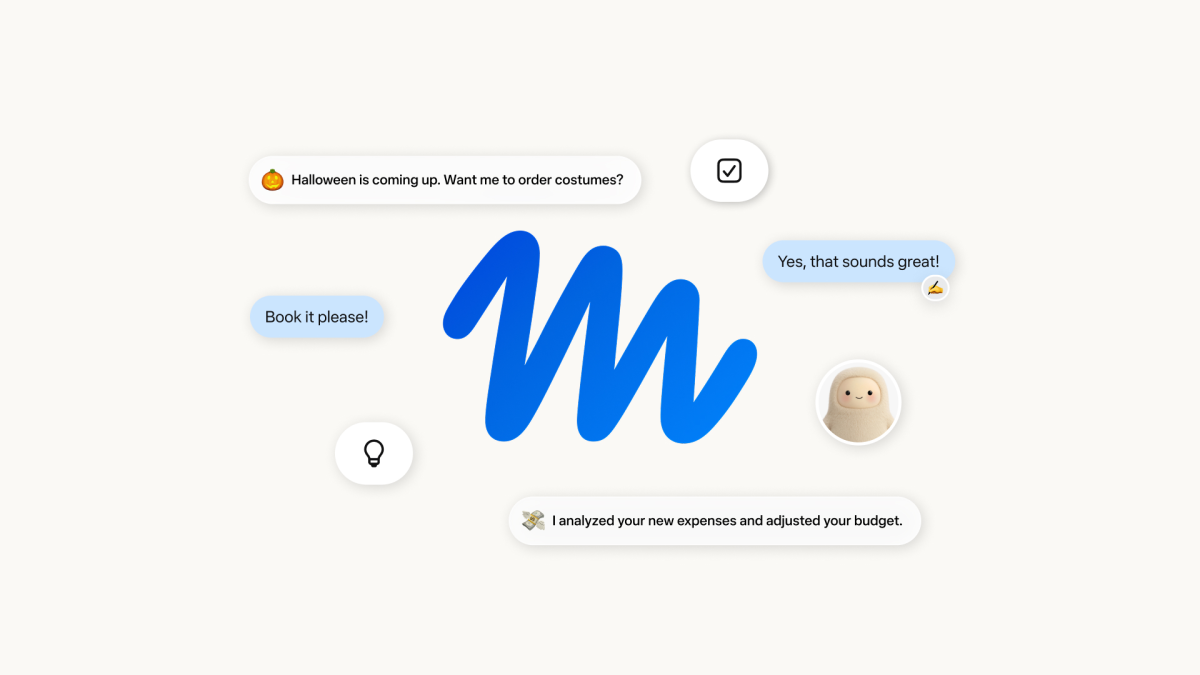
The company has launched Muse, a new personal AI agent designed to do more than generate answers. The system can help users manage everyday tasks, interact with other applications and, with the appropriate permissions, take actions on their behalf. Meta says Muse is built around the idea of a personal AI that can proactively help people achieve their goals rather than simply respond to individual prompts.
The launch, initially focused on users in the US, is significant for a reason that extends beyond Meta’s consumer strategy: AI agents are emerging as the next battleground for the technology industry.
The distinction is important.
Generative AI has largely been built around a question-and-answer model. Users ask ChatGPT or another AI system to write something, analyze information or produce an idea. Agentic AI introduces another layer: the system can plan a sequence of actions, interact with software and potentially complete a task on the user’s behalf.
Muse is designed around precisely that model. According to Meta, the agent can assist with activities including planning, shopping and managing schedules, while other reports on the launch point to capabilities such as sending emails, booking travel and making payments.
The enterprise opportunity behind the agent race
The consumer-facing launch also highlights a much larger opportunity for the enterprise software market.
If AI agents are to become genuinely useful inside large companies, they will have to do considerably more than generate text. They will need access to corporate knowledge, understand internal processes, operate across applications and respect the rules governing approvals, compliance and sensitive information.
That is where the emerging AI-agent market starts to overlap with enterprise workflow software.
European MarTech company Contents is building in this direction, with a platform designed to orchestrate AI agents, enterprise knowledge and approval workflows for large organizations.
The company says its technology is aimed at turning corporate information into governed business outcomes at scale, supporting use cases ranging from multi-market product launches to regulatory documentation. Contents operates in more than 25 languages and has reported 100% retention among its enterprise customers.
The underlying problem is increasingly clear: getting an AI model to produce a good answer is becoming easier. Getting AI to operate safely inside a complex organization is considerably harder.
From AI models to AI infrastructure
This distinction could become increasingly important as companies move from AI experimentation to deployment.
Meta’s Muse illustrates the consumer version of the trend. The agent can potentially interact with a user’s digital environment, but that capability also creates new questions around privacy, permissions, reliability and security.
Meta has built a separate safety system called Sentinel to mediate Muse’s access to the internet and determine whether an action should be allowed, blocked or require user confirmation. The company has also emphasized a secure virtual-machine architecture for the agent.
The challenges are not theoretical. Reuters reported that internal testing identified security and reliability issues before Meta’s launch, underscoring the difficulty of giving an AI system meaningful autonomy while maintaining control over what it can access and do.
For businesses, the stakes are even higher.
An enterprise AI agent cannot simply be allowed to act. It needs to know which information it can access, which actions it can take, when a human must intervene and which approvals are required before an action is executed.
That creates a new software layer between the underlying AI models and the business processes where those models are deployed.
Why this matters for startups
The rise of agents could create an opportunity for a new generation of startups focused less on building the next foundation model and more on making AI usable inside organizations.
Contents is one example of this approach. Founded in 2021 by Massimiliano Squillace, the company has raised $25 million from investors including Thomson Reuters Ventures, Alkemia Capital, SparkLabs and Qatar Development Bank. It has offices in Milan, Madrid and Paris, with an operational hub in Doha.
The company has also recently strengthened its management team, appointing Danilo Manfredi as General Manager and Gaia Lorenzato Rovera as Head of Sales as it prepares for further international expansion across Europe, the GCC and eventually the US.
The timing is notable.
As companies increasingly experiment with autonomous AI, the competitive advantage may move away from whoever has the smartest model toward whoever can connect intelligence to real-world workflows without losing control.
The next AI platform battle
Meta’s Muse is therefore more than another AI assistant launch. It is a signal of where the industry may be heading.
The first phase of generative AI was about getting machines to generate.
The next phase is about getting them to act.
For consumers, that could mean an AI that books a trip, manages a calendar or handles an online purchase. For enterprises, the equivalent could be an agent that launches a campaign across several markets, prepares regulatory documentation, coordinates approvals and executes routine processes across multiple systems.
The winners of this next phase may not necessarily be the companies with the largest language models.
They could be the companies that solve the harder problem: how to make AI autonomous enough to create value, but controlled enough to be trusted.


