
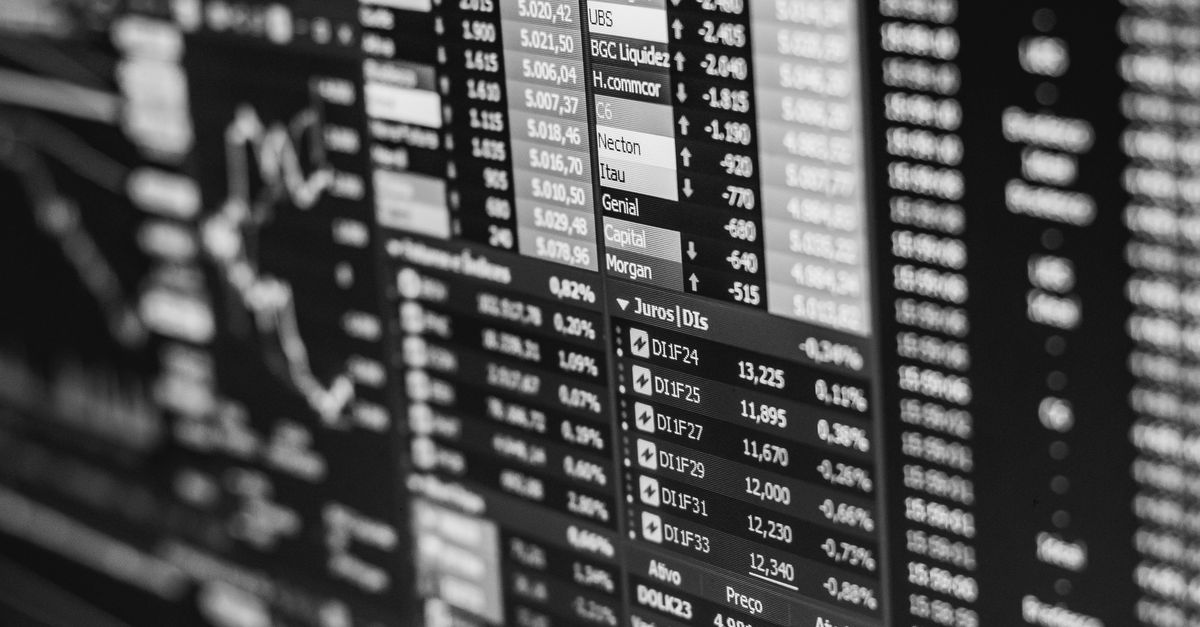
To answer how does the stock market work? start with a simple idea: a stock represents an ownership interest in a company. Investors may seek returns through price appreciation and dividends, while common stock may also provide voting rights. The Investor.gov stock FAQ explains both the potential benefits and the risk that stock prices can decline.
Everything after that is market infrastructure. When an investor taps Buy in a brokerage account, the order is reviewed, routed to a trading venue, matched with a seller if possible, and eventually settled. Understanding that sequence makes stock quotes, order types, fees, and investment risk much easier to evaluate.
What Is the Stock Market?
The stock market is not one building or a single website. It is a network of exchanges, brokers, alternative trading systems, wholesale broker-dealers, companies, and investors.
An exchange is a marketplace where securities are bought and sold. A stock quote generally includes two key prices:
- Bid: The highest price a buyer is currently willing to pay.
- Ask or offer: The lowest price a seller is currently willing to accept.
The difference between those prices is called the bid-ask spread. For example, suppose a hypothetical quote shows a $49.95 bid and a $50.05 ask. If 100 shares could be bought at the ask and immediately sold at the bid, the difference would be $10, calculated as 100 × $0.10. That example illustrates the spread; it is not a current market quote and does not include commissions or price changes.
An online brokerage is an entry point to the market, not necessarily the place where a trade is executed. An order submitted through a broker may be sent to an exchange, an alternative trading system, or a wholesale broker-dealer, as described in FINRA’s overview of the online stock-trading lifecycle and Investor.gov’s guide to market participants.
How Does the Stock Market Work in Practice?
A typical stock trade follows several steps.
1. The investor chooses a security and brokerage account
The investor decides what to buy or sell, how many shares to trade, and which brokerage account to use. Brokers generally accept orders and may provide account services or investment recommendations. They may also charge commissions or other fees, so investors should review disclosures and verify a firm’s registration status. Investor.gov’s broker guide outlines these considerations.
Before buying an individual stock, an investor can review the company’s available information. Public companies generally provide periodic disclosures through filings with the Securities and Exchange Commission. Those filings do not guarantee a particular outcome, but they are more informative than relying only on a ticker symbol or a short-term price move.
2. The investor submits an order
The order specifies whether the investor wants to buy or sell, the number of shares, and the order type. The two basic order types beginners encounter most often are market orders and limit orders.
3. The broker reviews and routes the order
The broker processes the order and determines where it can be executed. Depending on the security and the order, the destination may be an exchange, an alternative trading system, or a wholesale broker-dealer. The price and likelihood of execution can depend on the available buyers and sellers at that moment.
4. The trade is executed—or remains unfilled
A trade executes when the order finds a matching counterparty under the order’s conditions. A market order seeks execution at the best available price, but the final price is not guaranteed. A limit order provides more price control but may not execute at all.
5. The transaction settles
Execution and settlement are different events. U.S. securities transactions generally settle on a T+1 cycle, meaning settlement occurs one business day after the trade date. Investor.gov’s markets glossary provides the general settlement definition. Settlement completes the transfer of the securities and payment after the trade has been executed.
Market Orders vs. Limit Orders
The choice between a market order and a limit order depends on whether execution or price control matters more for the particular trade.
| Order type | Instruction | Main uncertainty |
|---|---|---|
| Market order | Buy or sell at the best available price | The execution price is not guaranteed |
| Limit order | Buy only at a specified maximum price, or sell at a specified minimum price | The order may not execute |
For a volatile or thinly traded stock, the best available price can change between order submission and execution. A limit order addresses that price concern, but accepting a price ceiling or floor can mean waiting indefinitely or receiving no fill. Investor.gov’s order-types bulletin explains these trade-offs.
Neither order type guarantees that the investment will perform well after execution. An order instruction controls how a trade is attempted; it does not control the company’s future results or the market’s next price.
How Stock Prices Produce Gains and Losses
Stock prices change as buying and selling interest changes. The bid and ask describe available prices in the market at a particular moment, not a permanent valuation or a promise about where the stock will trade next.
Consider a purely hypothetical example:
- An investor buys 20 shares at $50, for a total position of $1,000.
- If the stock later trades at $55, the position is worth $1,100, representing a $100 gain before costs if the investor could sell at that price.
- If it instead trades at $45, the position is worth $900, representing a $100 loss before costs.
The basic calculation is 20 shares × the $5 price change. Dividends, when paid, can add another source of return. However, stocks can lose value, and investors can lose money. Common shareholders generally have the lowest priority if a company is liquidated, which is another reason ownership of common stock carries risk. These points are addressed in Investor.gov’s stock information.
Individual Stocks and Diversification
Owning one stock creates concentrated exposure to one company. A diversified portfolio spreads exposure across multiple investments or market segments. Diversification cannot eliminate investment risk, but it can reduce the effect of a decline in any one investment or segment, according to Investor.gov’s investing overview.
| Approach | Primary exposure | Potential benefit | Limitation |
|---|---|---|---|
| Single-stock position | One company | Direct exposure to that company and, for common stock, possible voting rights and dividends | A decline in one company can have a large effect on the position |
| Diversified holdings | Multiple investments or market segments | A decline in one holding may have less effect on the overall portfolio | Diversification does not eliminate broader investment risk |
Diversification is not the same as a guarantee of positive returns. A portfolio can contain several holdings and still be exposed to the same industry, economic factor, or market decline. The key question is not simply how many securities an investor owns, but how different those exposures are.
What Beginners Should Check Before Trading
A practical checklist can help connect market mechanics to a sensible investing process:
- Understand the security. Know whether the purchase is an individual company ownership interest and what rights or potential sources of return may apply.
- Review the brokerage relationship. Check the firm’s registration, disclosures, services, and commissions or other fees.
- Choose the order deliberately. Use a market order only when accepting an uncertain execution price fits the objective. Use a limit order when price control matters more than guaranteed execution.
- Consider concentration. Ask how a significant decline in the position would affect the broader portfolio and personal finances.
- Separate execution from performance. A successfully filled order only confirms that a transaction occurred. It does not predict whether the stock will rise or fall.
- Understand settlement. T+1 describes when a completed transaction settles; it does not make the investment safer or more profitable.
U.S. securities markets also operate within a regulatory framework. The SEC oversees major parts of the securities industry, while FINRA and securities exchanges operate as self-regulatory organizations subject to SEC oversight. Investor.gov’s explanation of the securities laws describes those roles. Regulatory oversight supports market rules and disclosure requirements, but it does not prevent losses or guarantee a stock’s price.
Frequently Asked Questions
Is the stock market the same thing as a stock exchange?
No. An exchange is one marketplace within the broader stock market. Brokerage orders may also be executed through alternative trading systems or wholesale broker-dealers.
Does a market order guarantee the price shown on the screen?
No. A market order seeks the best available price, but the execution price is not guaranteed. The quote may change before the order is completed.
Can a limit order fail to execute?
Yes. A limit buy will not execute above its maximum price, and a limit sell will not execute below its minimum price. If the market never reaches the limit, the order may remain unfilled.
How do investors make money in stocks?
Investors may benefit from price appreciation and dividends, and common stock may provide voting rights. Those potential benefits come with the possibility of price declines and financial loss.
The Bottom Line
The stock market works through a coordinated chain: companies and shareholders hold ownership interests, brokers accept and route orders, trading venues match buyers with sellers, and transactions settle on the applicable cycle. Beginners do not need to master every market detail before investing, but they should understand bid and ask prices, market and limit orders, T+1 settlement, fees, concentration, and the possibility of loss.
This article is for informational and educational purposes only. It is not personalized investment, financial, tax, or legal advice.
Source 1 · Source 2 · Source 3 · Source 4 · Source 5 · Source 6 · Source 7 · Source 8 · Source 9 · Source 10 · Source 11


