
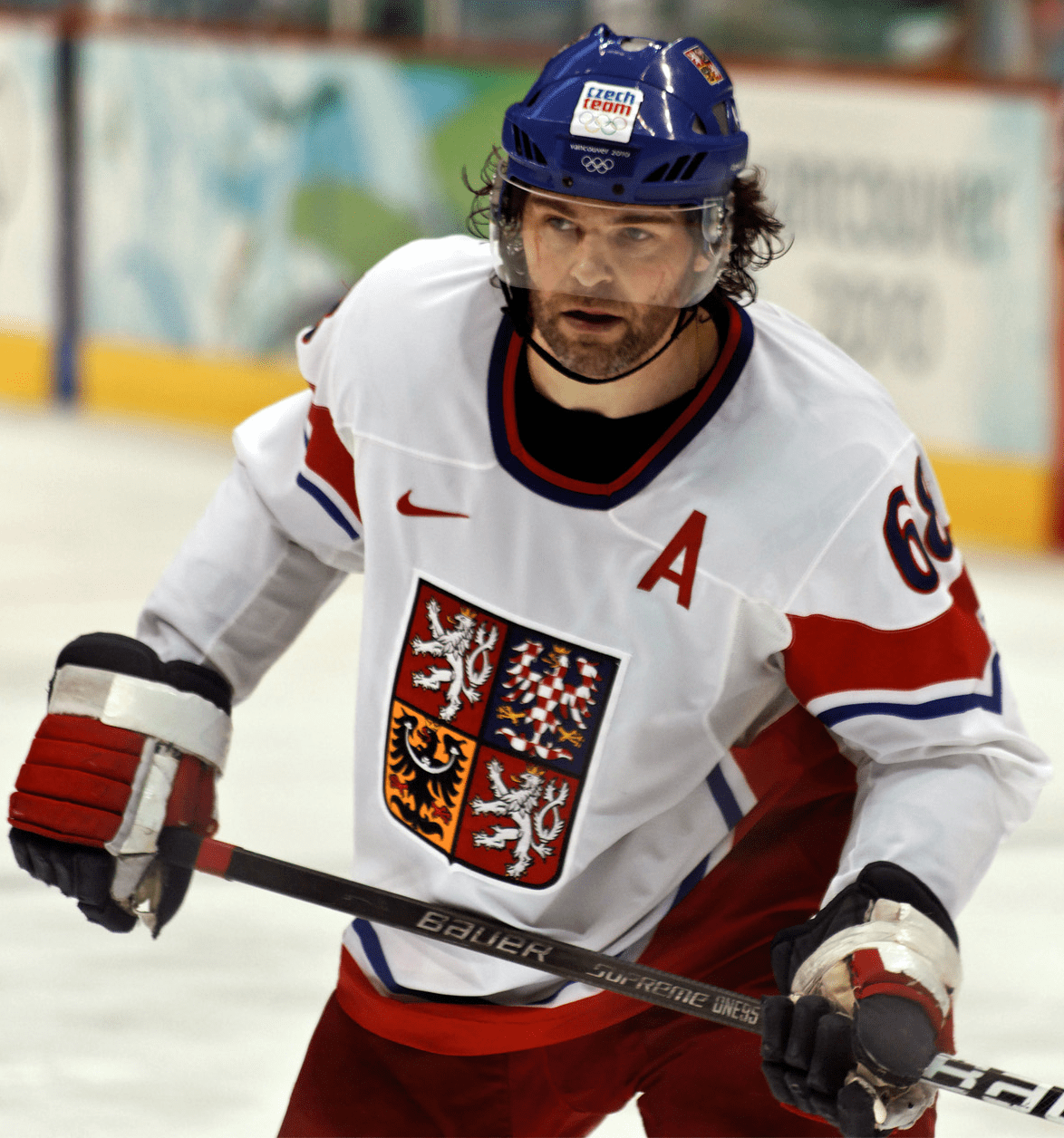
Jaromir Jagr, a legendary figure in the world of professional hockey, has enjoyed an illustrious career spanning multiple decades. Known for his extraordinary talent and longevity in the sport, Jagr has amassed significant wealth over the years. In this article, we explore Jaromir Jagr’s earnings, net worth, and the historical context that has shaped his financial journey.
Early Life and Career Beginnings
Jaromir Jagr was born on February 15, 1972, in Kladno, Czechoslovakia. From a young age, Jagr demonstrated a natural talent for hockey, beginning to skate at the age of three. By the time he was 15, he was playing at the highest level in Czechoslovakia for his hometown club, HC Kladno. His remarkable performances earned him a spot on Czechoslovakia’s national team by age 17.
Jagr’s early years were deeply influenced by his family’s experiences under communist rule. He kept a picture of Ronald Reagan in his notebook and chose to wear the number 68 to honor the year his grandfather died in a communist prison. This personal history has shaped Jagr’s conservative views and his affiliation with the liberal-conservative Civic Democratic Party in the Czech Republic.
Professional Career and Earnings
Jagr’s professional career took off when he was drafted by the Pittsburgh Penguins in the 1990 NHL Draft, becoming the first Czechoslovak player to join the NHL without defecting. His impact was immediate, contributing to the Penguins’ consecutive Stanley Cup victories in 1991 and 1992.
Pittsburgh Penguins
During his time with the Penguins, Jagr became one of the league’s most prolific players. By the 1994-1995 season, he won his first Art Ross Trophy with 70 points and set a new record for a European player with 149 points the following season. In 1998, he became the Penguins’ captain and continued to dominate, winning four consecutive NHL scoring titles and the Hart Memorial Trophy. His success translated into significant earnings, with his salary and bonuses reflecting his status as one of the top players in the league.
Washington Capitals
In 2001, Jagr was traded to the Washington Capitals and signed a groundbreaking seven-year, $77 million contract, the largest in NHL history at the time. Despite this lucrative deal, Jagr struggled to replicate his previous success, and his performance during this period was inconsistent.
New York Rangers
Jagr was traded to the New York Rangers in 2004, where he experienced a resurgence in his career. Although injuries hampered his performance, he managed to regain his scoring touch, becoming a key player for the Rangers.
European Leagues and Return to NHL
In 2008, Jagr left the NHL to play for Avangard Omsk in the Kontinental Hockey League (KHL). He returned to the NHL in 2011, signing with the Philadelphia Flyers and later playing for the Dallas Stars, Boston Bruins, New Jersey Devils, and Florida Panthers. His contracts during these years continued to be substantial, reflecting his enduring skill and value to the teams.
Final Stint and Retirement
Jagr’s final NHL season was with the Calgary Flames in 2017-2018. After leaving the NHL, he returned to play for HC Kladno in the Czech Republic, where he also serves as the team’s president. As of 2021, Jagr was still playing hockey, showcasing his remarkable longevity in the sport.
Total Career Earnings
Jaromir Jagr’s career earnings from salary alone amount to approximately $127 million, making him one of the highest-paid NHL players of all time. This figure was eventually surpassed by Sidney Crosby in 2021. Jagr’s earnings are a testament to his skill, dedication, and the significant contracts he secured throughout his career.
Net Worth
As of the latest reports, Jaromir Jagr’s net worth is estimated to be around $50 million. This net worth reflects his career earnings, endorsement deals, and various investments. Despite facing financial issues, including gambling debts and tax liens, Jagr has managed to maintain considerable wealth through prudent financial management and continued involvement in hockey.
Financial Management and Issues
Jagr’s financial journey has not been without challenges. In 2003, he faced significant gambling debts, reportedly owing $950,000 to a gambling website owner in Belize. Additionally, he dealt with tax issues, including a $3.27 million lien from the IRS for unpaid taxes in 2001. Jagr also sued his former accountant for not filing a tax form in 2003, which he claimed could have saved him millions.
Despite these financial setbacks, Jagr has demonstrated resilience and responsibility in managing his wealth. His investments, including his role as president of HC Kladno, have helped stabilize his financial situation.
Endorsements and Sponsorships
Throughout his career, Jagr has been a sought-after figure for endorsements, contributing to his overall net worth. His marketability as one of the greatest hockey players of all time has attracted numerous sponsorship deals, providing additional income streams.
Historical Context and Impact on Hockey
Jagr’s financial journey highlights the evolving economic landscape of professional hockey. His substantial earnings and net worth reflect broader trends in the sport, where top players command significant salaries and endorsement deals. Jagr’s career has also influenced the perception and marketability of European players in the NHL.
Legacy and Philanthropy
Beyond his financial achievements, Jagr’s legacy in hockey is monumental. He holds numerous records and accolades, including being the second-highest scorer in NHL history and the highest-scoring European player. Jagr’s impact extends beyond the rink, as he has been involved in various charitable activities, supporting causes related to youth sports and community development.
Conclusion
Jaromir Jagr’s journey from a young hockey prodigy in Czechoslovakia to a wealthy and respected NHL legend is a testament to his talent, perseverance, and smart financial management. With a net worth of approximately $50 million, Jagr has secured his place in hockey history and as a successful athlete who navigated the financial aspects of his career effectively. His story serves as an inspiration to current and future athletes, emphasizing the importance of combining athletic success with prudent financial planning.


