
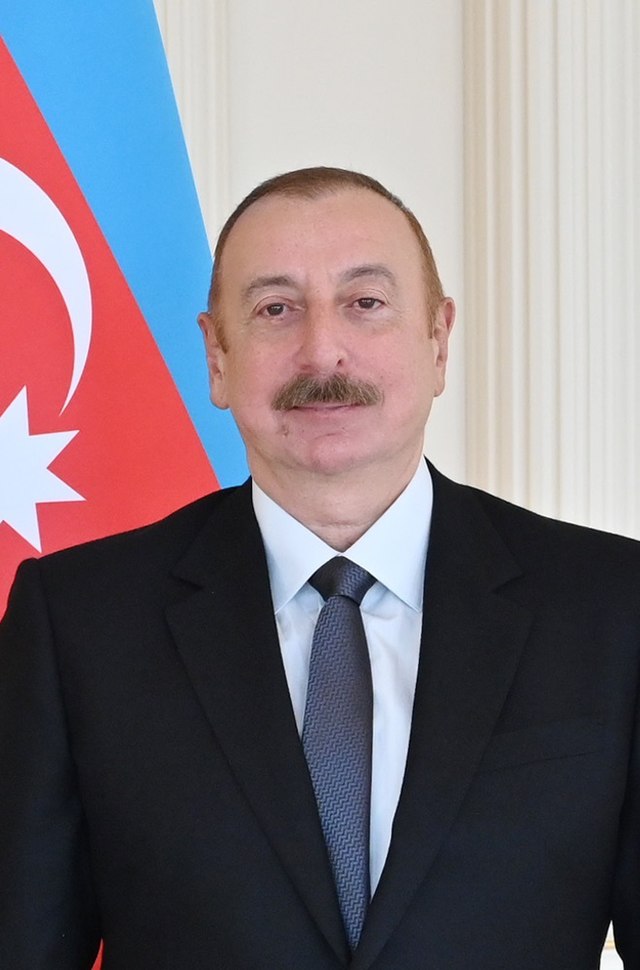
Ilham Aliyev, the President of Azerbaijan, is one of the most prominent political figures in the Caucasus region. Known for his significant influence over Azerbaijan’s political and economic landscape, Aliyev’s financial status has been a topic of considerable interest and speculation. As of this writing, Ilham Aliyev’s net worth is estimated to be around $900 million.
Early Life and Political Ascendancy
Ilham Aliyev was born on December 24, 1961, in Baku, Azerbaijan SSR, then part of the Soviet Union. He is the son of Heydar Aliyev, who served as the President of Azerbaijan before him. Ilham Aliyev’s academic credentials are impressive. He graduated from the Moscow State Institute of International Relations (MGIMO), one of the most prestigious institutions in the Soviet Union, where he later completed his PhD in History.
Aliyev’s career began in the oil industry, a critical sector in Azerbaijan. In 1994, he was appointed Vice-President of the State Oil Company of Azerbaijan (SOCAR), marking the beginning of his significant influence in the country’s vital oil sector. His political career advanced rapidly. He was elected to the National Assembly of Azerbaijan and became President of the National Olympic Committee. Additionally, he was appointed head of the Azerbaijan delegation to the Council of Europe, showcasing his growing influence on both national and international stages.
Ascension to the Presidency
Ilham Aliyev’s path to the presidency was heavily influenced by his father, Heydar Aliyev. In August 2003, Ilham was appointed as Prime Minister of Azerbaijan. A few months later, Heydar Aliyev, due to declining health, stepped down and named Ilham as his successor. Ilham Aliyev subsequently won the 2003 presidential election, a victory marred by widespread allegations of voter fraud and public protests. Despite these controversies, Aliyev has maintained a tight grip on power, winning subsequent elections with significant margins, albeit under questionable democratic practices.
Presidential Salary and Family Wealth
Officially, Ilham Aliyev’s presidential salary is relatively modest, amounting to approximately $230,000 per year. However, the true extent of his wealth far exceeds this figure, largely due to his control over Azerbaijan’s vast oil resources. The Aliyev family’s wealth is substantial, with significant investments and assets held both domestically and internationally.
Real Estate and Luxury Assets
The Aliyev family’s wealth is evident in their real estate holdings, particularly in Dubai. Ilham Aliyev’s son reportedly owns nine luxury mansions in Dubai, valued at around $45 million. His daughters are also significant property owners, with an estimated $30 million worth of real estate in Dubai. These figures highlight the substantial wealth accumulated by the family, often through opaque means and leveraging their political influence.
Business Interests and Holdings
Azerbaijani law prohibits public officials from owning private businesses, but this restriction does not extend to their family members. This loophole has allowed the Aliyev family to amass substantial business interests. For instance, Ilham Aliyev’s daughter, Arzu Aliyeva, a television personality and model, reportedly owns millions of dollars in company shares and other assets. Among these are significant stakes in Silk Way Bank and SW Holding. SW Holding, in particular, owns dozens of companies, including the state airline and the state’s official contractor, underscoring the extensive reach of the Aliyev family’s economic interests.
Historical Context and Governance
Ilham Aliyev’s tenure as president is often criticized for its autocratic nature and the lack of genuine democratic practices. Azerbaijan is frequently cited for its flawed democracy, with reports of human rights abuses, suppression of dissent, and lack of free and fair elections. The concentration of wealth and power in the hands of the Aliyev family is a testament to the enduring legacy of authoritarian governance in the country.
The political landscape in Azerbaijan under Aliyev has been characterized by a strong centralization of power. This centralization has allowed the Aliyev family to maintain a tight grip on both political and economic spheres, effectively controlling the country’s major resources and economic activities. Despite international criticism, Ilham Aliyev has managed to retain his position, leveraging both his domestic influence and strategic geopolitical positioning.
Conclusion
Ilham Aliyev’s financial status is a complex interplay of official earnings and vast, often opaque, family wealth. While his presidential salary is publicly known, the true extent of his wealth is reflected in the substantial real estate holdings and business interests controlled by his family. The historical and political context of his rise to power, marked by allegations of voter fraud and autocratic governance, further complicates the narrative around his financial status.
Aliyev’s story is emblematic of the broader issues of governance and wealth concentration in authoritarian regimes, where political power often translates into substantial personal wealth. His continued influence in Azerbaijan underscores the challenges faced by the country in transitioning to a more transparent and democratic governance model.


