
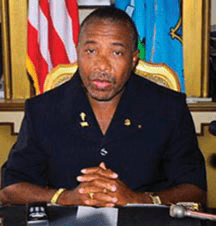
Charles Taylor, a former Liberian politician, has a net worth estimated at $56 million. This figure is a testament to a complex and controversial career marked by both political achievements and severe allegations. To understand the nuances of his wealth, one must delve into his life story, his political journey, and the historical context in which he operated.
Early Life and Education
Born Charles McArthur Ghankay Taylor on January 28, 1948, in Arthington, Liberia, Taylor’s early years were marked by an ambition for education and leadership. He pursued higher education at Bentley College in the United States, an experience that would later shape his political aspirations and strategies. His return to Liberia marked the beginning of a tumultuous career in politics.
Political Ascent and Controversies
Upon returning to Liberia, Taylor worked in the government of Samuel Doe. However, his career hit a significant roadblock when he was accused of embezzlement. Fleeing the country, Taylor found refuge in Libya, where he received training as a guerrilla fighter. This period was crucial as it equipped him with the skills and connections that would later play a pivotal role in his political and military maneuvers.
The First Liberian Civil War
In 1989, Taylor returned to Liberia as the leader of the National Patriotic Front of Liberia (NPFL), a Libyan-backed resistance group. This marked the beginning of the First Liberian Civil War (1989-1996), a conflict that would devastate the country but also catapult Taylor to power. His forces were instrumental in the eventual overthrow and execution of President Doe. A peace deal ended the war, and in 1997, amidst a climate of fear and coercion, Taylor was elected as the 22nd President of Liberia.
Presidency and Accusations
Taylor’s presidency (1997-2003) was marred by allegations of severe human rights violations. His involvement in the Sierra Leone Civil War (1991-2002) further tarnished his reputation. Taylor was accused of supporting the Revolutionary United Front (RUF) rebels in Sierra Leone, supplying them with arms in exchange for “blood diamonds.” These actions contributed to a decade of brutal conflict and human suffering in Sierra Leone.
The Second Liberian Civil War and Exile
The growing opposition and resentment towards Taylor’s regime culminated in the outbreak of the Second Liberian Civil War (1999-2003). Unable to maintain control over much of the country, Taylor eventually resigned and went into exile in Nigeria in 2003. However, his past would soon catch up with him.
Extradition and Trial
In 2006, newly elected Liberian President Ellen Johnson Sirleaf formally requested Taylor’s extradition. He was handed over to the Special Court for Sierra Leone, where he faced an array of charges, including terror, murder, and rape. After a lengthy trial, Taylor was found guilty on all eleven charges in April 2012. He was sentenced to 50 years in prison, marking a significant fall from grace for the once-powerful leader.
Wealth and Its Sources
Taylor’s estimated net worth of $56 million is shrouded in controversy. Much of his wealth is believed to have been amassed through illicit means, including embezzlement, exploitation of natural resources, and involvement in the illegal arms trade. During his presidency, Taylor had significant control over Liberia’s rich natural resources, including timber and rubber, which were allegedly used to finance his military campaigns and personal wealth accumulation.
Historical Context and Legacy
Understanding Taylor’s wealth requires a broader look at the historical and geopolitical context of West Africa during his rise to power. The late 20th and early 21st centuries were periods of intense conflict and instability in the region. Liberia, with its strategic location and rich resources, became a focal point for both internal and external power struggles.
Taylor’s legacy is a contentious one. For some, he is seen as a liberator who fought against a corrupt regime. For others, he is a war criminal whose actions caused immeasurable suffering. His trial and conviction were significant in the realm of international justice, representing a rare instance of a former head of state being held accountable for crimes committed during their tenure.
Conclusion
Charles Taylor’s net worth and earnings are deeply intertwined with his political and military career. His story is a complex tapestry of ambition, conflict, and controversy. While his wealth is substantial, it comes with a legacy of allegations and a conviction that has left an indelible mark on the history of Liberia and West Africa.


