
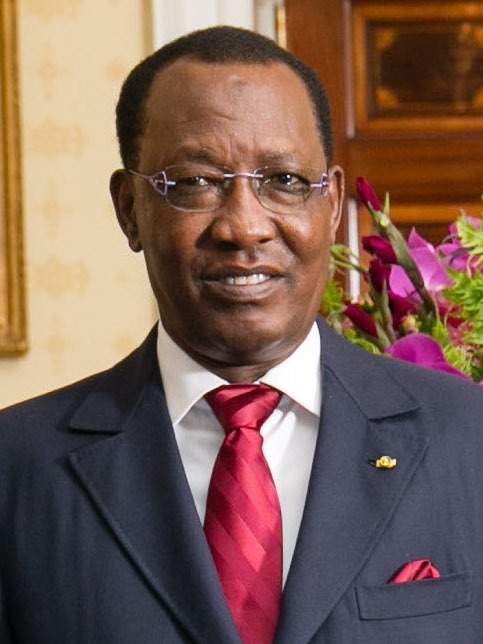
Idriss Déby, the late President of Chad, had an estimated net worth of $50 million at the time of his death in April 2021. This considerable wealth is a reflection of his long tenure in power, his military background, and his involvement in various economic ventures. To understand the sources and nuances of Déby’s wealth, it is essential to delve into his life story, political career, and the historical context of his leadership.
Early Life and Military Career
Idriss Déby Itno was born in 1952 in Fada, then part of French Equatorial Africa, into the Bidyat clan of the Zaghawa ethnic group. His early years were marked by a strong inclination towards military service. Déby attended the Officers’ School in N’Djamena, Chad’s capital, where he distinguished himself and earned a professional pilot certificate. His military prowess and leadership skills quickly propelled him through the ranks.
Rise to Power
Déby’s rise to power began in earnest in the 1980s. By 1983, he had become the commander-in-chief of the army under President Hissène Habré. His role expanded to include serving as chief military advisor to the Presidency. However, a rift developed between Déby and Habré in 1989, culminating in Habré accusing Déby of plotting a coup d’état. This accusation forced Déby to flee to Sudan, where he regrouped and founded the Patriotic Salvation Movement (MPS), an insurgent group supported by Sudan and Libya.
In December 1990, Déby led a successful rebellion against Habré, seizing control of Chad and installing himself as President. His rise to power was marked by a combination of military strategy and political maneuvering, setting the stage for his long-lasting rule.
Political Career and Leadership
Idriss Déby’s political career was characterized by both stability and controversy. He was first elected President in 1996 and re-elected in 2001. Following the elimination of term limits, he won subsequent elections in 2006 and 2011, extending his rule. Déby’s tenure saw him navigating multiple rebellion attempts and maintaining a firm grip on power through a combination of military strength and political acumen.
One of Déby’s notable international headlines occurred in 2006 when he accused Chevron and Petronas of failing to pay taxes totaling nearly $500 million. This bold move highlighted his assertive approach to governance and economic management. However, the same year, Chad was named the world’s most corrupt nation by Forbes magazine, underscoring the significant challenges and criticisms that marked Déby’s presidency.
Wealth and Its Sources
Déby’s estimated net worth of $50 million is attributed to various sources. His long tenure in power provided him with significant control over Chad’s resources and economic activities. Chad, a country rich in oil, saw substantial revenues from its oil production, particularly after the construction of the Chad-Cameroon pipeline in the early 2000s. Déby’s government had a significant stake in the country’s oil industry, which likely contributed to his wealth.
Additionally, Déby’s control over the military and his ability to navigate international relationships, particularly with Sudan and Libya, positioned him advantageously in regional power dynamics. These relationships and his military background enabled him to maintain stability and control over the country’s resources, further enhancing his wealth.
Personal Life and Controversies
Idriss Déby’s personal life was marked by multiple marriages and a large family. He had at least a dozen children, reflecting his extensive personal connections. Tragically, his son Brahim was found dead in 2007, reportedly asphyxiated by white powder from a fire extinguisher. This incident added a layer of personal tragedy to Déby’s complex legacy.
Historical Context and Legacy
Understanding Déby’s wealth and leadership requires examining the broader historical and geopolitical context of Chad and the Sahel region. Chad, a country with significant ethnic diversity and a history of political instability, has faced numerous challenges, including poverty, corruption, and conflict. Déby’s leadership was often viewed through the lens of these challenges.
Déby’s legacy is multifaceted. On one hand, he maintained relative stability in a region fraught with conflict. His military background and strategic alliances enabled him to navigate complex political landscapes. On the other hand, his presidency was marred by allegations of corruption, human rights abuses, and authoritarianism. These controversies have left a mixed legacy, reflecting the complexities of leadership in a volatile region.
Conclusion
Idriss Déby’s estimated net worth of $50 million is a testament to his long and complex political career. His wealth, derived from his control over Chad’s resources and strategic alliances, underscores the intricate interplay of power, politics, and economics in his leadership. While his legacy includes significant achievements in maintaining stability, it is also marked by controversies and criticisms that reflect the broader challenges faced by Chad and the Sahel region.


