
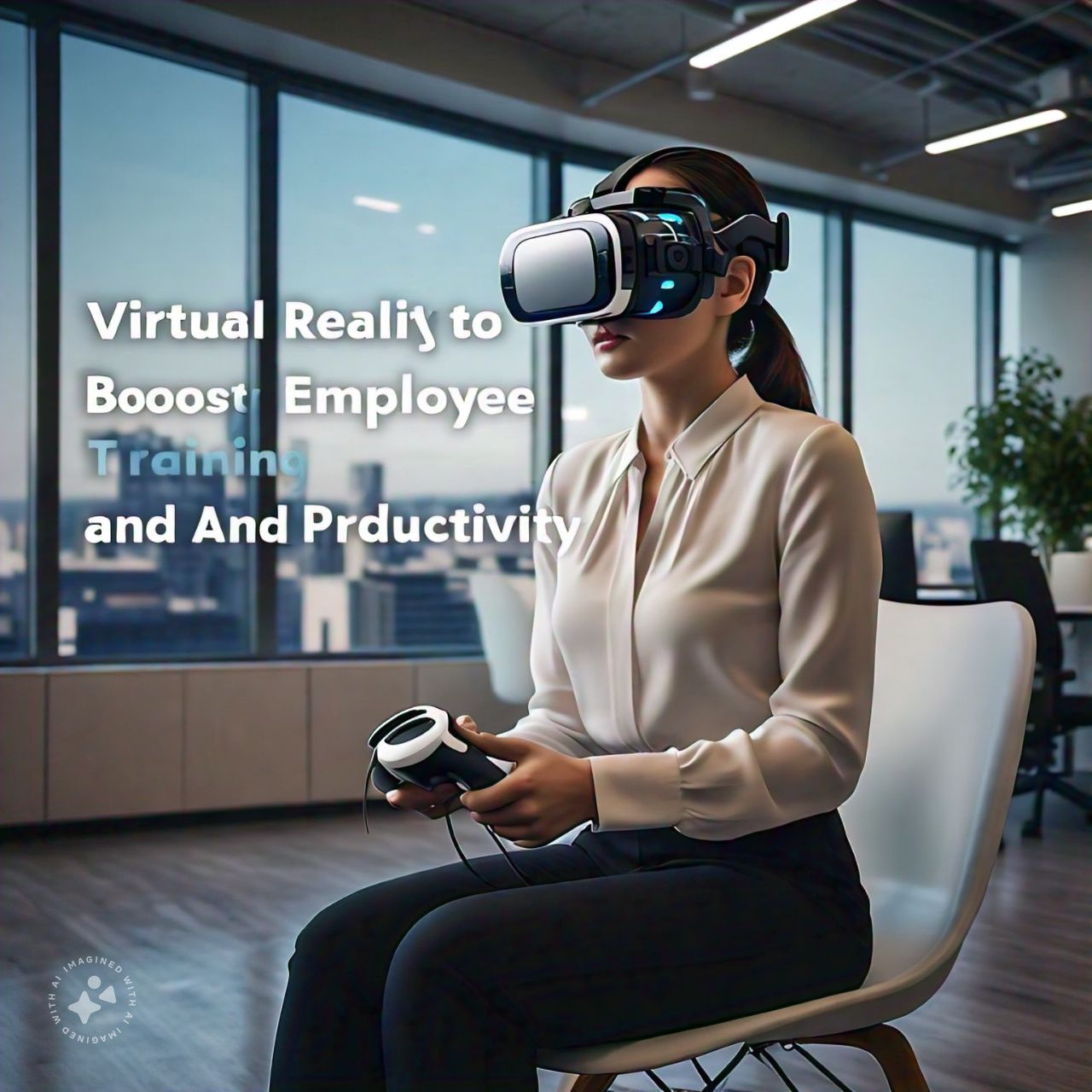
In today’s fast-paced digital world, corporate training has evolved significantly, moving beyond the traditional classroom setting to embrace innovative technologies like Virtual Reality (VR). As businesses strive to keep their employees at the top of their game, VR is transforming how training occurs, making it more immersive, interactive, and effective. Here are ten ways Virtual Reality is reshaping corporate training, unlocking new potential for organizations and their workforce.
1. Immersive Learning Experiences
One of the most significant advantages of VR in corporate training is its ability to create immersive environments. Trainees can step into a simulation where they can practice their skills in a lifelike setting. For example, a sales team can enter a virtual store to practice customer interactions, while engineers can explore complex machinery without the risks associated with hands-on training. This engagement leads to deeper learning and better retention of information.
2. Safe Simulations for High-Stakes Scenarios
In industries like healthcare, aviation, and emergency services, training can involve high-stakes scenarios where mistakes can have dire consequences. VR allows trainees to practice these critical skills in a safe environment. For instance, medical professionals can simulate surgeries or emergency responses, providing an opportunity to build muscle memory without putting patients at risk. This safety net ensures that employees can learn from their mistakes without facing real-world repercussions.
3. Enhanced Engagement and Motivation
Traditional training methods often lead to disengagement among employees. VR transforms this by adding an element of fun and excitement, making training more appealing. The gamification of learning experiences—including rewards, challenges, and achievements—boosts motivation and encourages employees to actively participate in their training process. This heightened engagement translates to a more invested workforce proficient in their roles.
4. Customized Training Programs
Every employee has unique learning needs and paces. VR facilitates the creation of customized training experiences tailored to individual skill levels and learning styles. For example, a sales associate might need to develop specific negotiation tactics, while a software developer might require a different set of technical skills. A tailored VR program can address these distinctions more efficiently than one-size-fits-all approaches, leading to better performance outcomes.
5. Real-Time Feedback and Assessment
One of the downsides of traditional training methods is the often delayed feedback that participants receive. VR systems can provide immediate assessments of employee performance. For example, in a virtual customer service scenario, real-time data analytics can track decision-making processes, evaluate interactions, and provide instant feedback. Trainers can better understand the areas where employees excel or struggle, allowing for more focused additional training.
6. Cost-Efficiency and Scalability
Implementing VR in corporate training is becoming increasingly cost-effective compared to traditional training setups. While there may be upfront costs associated with developing VR content and purchasing hardware, organizations can save on travel, accommodation, and logistics over time. VR training modules can be easily scaled and reused across multiple locations, making it an attractive option for large corporations with diverse teams scattered worldwide.

- Overcome negative thought patterns, reduce stress, and live a worry-free life
- Overthinking is the biggest cause of unhappiness
- Don't get stuck in a never-ending thought loop
- Stay present and keep your mind off things that don't matter, and never will
- Break free of your self-imposed mental prison
7. Vivid Learning for Technical Skills
Technical fields often require hands-on experience that can be both time-consuming and expensive to replicate in real life. VR allows employees to interact with complex systems and machinery in a controlled virtual environment. For training in robotics, engineering, or IT, VR can simulate scenarios where personnel can troubleshoot issues, conduct repairs, or simply learn how to operate various tools, all from the comfort of their training centers.
8. Collaboration in Remote Teams
As the remote workforce becomes more prevalent, team collaboration poses challenges. VR offers a virtual space where employees can come together in real-time, regardless of their physical locations. Training sessions can mimic real-life interactions, fostering teamwork and collaboration. In a VR session, employees can engage with their peers on projects or participate in group exercises, recreating the dynamics of in-person training.
9. Global Training Solutions
For multinational companies, maintaining uniform training standards across different regions can be a challenge. VR provides a solution by delivering consistent training experiences to employees worldwide. With VR, organizations can ensure that every employee receives the same information and training regardless of their location. This standardization leads to a more unified workforce and increases overall company effectiveness.
10. Future-Proofing the Workforce
As industries evolve, so do the skill requirements for employees. VR training enables a proactive approach to upskilling. Organizations can update virtual training modules to reflect the latest technological advancements or industry standards, ensuring that employees are always equipped with current knowledge. This future-proofing strategy not only enhances employee performance but also boosts morale by demonstrating a commitment to their professional growth.
Conclusion
Virtual Reality is transforming corporate training by making it more immersive, engaging, and effective. As businesses look to thrive in a competitive environment, the integration of VR technology equips employees with the skills they need while maximizing engagement and safety. From customized training programs to real-time feedback, the advantages are compelling.
As the technology continues to evolve, the potential for VR to enhance corporate training will only grow, encouraging organizations to keep pace with industry changes. By embracing VR in their training strategies, companies can foster a workforce that is not only skilled but also enthusiastic about learning and professional development.
With the growing demand for skilled labor and the rapid pace of technological advancement, corporate training will undoubtedly continue to evolve, and VR will lead the way. Embrace this revolutionary learning tool today to prepare your workforce for the future.


