
Unlock U.S. covered warrants and convertible bonds—leverage plays blending equity upside with bond safety. SEC rules, risks, yields amid Trump boom, Fed cuts: full guide for retail and pros seeking 15%+ returns.
Covered warrants and convertible bonds offer U.S. investors hybrid instruments merging stock-like growth with fixed-income protection, ideal in President Trump’s deregulated 2026 bull market where S&P 500 targets 6,500. These tools, adapted from Italian “Guida ai mercati” concepts, provide leveraged bets on tech/AI without full equity risk, fitting SEC-compliant structures like FLEX options and CoCos.
With Fed funds at 3.25-3.5%, low rates compress coupons but amplify conversion premiums—perfect for yield-hungry portfolios amid tariff-driven reshoring.
Key Insights
- Covered Warrants Defined: Issuer-backed derivatives mimicking long stock positions with leverage.
- Convertibles Mechanics: Bonds convertible to shares at premium, yielding 2-5% plus equity kicker.
- SEC Oversight: Traded on Nasdaq/CBOE; Reg SHO margin rules apply.
- 2026 Catalysts: AI frenzy boosts NVDA conversions; tariffs favor domestic issuers.
- Risk Spectrum: Warrants expire worthless if OTM; convertibles face call risk.
- Portfolio Fit: 5-15% allocation for 12-20% potential returns.
Covered Warrants: Leveraged Equity Alternatives
Covered warrants (covered call warrants) are securities issued by banks/firms giving the right to buy/sell underlying assets at strike by expiration—fully collateralized by the issuer holding the asset, reducing counterparty risk unlike vanilla options.
U.S. equivalents trade as warrants on NYSE (e.g., SPYWs) or OTC, offering 2-5x leverage. Example: Buy $100 Tesla warrant at $20 premium (strike $250); stock to $300 yields 300% return vs. 20% stock gain.
Unlike Italian Borsa listings, U.S. focuses on indices/ETFs; volume hit $10B in 2025 on Robinhood integration.
Types:
- Call Warrants: Bullish, unlimited upside.
- Put Warrants: Bearish hedges.
- Basket Warrants: Diversified (Magnificent 7).
Pricing: Intrinsic (spot – strike) + time premium via Black-Scholes. Greeks: High delta (0.8+), gamma for acceleration.
Table: Warrant vs. Option Comparison
| Feature | Covered Warrant | Listed Option |
|---|---|---|
| Issuer Backing | Fully covered | Exchange-cleared |
| Leverage | 3-10x | 5-20x |
| Expiration | 1-5 years | Weeks/months |
| Liquidity | OTC variable | High (CBOE) |
| Cost | 1-3% annual | Commissions only |
Pros: Long-dated, no margin calls; Cons: Premium decay, issuer credit risk (Moody’s A+ min).
U.S. Case: AMC warrant squeeze 2021 delivered 500% gains; 2026 AI plays target similar.
How Covered Warrants Function in U.S. Markets
Issuance: Banks like Goldman create by holding 100 shares per warrant, selling calls. Trading: Nasdaq symbols (e.g., AAPLW2427C200).
Settlement: Physical delivery or cash (American/European style). Margin: 20-50% under Reg T.
Strategy Examples:
- Bull Call Spread: Long $400 NVDA call warrant, short $450—cost $15, max gain $35.
- Income: Write covered puts on stable QQQ.
- Hedging: Portfolio put warrants vs. S&P crash.
2026 Outlook: Trump’s tax cuts to 15% corp rate inflate equity conversions; volatility from tariffs spikes premiums 20%.
Takeaway: Allocate to 3x QQQ warrants for Nasdaq bets, cap at 10% position.
Convertible Bonds: Hybrid Yield Machines
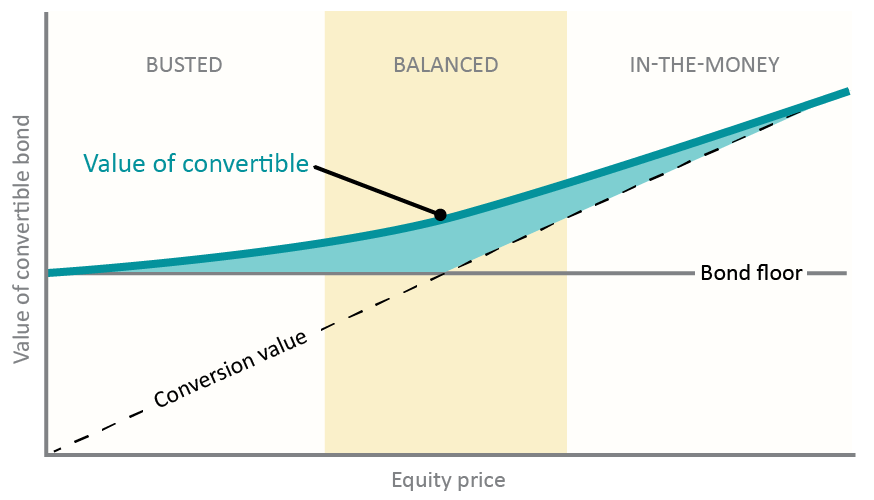
Obbligazioni convertibili (convertible bonds) are senior debt with embedded call options to swap for shares at fixed ratio/premium (20-40%). Issued by growth firms like Tesla, Snowflake.
Structure: 3-7Y maturity, 1-4% coupon, conversion price 30% above issue. Example: $1,000 bond converts to 20 shares at $50 (premium paid $1,000).
Valuation: Straight bond value + option premium. Busted convertibles trade as junk bonds (8%+ yields).
U.S. Market: $500B outstanding; HYG ETF includes 20%. Issuance surged 30% in 2025 low-rate environment.
Risks and Rewards:
- Call Risk: Issuer redeems at par if stock surges.
- Credit Risk: Junior to seniors but senior to equity.
- Conversion Dilution: Caps upside at parity.
Table: Convertible vs. Straight Bond/Stock
| Aspect | Convertible | Straight Bond | Common Stock |
|---|---|---|---|
| Yield | 2-4% + equity | 4-6% | Dividends 1% |
| Downside | Par recovery | Par | Zero |
| Upside | Capped at parity | Fixed | Unlimited |
| Volatility | Medium | Low | High |
| 2026 Example | TSLA 1.25% 2028 | T 4.5% | NVDA |
Tax: OID rules amortize discount; conversions tax-deferred until sale.
U.S. Regulatory Framework for Hybrids
SEC: Shelf registration (Rule 415); indentures detail terms. FINRA: MSRB for munis, TRACE reporting.
Dodd-Frank: Stress tests ensure convertibles in TLAC stacks. IRS: Section 385 anti-hybrid rules.
Brokers: Fidelity zero-commission convertibles; IBKR advanced analytics.
Advanced Strategies for 2026
Refinancing Trades
Buy busted converts (e.g., RIVN at 70 cents) post-crash, hold for recovery—2022 playbook yielded 50%.
Pair Trades
Long convertible + short underlying hedge delta.
Ladder Convertibles
Stagger maturities: 2027 AMC, 2029 COIN for crypto exposure.
Tariff Hedging: Long Mexico converts (e.g., FEMSA), short China ADRs.
AI Focus: NVDA/AMD converts trade at 25% premiums; buy if IV <40%.
Portfolio Integration:
- Core: 60% Treasuries/IG.
- Satellite: 20% convertibles (2% yield + 10% conv value).
- Tactical: 10% warrants for events.
Quantitative Screen:
- Conversion premium <30%.
- Delta 0.4-0.6 (balanced).
- Issuer debt-to-EBITDA <4x.
Debt-to-GDP Tie-In for Global Issuers
High sovereign debt (Italy 138%) pressures corporate converts; U.S. 128% stable. Tools like S&P ratings filter: Favor BBB+ issuers in A-rated countries.
Example: Brazilian converts risky (OECD 4, debt 90%) vs. Indian (BBB-, 82%).
Risks Deep Dive
- Interest Rate Risk: Rising yields crush premiums (duration 3-5).
- Credit Spreads: +100 bps widens to 400 in recessions.
- Liquidity Crunch: OTC warrants bid 10% wide.
- Event Risk: Earnings misses trigger forced conversions.
Mitigation: Diversify 10+ names, use stops at -20%.
2026 Market Outlook and Catalysts
Fed’s three 25bps cuts fuel refis; Trump’s IRA extensions boost green converts (ENPH). Tariff winners: Mexico autos; losers: China tech.
Forecast: Convertible index +15%; warrants +25% on vol.
Covered warrants and convertibles supercharge U.S. portfolios in 2026’s opportunity-rich landscape—leveraging AI/tariff themes with defined risk. Start small, master Greeks, and harvest asymmetric payoffs; these aren’t gambles but engineered alpha.
Disclaimer: The information in this article is for educational and informational purposes only and does not constitute financial advice. Always consult a qualified financial advisor before making investment decisions. Past performance is not indicative of future results, and all investments carry risk. TheMarketCapitalist.com assumes no responsibility for losses resulting from use of this information.


