
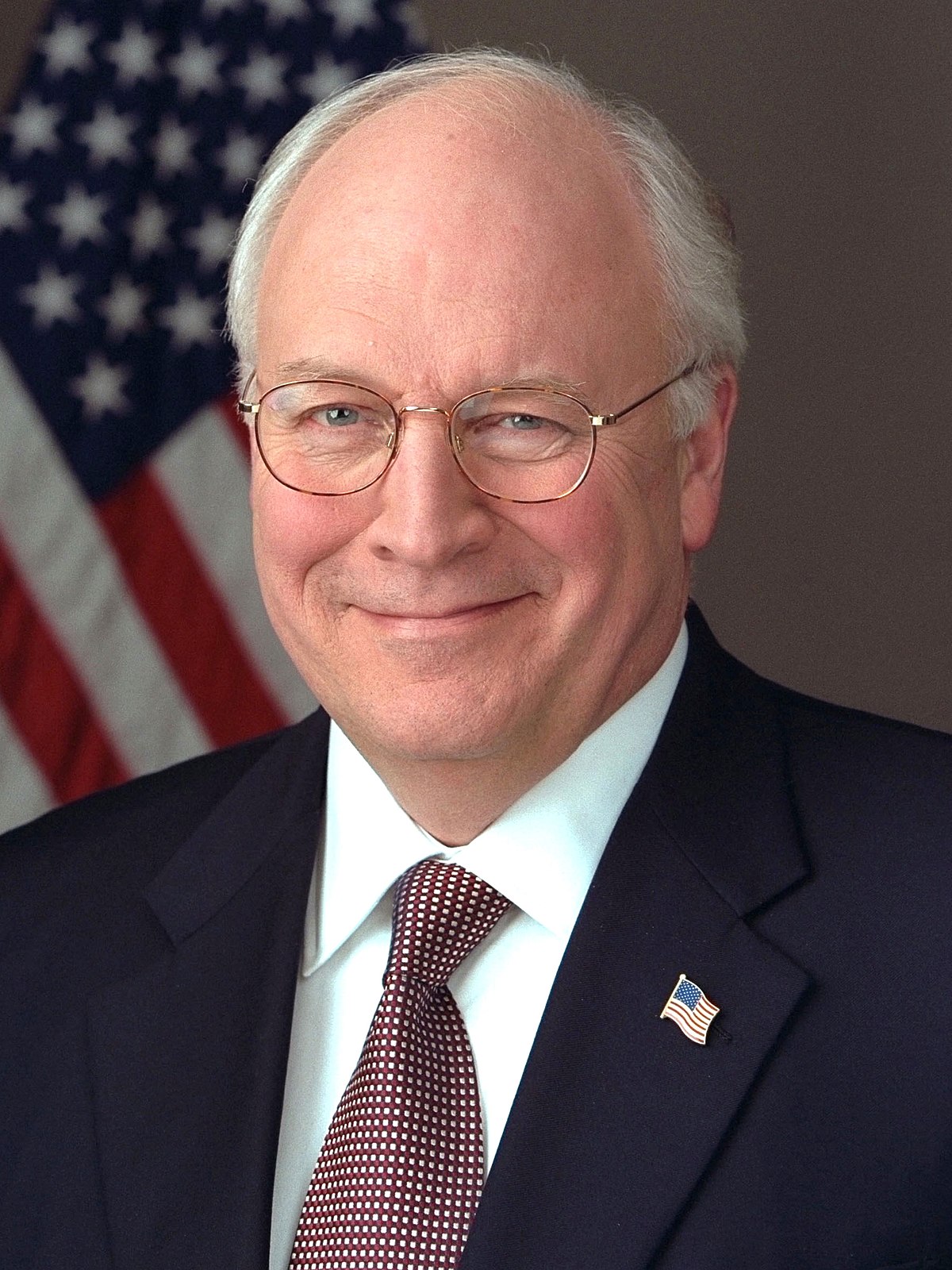
Dick Cheney, a prominent American politician, author, and business executive, boasts a substantial net worth of $150 million. Known for his influential role as the 46th Vice President of the United States under President George W. Bush, Cheney’s career spans decades in both the public and private sectors. His financial success is largely attributed to his time as CEO of Halliburton, a leading oil services contractor, and his extensive political career.
Early Life and Education
Richard Bruce Cheney was born on January 30, 1941, in Lincoln, Nebraska. Raised in Casper, Wyoming, Cheney was the eldest of three children. His father, Richard, worked for the U.S. Department of Agriculture as a soil conservation agent, while his mother, Marjorie, was a former softball player. Cheney attended College View Elementary School and later Natrona County High School, where he excelled in academics and sports, serving as senior class president and captain of the football team.
Cheney briefly attended Yale University but left due to poor grades. He subsequently attended Casper College and earned both a Bachelor of Arts and a Master of Arts in political science from the University of Wyoming. Cheney also began doctoral studies at the University of Wisconsin-Madison but left to pursue a career in politics.
Political Career
Cheney’s political journey began in 1968 when he was awarded an American Political Science Association congressional fellowship, which brought him to Washington, D.C. He initially worked for Congressman William Steiger and later joined the Nixon administration, where he worked under Donald Rumsfeld in the Office of Economic Opportunity. Cheney held various positions, including White House Staff Assistant and Assistant Director of the Cost of Living Council.
During Gerald Ford’s administration, Cheney served as Deputy Assistant to the President and eventually as White House Chief of Staff. He also managed Ford’s 1976 presidential campaign. Cheney was elected to the U.S. House of Representatives in 1978, representing Wyoming, and served five terms. He was known for his strong conservative stance and leadership roles, including Chairman of the House Republican Policy Committee and House Minority Whip.
In 1989, Cheney was appointed Secretary of Defense under President George H.W. Bush. During his tenure, he oversaw military operations such as Operation Just Cause in Panama and Operation Desert Storm in the Gulf War. Cheney’s leadership earned him the Presidential Medal of Freedom and the U.S. Senator John Heinz Award for Greatest Public Service by an Elected or Appointed Official.
Private Sector Career
After leaving the Department of Defense in 1993, Cheney entered the private sector. He joined the American Enterprise Institute and served as a director of the Council on Foreign Relations. From 1995 to 2000, Cheney was the CEO and Chairman of Halliburton, a multinational corporation providing products and services to the energy industry. His tenure at Halliburton significantly boosted his wealth, with Cheney earning approximately $72.5 million in total compensation, including salary, retirement benefits, and stock options.
During Cheney’s time at Halliburton, the company grew significantly, becoming one of the largest military contractors in the U.S. This period also saw controversy, including allegations of securities fraud and a $100 million settlement in a class-action lawsuit. Additionally, in 2010, Halliburton settled corruption charges with the Nigerian government for $250 million.
Vice Presidency
Dick Cheney served as Vice President from 2001 to 2009, during George W. Bush’s presidency. His tenure is often regarded as one of the most powerful in U.S. history, with Cheney playing a central role in shaping domestic and foreign policy. He was a key architect of the administration’s response to the September 11, 2001, terrorist attacks, including the initiation of the “War on Terror” and the invasions of Afghanistan and Iraq.
Cheney’s vice presidency was marked by his advocacy for enhanced interrogation techniques and controversial claims regarding weapons of mass destruction in Iraq. These actions drew significant criticism and sparked debates about the legality and morality of U.S. policies during the Bush administration.
Post-Vice Presidency and Personal Life
After leaving office, Cheney focused on writing and public speaking. He co-authored two books with his daughter Liz Cheney: “In My Time: A Personal and Political Memoir” (2011) and “Exceptional: Why the World Needs a Powerful America” (2015). Cheney also continued to comment on political issues and remained an influential figure in conservative circles.
Cheney married his high school sweetheart, Lynne Vincent, in 1964. They have two daughters, Elizabeth (Liz) and Mary. Liz Cheney followed in her father’s political footsteps, serving as the U.S. Representative for Wyoming since 2017. Mary Cheney has been involved in political campaigns and advocacy for same-sex marriage, which her father publicly supported after leaving office.
Health and Real Estate
Cheney has faced significant health challenges, including multiple heart attacks and a heart transplant in 2012. Despite these issues, he remained active in public life and maintained his influence in political and business circles.
Cheney’s real estate holdings include a custom-built home in McLean, Virginia, a waterfront estate in Saint Michaels, Maryland, and property in Wyoming. These assets contribute to his substantial net worth and reflect his financial acumen.
Conclusion
Dick Cheney’s net worth of $150 million is a testament to his successful careers in both politics and business. His influential roles as Secretary of Defense, Vice President, and CEO of Halliburton underscore his significant impact on American politics and the private sector. Cheney’s legacy is marked by both his achievements and controversies, highlighting the complexities of a career that has shaped modern U.S. history.


