
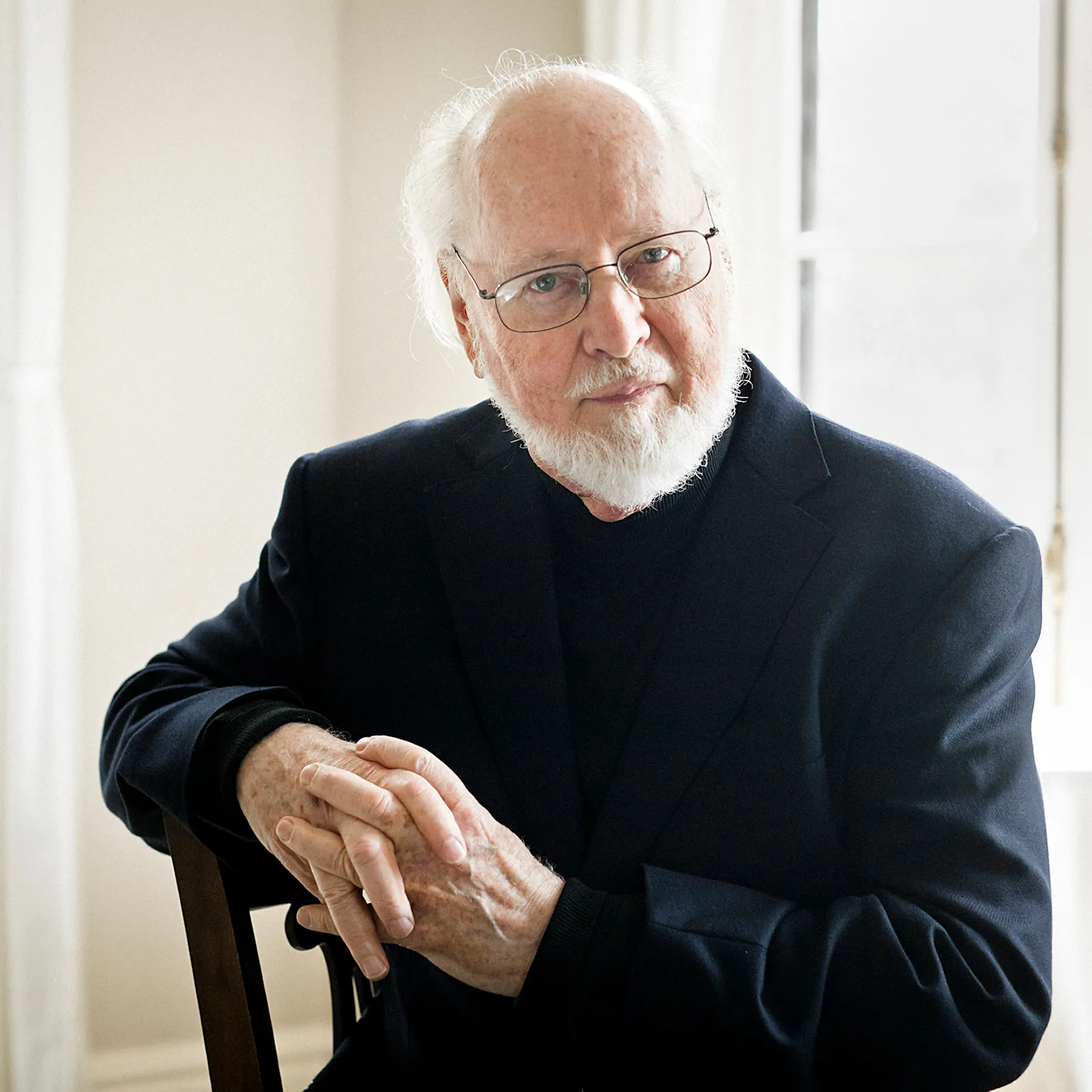
John Williams, a legendary American composer and conductor, has made an indelible mark on the music and film industries. With a net worth of $300 million, Williams’s career spans over seven decades, during which he has created some of the most iconic film scores in history. His work includes music for “Jaws,” “Star Wars,” “Indiana Jones,” “Harry Potter,” and many others. Williams’s contributions have significantly influenced the landscape of cinematic music.
Early Life and Education
John Towner Williams was born on February 8, 1932, in Queens, New York City, to Esther and John Sr., a percussionist. He grew up with three siblings: Jerry, Joan, and Donald. In 1948, the Williams family moved to Los Angeles, where John attended North Hollywood High School. He later enrolled at UCLA and studied composition privately with Italian composer Mario Castelnuovo-Tedesco. Williams also briefly attended Los Angeles City College, where he played with its jazz band.
After his initial education, Williams joined the US Air Force in 1951, where he continued to play music and conduct. Following his military service, he moved back to New York City and enrolled at the Juilliard School, further honing his musical skills. He also studied at the Eastman School of Music at the University of Rochester.
Career Beginnings
After completing his studies, Williams returned to Los Angeles and began working for film studios as an orchestrator. He served as a studio pianist and session musician, contributing to scores by major composers such as Jerry Goldsmith, Henry Mancini, and Elmer Bernstein. During this period, he also released several jazz albums, including “World on a String,” and worked as a music arranger and bandleader for singers Frankie Laine and Ray Vasquez.
Breakthrough in Film Scoring
Williams’s first feature film score was for the 1958 B-movie “Daddy-O.” Two years later, he composed the score for “Because They’re Young.” His versatility and talent quickly earned him a reputation in Hollywood. In 1967, Williams received his first Academy Award nomination for his score for “Valley of the Dolls.” He earned another nomination for the 1969 musical “Goodbye, Mr. Chips,” and won his first Oscar for the 1971 film adaptation of “Fiddler on the Roof.”
Williams’s career took a significant turn in 1974 when he collaborated with Steven Spielberg on the director’s debut feature, “The Sugarland Express.” This partnership led to the iconic score for “Jaws” in 1975, earning Williams his second Academy Award. He continued to work with Spielberg on numerous projects, including “Close Encounters of the Third Kind” and the “Indiana Jones” series.
Iconic Scores and Major Collaborations
Williams’s collaboration with George Lucas on the “Star Wars” saga produced one of the most recognizable film scores in history. The theme for “Star Wars,” composed in 1977, has become a cultural touchstone. Williams continued to score subsequent films in the series, reinforcing his reputation as a master composer.
Throughout the late 1970s and early 1980s, Williams composed scores for a string of successful films, including “Superman,” “E.T. the Extra-Terrestrial,” “Raiders of the Lost Ark,” and “Empire of the Sun.” His work on “E.T.” earned him his fourth Academy Award.
Continued Success and Recognition
In the 1990s, Williams’s scores for films such as “Jurassic Park,” “Schindler’s List,” “Home Alone,” and “Saving Private Ryan” further solidified his legacy. He won his fifth Academy Award for “Schindler’s List,” and his work on “Jurassic Park” became another iconic piece of film music.
Williams continued to be prolific into the 21st century, scoring films such as “The Patriot,” “Catch Me If You Can,” “Memoirs of a Geisha,” and “Lincoln.” His work on the “Harry Potter” series, starting with “Harry Potter and the Sorcerer’s Stone” in 2001, introduced his music to a new generation of fans.
Conducting and Other Works
From 1980 to 1993, Williams served as the principal conductor of the Boston Pops Orchestra, later becoming the Pops’ laureate conductor. He has also conducted the New York Philharmonic, the National Symphony Orchestra, and the Berlin Philharmonic, among others. Williams regularly appears at the Hollywood Bowl with the Los Angeles Philharmonic.
In addition to his film work, Williams has composed numerous concert pieces, including symphonies and concertos. He also wrote theme music for the Olympic Games and television programs such as “NBC Sunday Night Football” and “Lost in Space.”
Personal Life
In 1956, Williams married actress and singer Barbara Ruick, with whom he had three children: Jennifer, Mark, and Joseph. Joseph Williams is best known as the lead singer of the rock band Toto. Barbara Ruick passed away in 1974, and six years later, Williams married photographer Samantha Winslow.
Real Estate
In 1976, John and Barbara Williams purchased a home in Los Angeles for $170,000. Today, the property is valued between $7 million and $10 million, reflecting the substantial appreciation in real estate values over the decades.
Conclusion
John Williams’s net worth of $300 million is a testament to his extraordinary career and enduring influence in the world of music and film. His scores have become synonymous with the movies they accompany, and his work continues to inspire both audiences and fellow musicians. As one of the most prolific and celebrated composers in history, John Williams’s legacy is secure, and his contributions to the arts will be cherished for generations to come.


