
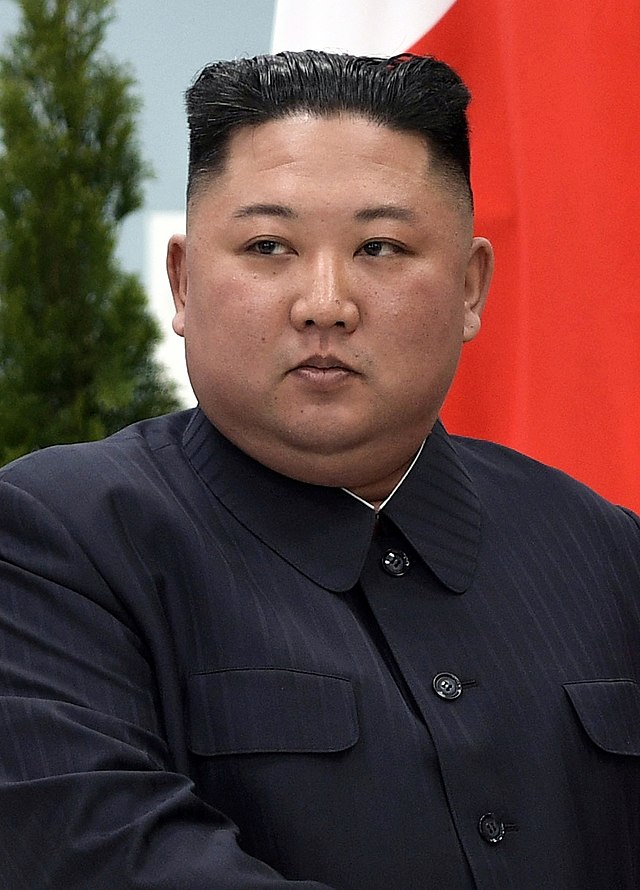
Kim Jong Un, the Supreme Leader of North Korea, has a net worth estimated at $5 billion. As the leader of one of the world’s most secretive and controversial regimes, Kim Jong Un’s wealth and earnings are shrouded in mystery. This article delves into the details of Kim Jong Un’s earnings, wealth, and the various factors contributing to his financial status, providing a comprehensive overview of his career and its impact.
Early Life and Background
Kim Jong Un was born into the ruling Kim dynasty, which has held power in North Korea since its founding. Although the exact date of his birth is disputed, North Korea officially claims he was born on January 8, 1982. This date is significant as it aligns perfectly with key dates in the history of the Kim dynasty, suggesting it may have been chosen for symbolic reasons. Kim Jong Un is the third and youngest son of Kim Jong Il, the former Supreme Leader of North Korea, and the grandson of Kim Il Sung, the country’s founding leader.
Kim Jong Un spent much of his early life in Switzerland, where he attended school under a false name. Known for his passion for basketball and shy demeanor, he integrated well with his peers. By 2000, he had returned to North Korea, where he attended Kim Il Sung University and earned degrees in physics and military studies. His education and upbringing were carefully curated to prepare him for leadership.
Rise to Power
Initially, it was not expected that Kim Jong Un would succeed his father as the Supreme Leader. His older brother, Kim Jong Nam, was the presumed heir until a scandal involving a forged passport and an attempt to visit Tokyo Disneyland led to his disgrace. This incident, combined with internal family politics, positioned Kim Jong Un as the favored successor.
In 2009, Kim Jong Un was officially designated as the next in line to lead North Korea. He was rapidly elevated through the ranks of the Workers’ Party of Korea, attaining the rank of four-star general in 2010. By 2011, the regime was actively eliminating potential rivals to ensure a smooth transition of power.
Following Kim Jong Il’s death in December 2011, Kim Jong Un was declared Supreme Leader. Despite initial speculation that other high-ranking officials might serve as regents, Kim Jong Un quickly consolidated power. In 2012, he was promoted to the rank of marshal, the highest in the North Korean military, solidifying his control over the armed forces.
Personal Wealth
Kim Jong Un’s personal wealth is vast and diverse. A joint investigation by South Korea and the United States in 2013 uncovered assets and bank accounts worth up to $5 billion controlled by Kim and his family. These assets are spread across more than 200 foreign bank accounts in countries including Austria, Liechtenstein, Russia, Singapore, China, Switzerland, and Luxembourg. Many of these accounts reportedly contain hundreds of millions of dollars in cash.
Properties and Luxury Assets
Kim Jong Un owns nearly 20 palaces and mansions scattered throughout North Korea for his personal use. His lifestyle includes a fleet of over 100 luxury cars, with a particular preference for European sports cars. Additionally, he owns at least one private jet and a luxury yacht over 100 feet in length. According to former NBA star Dennis Rodman, who visited Kim, the North Korean leader spends considerable time on a private island off the coast of North Korea.
Allegations of Embezzlement
Much of Kim Jong Un’s wealth is believed to come from the embezzlement of state funds. The regime’s control over North Korea’s economy allows for the diversion of substantial sums into the private coffers of the ruling family. This accumulation of wealth is in stark contrast to the widespread poverty experienced by the general population.
Leadership and Reforms
Since becoming the leader of North Korea, Kim Jong Un has introduced several notable reforms. While the changes have been subtle, they include increased Western influences in the nation’s culture and a more public persona. Unlike his predecessors, Kim Jong Un has appeared in public with his wife, showcasing a more approachable image.
Economic reforms have also been a hallmark of his rule, with a significant loosening of restrictions. Infrastructure development has shifted focus from political monuments to public amenities like skating rinks, parks, and pools. However, these reforms are accompanied by continued human rights abuses and severe political repression.
Diplomatic Efforts
Kim Jong Un’s leadership has also been marked by unprecedented diplomatic efforts. He has engaged in high-profile meetings with global leaders, including South Korean President Moon Jae-in, Chinese President Xi Jinping, and former U.S. President Donald Trump. These meetings have aimed at reducing tensions and discussing North Korea’s nuclear program. Although significant progress remains elusive, these interactions have marked a departure from North Korea’s historically isolated stance.
Controversies and Criticisms
Kim Jong Un’s regime has been at the forefront of numerous controversies. Human rights organizations have documented widespread abuses, including torture, forced labor camps, and public executions. The regime’s aggressive pursuit of nuclear weapons has also drawn international condemnation and led to severe economic sanctions.
One of the most high-profile incidents was the detention and subsequent death of American student Otto Warmbier, who was imprisoned in North Korea and returned to the United States in a comatose state. This incident further strained relations between North Korea and the U.S., despite the diplomatic overtures.
Conclusion
Kim Jong Un’s earnings and wealth are a reflection of his position as the supreme leader of one of the world’s most reclusive and authoritarian regimes. His wealth, amassed through a combination of state control and alleged embezzlement, starkly contrasts with the economic hardships faced by the North Korean populace. As he continues to navigate the complexities of international diplomacy and internal governance, Kim Jong Un’s influence on the global stage remains significant.
Despite the controversies and criticisms, his leadership has introduced subtle reforms and opened new diplomatic channels. The future of North Korea under Kim Jong Un’s rule remains uncertain, but his impact on the country’s trajectory is undeniable. As the world continues to watch, the legacy of Kim Jong Un will be shaped by his actions both at home and abroad.


