
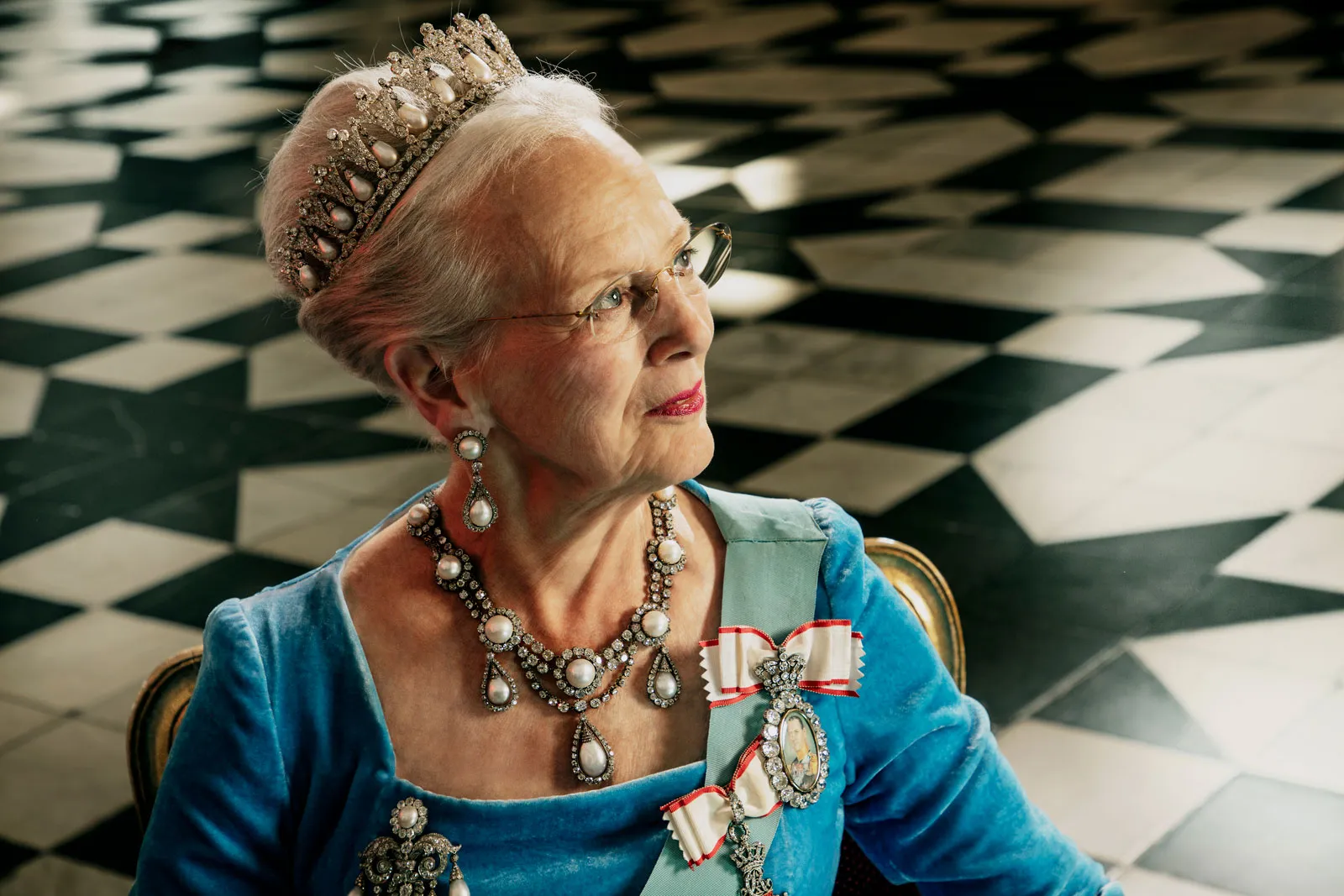
Margrethe II of Denmark, the first female monarch of Denmark since the reign of Queen Margrethe I in the 14th century, has long been a figure of interest not only for her leadership but also for her financial status. As a modern monarch in a constitutional monarchy, her wealth and earnings are shaped by both historical traditions and contemporary practices. This article provides a detailed insight into Queen Margrethe II’s earnings, wealth, and the historical context surrounding her financial standing.
Early Life and Ascension to the Throne
Born on April 16, 1940, in Copenhagen, Denmark, Margrethe Alexandrine Þórhildur Ingrid is the eldest daughter of King Frederick IX and Queen Ingrid. Her early education took place in Denmark, Sweden, and the United Kingdom, providing her with a robust academic foundation. Margrethe studied at prestigious institutions such as the University of Copenhagen, the University of Aarhus, and the Sorbonne in Paris, majoring in political science, archaeology, and economics.
Margrethe ascended to the throne on January 14, 1972, following the death of her father. Her ascension marked a significant moment in Danish history, as she became the first female monarch of Denmark in over 600 years. Her reign has since been characterized by modernization and adaptation to changing times while maintaining the traditions of the Danish monarchy.
Official Earnings and State Allowance
As the reigning monarch, Queen Margrethe II receives an annual allowance from the Danish state. This allowance, known as the Civil List, is intended to cover the costs associated with her official duties, including the maintenance of royal palaces, staff salaries, and public engagements. In recent years, the annual allowance for the Danish royal family has been approximately 86 million Danish krone (around $13 million USD).
The Civil List is a publicly disclosed budget, ensuring transparency in the financial support provided to the royal family. This allowance is used to cover various expenses related to the queen’s official functions, including travel, hosting state visits, and charitable activities.
Personal Wealth and Inherited Assets
In addition to the state allowance, Queen Margrethe II has personal wealth and inherited assets. The Danish royal family has historically owned significant properties and valuable assets, contributing to their overall wealth. Key properties include Amalienborg Palace, the official residence of the royal family in Copenhagen, and Fredensborg Palace, a summer residence. These properties, while state-owned, underscore the prestige and status of the monarchy.
Queen Margrethe II also owns private estates, such as the Chateau de Cayx in France, which serves as a holiday home for the royal family. These properties are significant assets in her financial portfolio, contributing to her overall wealth.
Art and Cultural Contributions
Queen Margrethe II is not only a monarch but also a recognized artist and cultural contributor. She has created numerous works of art, including paintings, illustrations, and textile designs. Her artistic endeavors add a unique dimension to her public persona and have also contributed to her income. Some of her artwork has been displayed in exhibitions and sold, further enhancing her wealth.
Her cultural contributions extend to her involvement in the arts and literature, including translating works into Danish. These activities, while primarily pursued out of personal interest and public service, also generate income and bolster her financial standing.
Financial Transparency and Public Perception
The financial affairs of the Danish royal family are subject to a degree of transparency, with the state allowance and public expenditures being regularly disclosed. This transparency helps maintain public trust and support for the monarchy. The Danish public generally holds Queen Margrethe II in high regard, appreciating her dedication to her role and her efforts to modernize the monarchy.
Public perception of Queen Margrethe II is shaped by her commitment to her duties, her cultural contributions, and her personal integrity. This positive perception reinforces the support for the financial provisions made for the royal family.
Historical Context and Family Influence
Understanding Queen Margrethe II’s wealth requires considering the historical context of the Danish monarchy. The Danish royal family is one of the oldest in Europe, with a history dating back over a millennium. This long-standing tradition provides a backdrop of stability and continuity, influencing the financial and social standing of the monarchy.
The wealth and influence of the Danish royal family have evolved over time, reflecting broader economic and social changes. The shift from an absolute monarchy to a constitutional monarchy in the 19th century significantly altered the financial dynamics of the royal household. Today, the monarchy operates within a framework that balances tradition with modern accountability and transparency.
Legacy and Future Prospects
Queen Margrethe II’s legacy is characterized by her efforts to modernize the Danish monarchy while preserving its historical traditions. Her financial management and public service have ensured the stability and continuity of the royal family. Her estimated net worth is around $40 million, reflecting her personal wealth, state allowance, and inherited assets.
Looking forward, the financial stability of the Danish monarchy is likely to continue, supported by the state’s provision and the careful management of personal and inherited assets. Crown Prince Frederik, the heir apparent, will carry forward the responsibilities and traditions of the monarchy, ensuring its relevance and continuity in the modern era.
Conclusion
Queen Margrethe II of Denmark’s wealth is a multifaceted narrative of state support, personal assets, and cultural contributions. Her estimated net worth of $40 million encompasses a blend of official earnings, inherited wealth, and personal endeavors. Margrethe’s life and financial journey highlight the unique intersection of tradition, duty, and modernity within the context of the Danish monarchy.
Understanding her financial standing involves appreciating the nuances of her role as a modern monarch, the historical context of the Danish royal family, and her personal contributions to the arts and culture. Queen Margrethe II’s story is a testament to the enduring significance of the monarchy and its ability to adapt and thrive in contemporary society.


