
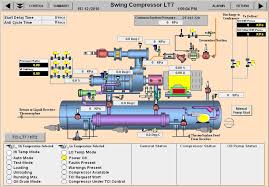
The Power of Plc: Unlocking Control And Automation
In the realm of electrotechnics, few elements are as crucial as the Programmable Logic Controller (PLC). A PLC is a sophisticated device that enables control and automation in various systems, from industrial machinery to residential appliances. In this article, we will delve into the world of PLCs, exploring their functions, components, and applications.
What is a Plc?
A PLC is an extended form of logical controller programmable by means of a programming language. It’s a device that executes programs based on input signals from various sources, such as sensors or switches. The primary function of a PLC is to control and automate processes in industrial settings, but its applications extend far beyond.
Plc Components
A PLC consists of three fundamental parts: The processor, input blocks, and output blocks.
- Processor: This is the brain of the PLC, responsible for executing programs and managing data. It’s not as powerful as a computer processor but sufficient for controlling industrial processes.
- Input Blocks: These are modules that receive signals from various sources, such as sensors or switches. They’re used to collect data from the environment and feed it into the PLC’s processor.
- Output Blocks: These modules send output signals to external devices, such as motors, valves, or lights. They’re responsible for controlling the physical world based on the decisions made by the PLC.
Programming Languages For Plcs
There are five primary programming languages used for PLCs:
- Kop (Ladder Logic): This language is ideal for those familiar with electrical diagrams and electronics.
- Sfc (Sequential Function Chart): A flowchart-based language that’s easy to understand, even for those without a background in electronics or electrotechnics.
- Fup (Functional Block): This language uses functional blocks to represent electronic components and their connections.
- Awl (Alphanumeric Word): A text-based language that’s not as commonly used due to its complexity and limited applications.
- ST (Structured Text): Similar to the Pascal programming language, this is a structured text language that’s easy to learn and use.
Simulators For Plc Programming
To practice PLC programming without risking damage to real equipment, simulators are available online. These tools allow you to create programs for PLCs in a virtual environment, testing and debugging them before implementing them on actual systems.
How Does a Plc Work?
Imagine a house with a simple hydraulic system consisting of taps and downloads. The downloads represent output signals (gone out), while the taps are input signals (ingressi). When you open a tap, it sends a signal to the download, which then activates another tap or valve. This process is repeated throughout the system.
In this example, the PLC acts as the central controller, reading input signals from various sources and sending output signals to external devices. It’s not just about controlling taps and downloads; PLCs can manage complex systems with multiple variables and outputs.
Understanding Plc Programming
PLC programming involves creating a program that combines input signals (ingressi) to generate output signals (gone out). The program is based on logical combinations of inputs, which determine the state of the system. For example, if two taps are opened, the PLC might activate a valve or another tap.
Conclusion
In conclusion, Programmable Logic Controllers (PLCs) are powerful devices that enable control and automation in various systems. By understanding their components, programming languages, and applications, you can unlock the potential of PLCs to improve efficiency, productivity, and safety in industrial settings.
Frequently Asked Questions
- What is a Plc?
A Programmable Logic Controller (PLC) is an extended form of logical controller programmable by means of a programming language. - What Are The Primary Components of a Plc?
The three fundamental parts of a PLC are the processor, input blocks, and output blocks. - How Many Programming Languages Are Used For Plcs?
There are five primary programming languages used for PLCs: KOP (Ladder Logic), SFC (Sequential Function Chart), FUP (Functional Block), AWL (Alphanumeric Word), and ST (Structured Text). - What is The Purpose of a Plc Simulator?
A PLC simulator allows you to create programs for PLCs in a virtual environment, testing and debugging them before implementing them on actual systems. - How Does a Plc Work?
A PLC acts as the central controller, reading input signals from various sources and sending output signals to external devices based on logical combinations of inputs. - What is The Difference Between an Input Block And an Output Block?
Input blocks receive signals from various sources, while output blocks send output signals to external devices. - Can Plcs be Used in Residential Applications?
Yes, PLCs can be used in residential applications, such as controlling lighting systems or heating systems.


