
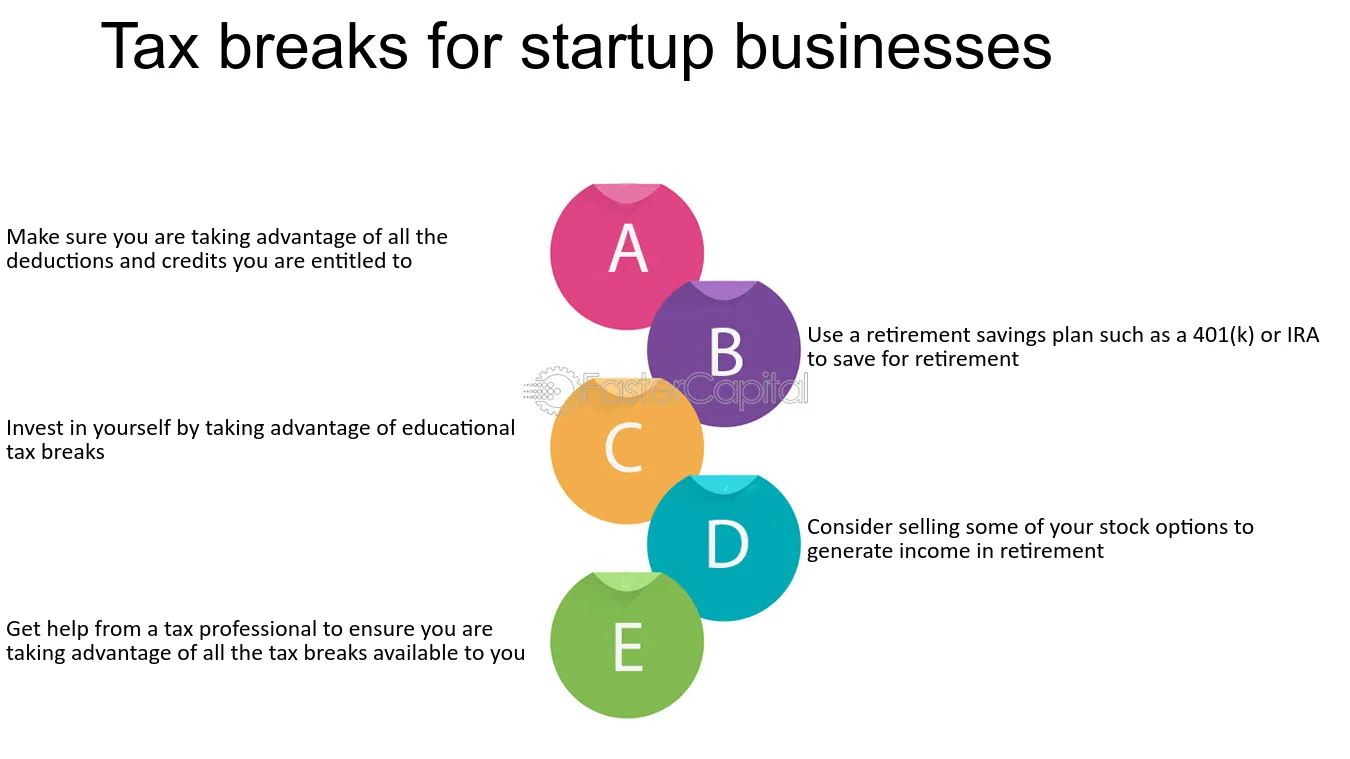
If you’re a startup founder, you’re likely wearing many hats as you launch and grow your business. From product development to marketing, your day-to-day tasks can seem endless. While you’re busy pushing your startup forward, it’s also essential to think about your financial future. One effective way to do that is by understanding how retirement plans can help you save on taxes. In this comprehensive guide, we’ll explore various retirement plans available to entrepreneurs, demonstrate how they can be used strategically to minimize taxes, and offer tips to navigate these options effectively.
The Importance of Retirement Planning for Startup Founders
Starting a business is an exhilarating endeavor, but it can also be fraught with financial uncertainty. As a startup founder, financial planning often takes a back seat to immediate business needs. However, it is crucial to prioritize retirement planning not just for your future but also to leverage tax incentives available through retirement accounts.
Typically, startup founders can find themselves in a unique situation of fluctuating income, making consistent savings challenging. Yet, setting up a retirement plan can provide structure to your financial planning while offering potential tax savings. The earlier you start saving for retirement, the more financial security you will have in the future.
Understanding Different Types of Retirement Plans
When you’re considering retirement plans that could offer tax benefits, it’s essential to understand the different types available. Here are some popular options for startup founders:
1. Simplified Employee Pension (SEP) IRA
A SEP IRA is an attractive option for self-employed individuals and small business owners. Here’s why it stands out:
-
High Contribution Limits: In 2023, you can contribute up to 25% of your net earnings (with a maximum of $66,000), much higher than traditional IRAs.
-
Tax Deductible Contributions: Contributions are tax-deductible, reducing your taxable income, which ultimately lowers your tax bill.
-
Easy to Set Up and Maintain: Setting up a SEP IRA is incredibly straightforward, making it an attractive option for busy entrepreneurs.
2. Solo 401(k)
The Solo 401(k) is another excellent choice for solo entrepreneurs. Here’s what makes it beneficial:
-
Dual Contribution Options: As both the employer and employee, you can make significant contributions—up to $66,000 in 2023, or $73,500 if you’re aged 50 or older.
-
Tax Benefits: Contributions can be made pre-tax, which lowers your taxable income. Alternatively, you can opt for Roth contributions, allowing tax-free withdrawals in retirement.
-
Diverse Investment Options: With a Solo 401(k), you have a wide range of investment options, from stocks to real estate.
3. Traditional IRA
The Traditional IRA is a more straightforward retirement saving option:
-
Tax Deductible Contributions: Contributions may be tax-deductible, depending on your income level and the type of retirement plan you offer your employees.
-
Lower Contribution Limits: The contribution limit is $6,500 for individuals under 50 and $7,500 for those 50 or older.
Although the limits are lower than other options, the Traditional IRA still provides tax benefits, especially for those with lower incomes.
4. Roth IRA
The Roth IRA is another option but with a different tax structure:
-
Tax-Free Withdrawals: Contributions are made after taxes, but all qualified withdrawals are tax-free, making it attractive for younger startup founders who expect to be in a higher tax bracket in retirement.
-
Flexible Contributions: Unlike Traditional IRAs, you can withdraw your contributions at any time without penalty.
However, the contribution limits are the same as Traditional IRAs, and there are income limits for eligibility.
5. Defined Benefit Plan
For those with a higher income and a more established business, a Defined Benefit Plan could be a valuable option:
-
High Contribution Limits: Defined Benefit Plans allow for much larger contributions, depending on your age and income, potentially exceeding $200,000 annually.
-
Predictable Retirement Benefits: This plan is designed to ensure a specific payout during retirement, making it easier to plan your finances.
-
Tax Advantages: Contributions are tax-deductible, lowering your taxable income substantially.
While this plan requires more administrative work and a higher level of commitment, the tax benefits make it worthwhile for many founders.

- Overcome negative thought patterns, reduce stress, and live a worry-free life
- Overthinking is the biggest cause of unhappiness
- Don't get stuck in a never-ending thought loop
- Stay present and keep your mind off things that don't matter, and never will
- Break free of your self-imposed mental prison
Tax Strategies for Startup Founders
Understanding retirement plans is one thing, but knowing how to leverage them effectively for tax savings is another. Here are actionable strategies to help startup founders minimize their tax liabilities using retirement plans:
1. Start Early
The earlier you start contributing to your retirement plan, the more benefits you’ll reap in terms of tax deductions and compound growth. If you can manage to set aside even a small percentage of your income in the early days of your startup journey, it will prove valuable in the long run.
2. Take Advantage of Employer Contributions
If you have employees, consider setting up a retirement plan where you can contribute to their plans as well. Not only does this provide you with tax deductions, but it can also help attract and retain top talent—a crucial factor for startup success.
3. Keep Your Contributions Below Income Thresholds
Be mindful of contribution limits relative to your income. For example, exceeding certain thresholds can lead to tax penalties. Ensure that your contributions don’t push you into a higher tax bracket or violate contribution limits.
4. Utilize Catch-up Contributions
If you’re over 50, take advantage of catch-up contributions in plans like the Solo 401(k) or Traditional IRA. This can help boost your savings as you near retirement, while also providing additional tax deductions.
5. Consider a Backdoor Roth IRA
If you find yourself ineligible for a Roth IRA due to income limits, consider utilizing a Backdoor Roth IRA strategy. Contribute to a Traditional IRA first, then convert it to a Roth IRA. This will allow you to benefit from tax-free growth and withdrawals without being constrained by income limits.
6. Bundle Business Expenses
As a startup founder, you likely incur numerous business-related expenses. Ensure you’re tracking these expenses diligently, as many can be deducted from your income, lowering your overall tax burden. Coupling business expense deductions with retirement contributions can maximize your tax-saving strategies.
7. Talk to a Financial Advisor
Make it a point to consult a financial advisor or tax professional who specializes in serving entrepreneurs. They can offer tailored advice on retirement planning and tax strategies that are specific to your situation, ensuring you get the most out of your efforts.
Common Misconceptions About Retirement Plans and Taxes
As you dive into the world of retirement planning, it’s easy to stumble upon misinformation. Here are some common misconceptions that startup founders should be aware of:
Misconception 1: “I Don’t Have Time for Retirement Planning”
While launching a startup can be all-consuming, ignoring retirement planning can affect your long-term financial health. Taking an hour to set up a retirement account can save you substantial time later in managing your finances.
Misconception 2: “Retirement Plans Only Benefit Highly Paid Employees”
While higher-paid employees can maximize their contributions, retirement plans can equally benefit lower-paid employees and self-employed individuals. The key is finding the right plan that fits your financial situation and goals.
Misconception 3: “I’ll Save Enough by Relying on Social Security”
Relying solely on social security for retirement often leads to financial stress. Having a robust retirement plan ensures you have the savings you need to maintain your lifestyle in retirement.
Conclusion
As a startup founder, you have numerous responsibilities but don’t overlook the importance of retirement planning. Utilizing retirement accounts effectively can help you minimize taxes, attract talent, and secure your financial future.
From SEP IRAs to Solo 401(k)s, each retirement plan has unique benefits that can be harnessed in tandem with your financial strategies. The sooner you start contributing, the better positioned you will be for retirement.
By understanding your options and employing tactical strategies, you can turn retirement planning into a rewarding aspect of your entrepreneurial journey. So, what are you waiting for? Jumpstart your retirement planning today, and watch your future thrive!
This article provides insights and actionable information to help startup founders maximize their tax savings through retirement plans, ensuring relevance and clarity for readers interested in financial planning within the entrepreneurial space.


