
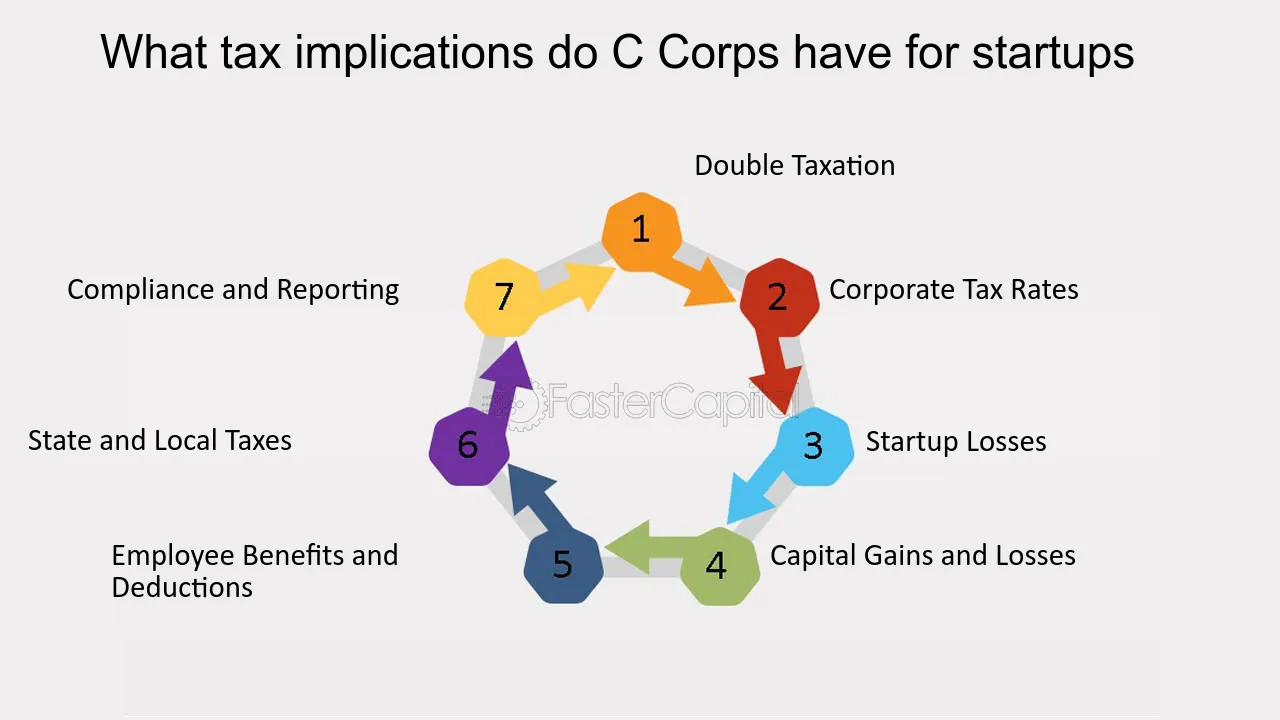
When you’re launching a startup, numerous decisions will shape your business’s trajectory—from your mission statement to your market strategy. One of the most pivotal choices is the legal structure of your business. For many entrepreneurs, a C-Corporation (C-Corp) is the ideal route. Not only does it provide liability protection and a solid foundation for growth, but it also offers unique advantages for tax planning that can significantly benefit your startup.
In this article, we’ll delve into how the C-Corp structure can enhance your startup’s tax strategy, ensuring that you capitalize on its benefits while avoiding common pitfalls. Whether you’re still in the early stages of planning or you’ve already launched your startup, understanding the C-Corp framework might just be the key to your financial success.
What is a C-Corporation?
Before we dive into the benefits, it’s vital to grasp what a C-Corporation is. A C-Corp is a legal structure for a corporation in which the owners, or shareholders, are taxed separately from the entity itself. Unlike Sole Proprietorships or Limited Liability Companies (LLCs), which pass profits and losses directly through to the owners’ personal tax returns, a C-Corp is taxed at the corporate level. A brief overview of its characteristics includes:
- Limited Liability: Owners are typically not personally liable for business debts or liabilities.
- Unlimited Ownership: A C-Corp can have an unlimited number of shareholders, making it an attractive option for startups seeking outside investment.
- Perpetual Existence: The corporation continues to exist independently of its owners, facilitating longevity.
- Stock Structure: Easier to issue several classes of stock, enticing investors and allowing for ownership flexibility.
These unique characteristics lay the groundwork for potential tax benefits, making C-Corps particularly appealing for startups aiming for scalability.
Tax Benefits of the C-Corp Structure
1. Lower Corporate Tax Rate
One of the most pronounced tax advantages of a C-Cop is its flat corporate tax rate, currently set at 21% (as of the latest tax reforms). In contrast, personal income tax rates can reach as high as 37%, depending on your income level. By opting for a C-Corp structure, startups can retain more earnings within the business, allowing for reinvestment in growth opportunities rather than remitting a higher percentage in personal taxes.
2. Deductions for Business Expenses
C-Corps can deduct a wide variety of business expenses. This includes costs incurred during normal operations, such as salaries, benefits, rent, utilities, and marketing expenses. Moreover, C-Corps have the added flexibility to provide benefits such as health insurance and retirement plans, which can be deducted at the corporate level and further reduce taxable income.
3. Possibility for Retained Earnings
C-Corps can retain earnings rather than distributing them as dividends. Retaining earnings allows your startup to reinvest profits back into the company without incurring immediate personal tax liabilities. This is particularly advantageous for young companies that need funds for expansion, development, or operations. Even with this benefit, however, companies should be aware of the Accumulated Earnings Tax, which imposes a penalty on corporations that retain earnings beyond reasonable business needs.
4. Attractive Tax Treatment for Employee Benefits
C-Corps can offer various tax-deductible benefits for employees, which can improve staff satisfaction and retention while delivering potential tax breaks. Benefits like stock options, health insurance, and retirement plans (i.e., 401(k)s) are not only tax-deductible for the corporation but may also allow employees to lower their taxable income. This mutually beneficial situation can help startups attract top talent while also benefiting from valuable tax breaks.

- Overcome negative thought patterns, reduce stress, and live a worry-free life
- Overthinking is the biggest cause of unhappiness
- Don't get stuck in a never-ending thought loop
- Stay present and keep your mind off things that don't matter, and never will
- Break free of your self-imposed mental prison
5. Capitalizing on Multiple Tax Brackets
C-Corps can structure their financial architecture cleverly to take advantage of multiple tax brackets effectively. For example, if funds are retained in the business, the C-Corp pays corporate taxes at the lower rate, while shareholders only incur taxes when distributions occur. This structure offers increased flexibility in tax planning, as profits can be strategically allocated when their tax implications are most favorable.
6. Options for International Expansion
If your startup intends to explore international markets, a C-Corp provides a favorable structure for this ambition. C-Corps can benefit from a range of significant tax treaties, and the potential for deferred taxes on foreign earnings can make it easier for U.S.-based corporations to expand without incurring immediate tax consequences.
Potential Challenges and Considerations
While a C-Corp structure offers numerous benefits for tax planning, it’s essential to be aware of potential challenges:
Double Taxation
One of the primary drawbacks of a C-Corp is the phenomenon of double taxation. Profits are taxed at the corporate level, and when dividends are distributed to shareholders, they are taxed again on their individual tax returns. Although this can be mitigated through strategies such as reinvesting profits or the incorporation of fringe benefits, it’s a significant consideration for startups weighing their legal structure.
Increased Complexity and Compliance
C-Corps require adherence to specific formalities, including regular board meetings, maintaining corporate minutes, and filing various taxes and reports. The cost associated with compliance can be significant, especially for startups operating on tight budgets. Proper legal and accounting advice is crucial to navigating these complex requirements.
Limited Flexibility in Cash Distribution
C-Corps distribute profits through dividends, which are not automatically linked to ownership percentage or investment level. This limitation can impact the way funds are allocated among shareholders, potentially introducing conflict if some investors expect more immediate returns on their investments.
Conclusion: Is a C-Corp Right for Your Startup?
Choosing a business structure is an essential component of your startup’s financial planning and strategy. The C-Corp structure provides compelling tax benefits, particularly for startups looking for scalability and access to a broader investor pool. With lower corporate tax rates, opportunities for deductions, and a framework for retaining earnings, C-Corps align with ambitious growth objectives.
However, entrepreneurs must weigh the benefits against potential challenges like double taxation and regulatory complexities. It’s advisable to consult with legal and financial professionals before choosing this structure to ensure that it aligns with your specific business goals and financial situation.
As you navigate the exciting journey of launching your startup, understanding your tax implications and utilizing the right structure can set the foundation for success. A C-Corp may just provide the flexibility and financial benefits necessary to propel your business forward.
So, as you work toward your entrepreneurial dreams, remember that the structure you choose today can have lasting impacts on your startup’s growth trajectory, tax planning, and overall financial health. With careful consideration and strategic planning, you can aim for a tax-efficient future that allows your startup to thrive in competitive markets.


