
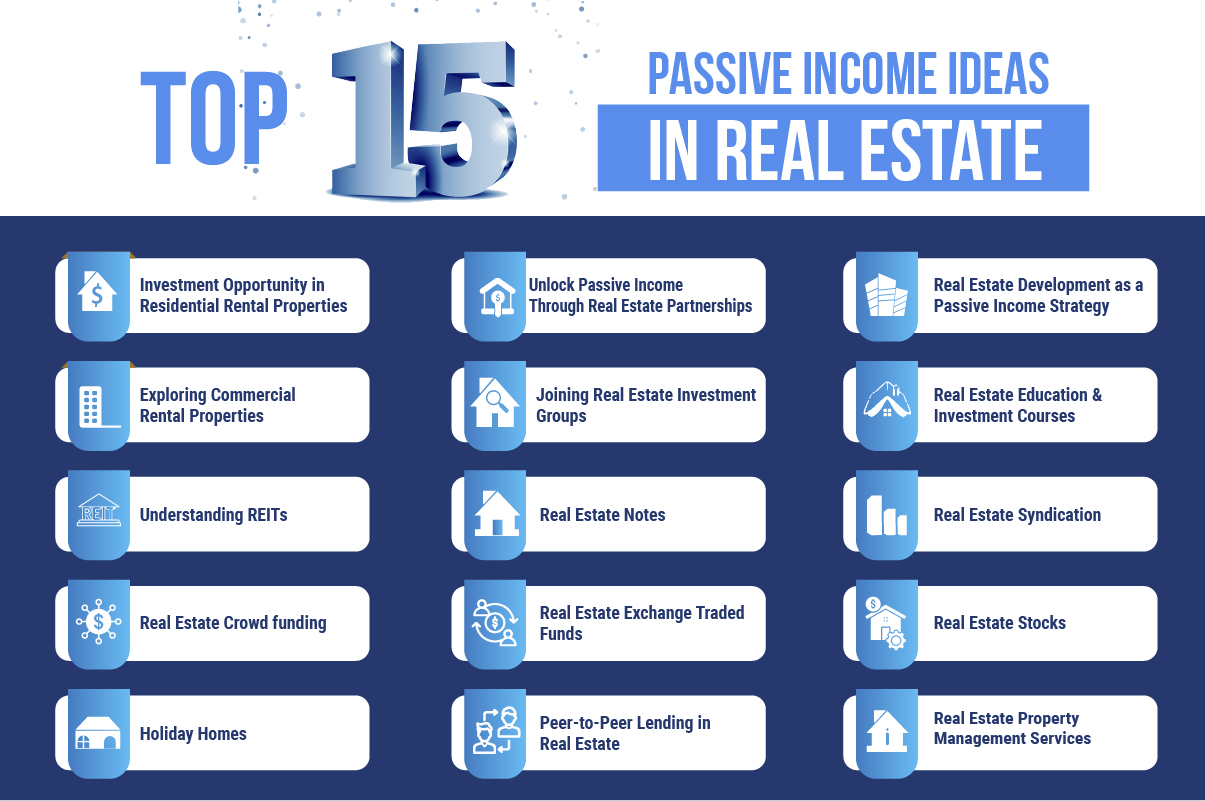
In recent years, real estate has emerged as one of the top avenues for generating passive income, attracting seasoned investors and novices alike. However, choosing the right real estate investment can be daunting. With so many options available and each with its unique risks and benefits, it’s crucial for potential investors to navigate this intricate landscape wisely. In this comprehensive guide, we’re going to explore the key steps you need to take to choose the right real estate investment for passive income.
Understanding Passive Income in Real Estate
Before diving into the specifics of selecting a real estate property, let’s clarify what passive income means in the context of real estate. Passive income is the money earned with minimal effort on the part of the investor. In real estate, this often includes earnings from rental properties, real estate investment trusts (REITs), and crowdfunding platforms. Unlike active income, where you trade time for money, the goal of passive income is to create a system that allows you to earn money regularly without being fully involved day-to-day.
The Allure of Passive Income from Real Estate
The beauty of passive income from real estate lies in its potential for wealth creation. It allows you to build equity, hedge against inflation, and generate cash flow. Furthermore, real estate offers tax advantages, which can improve your overall net earnings. However, while the potential rewards are significant, the risks are equally noteworthy. Thus, careful consideration is imperative when selecting your investment.
Step 1: Define Your Investment Goals
Before hitting the market, it’s important to clearly outline your investment goals. Are you looking for a quick return on investment (ROI) or long-term stability? Do you prefer residential or commercial properties? Let’s break that down:
- Short-term vs. Long-term: Are you looking to flip houses for quick profits, or would you prefer the steadiness of rental income?
- Type of Property: Each property type has its own pros and cons. For example, single-family homes may offer stability, while multi-family units can maximize your cash flow. Commercial properties may involve a higher initial investment but can often yield higher returns.
- Risk Tolerance: Understand how much risk you are willing to take. More significant potential returns generally accompany higher risks, particularly with properties needing substantial renovation or in less desirable locations.
Step 2: Research Your Market
Once your investment goals are established, the next step is to conduct thorough market research. This includes:
Location, Location, Location
The location of your investment property is arguably the most crucial factor affecting its value. High-demand areas are usually marked by lower vacancy rates and a steady stream of tenants. Consider the following:
- Population Growth: Areas experiencing population growth may have an increasing demand for housing, driving rental prices up.
- Economic Indicators: Job markets and employment rates are significant indicators of the economic stability of an area.
- Amenities and Infrastructure: Proximity to schools, hospitals, public transport, and shopping can significantly enhance property appeal.
- Neighborhood Trends: Understanding gentrification trends can provide insight into future property values.
Market Conditions
Also, take into account the current real estate market conditions. Are property prices rising or falling? Is it a buyers’ or sellers’ market? Resources like market reports, local real estate agencies’ data, and economic forecasts will help you understand the prevailing market conditions effectively.
Step 3: Determine Your Budget
Establishing a firm budget is essential. When selecting real estate investments, consider not just the purchase price but also ongoing costs such as:
- Property Taxes: Research local tax rates as they can affect your overall ROI.
- Insurance: Adequate property insurance is a necessity.
- Maintenance: Factor in costs for upkeep, repairs, and emergency expenses.
- Management Fees: If you’re planning to hire a property management service, include these costs in your budget.
Creating a comprehensive budget helps you understand what type of properties are within your financial reach and allows for realistic cash flow projections.

- Overcome negative thought patterns, reduce stress, and live a worry-free life
- Overthinking is the biggest cause of unhappiness
- Don't get stuck in a never-ending thought loop
- Stay present and keep your mind off things that don't matter, and never will
- Break free of your self-imposed mental prison
Step 4: Analyze the Investment Options
Once you’ve established your goals, researched the market, and set a budget, it’s time to analyze specific investment options. Here are the primary avenues:
Rental Properties
Owning rental properties can be one of the most lucrative ways to generate passive income. However, it requires active management unless you hire a property manager. Consider:
- Single-Family Homes: Generally easier to manage and finance, but can have fluctuating rental income.
- Multi-Family Units: More doors mean potentially higher cash flow, though they often require more maintenance and management.
- Vacation Rentals: Platforms like Airbnb have popularized short-term rentals, but these can require high effort in maintenance and bookings.
Real Estate Investment Trusts (REITs)
REITs allow you to invest in real estate without owning physical properties. They typically pay high dividends, and their shares can be traded on stock exchanges. The benefits include:
- Liquidity: Unlike physical properties, you can easily buy and sell REIT shares.
- Diversification: REITs often own portfolios of properties, reducing your risk exposure.
However, pay attention to the management fees and performance history of the REITs you consider.
Real Estate Crowdfunding
This relatively new model allows you to pool your money with other investors to fund real estate projects. Platforms like Fundrise or RealtyMogul provide access to commercial properties that may otherwise be out of reach for individual investors. Benefits include:
- Low Entry Cost: Many crowdfunding platforms allow investments with lower amounts compared to traditional real estate.
- Diversification: You can spread your investment across different projects to mitigate risk.
However, this option often comes with longer investment periods and can be less liquid than purchasing real estate outright.
Step 5: Conduct Due Diligence
Don’t overlook the need for thorough due diligence. Whether you’re considering a rental property, REIT, or crowdfunding, it’s essential to gather all necessary information and assess potential risks.
- Property Inspection: For physical properties, always conduct a comprehensive inspection to assess structural integrity and potential repair costs.
- Financial Projections: Evaluate potential income, expenses, and expected ROI over time. Utilize tools like spreadsheets to analyze cash flow and profitability.
- Legal Considerations: Ensure you understand local zoning laws, rental regulations, and any legal obligations tied to the property.
Step 6: Calculate Your Potential Return on Investment (ROI)
Your ROI will help you gauge the overall effectiveness of your investment strategy. To calculate ROI, use the following formula:
[
\text{ROI} = \left( \frac{\text{Net Profit}}{\text{Total Investment}} \right) \times 100
]
This calculation gives you a percentage that you can use to compare different investment opportunities. Be sure to account for all income and expenses, including management fees, maintenance, and taxes.
Step 7: Start Small and Scale Up
If you’re new to real estate investing, consider starting small. A single-family rental or a small multi-family unit can be an excellent way to learn the ropes without overwhelming yourself. As you gain experience, you’ll find it easier to make informed decisions about larger or more complex properties.
Step 8: Keep Learning and Adapting
Finally, the world of real estate is always evolving. Market conditions, economic indicators, and legislation can all change. Thus, it’s essential to remain informed and adaptable. Subscribe to real estate journals, podcasts, and attend local investor meetings or online webinars to expand your knowledge and network.
Conclusion
Choosing the right real estate investment for passive income requires a thoughtful and strategic approach. By defining your investment goals, researching the market, analyzing properties, and conducting thorough due diligence, you can position yourself for success. Remember, real estate investing isn’t a get-rich-quick scheme; it requires patience, ongoing education, and an understanding of your personal financial landscape. Whether you opt for rental properties, REITs, or crowdfunding, make informed choices that align with your lifestyle and investment aspirations. Happy investing!


