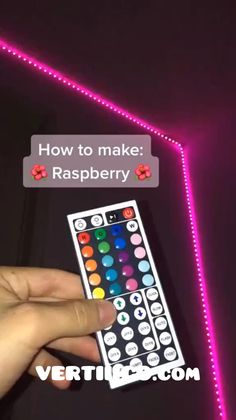
Creating Colors With Led: A Comprehensive Guide
As we navigate through the vast expanse of the web and social networks, it’s not uncommon to stumble upon stunning photos and videos showcasing environments bathed in vibrant LED lights. Among these captivating visuals, one catches our eye – a colorful light source that seems to transport us to an enchanting world.
What Would Be Beautiful: Creating Colorful Atmospheres at Home
We’re sure you’ve wondered what it would be like to have such an atmosphere in your own home. The idea of infusing each room with a unique chromatic temperature and intensity is indeed appealing. LED lights can make this vision a reality, offering an optimum solution for personalized ambiance.
Led Colored Lights: Unpacking The Basics
Before diving into the world of colorful LEDs, let’s clarify some basic concepts. An LED (Light Emitting Diode) colored light combines several semiconductor materials that emit light when crossed with electrical current. This phenomenon is made possible by the presence of RGB (Red, Green, Blue) or RGBW (Red, Green, Blue, White) semiconductors in the LED.
Temperature Color: Unraveling Its Secrets
On the other hand, temperature color, expressed in Kelvin (K), refers to the degree of colorization emitted by a white light LED. This measure ranges from warm whites (1800K), tending towards red, to cold whites (12000K), which lean towards bluish colors. While the temperature color affects the atmosphere and ambiance, it’s essential to understand that LEDs can produce different temperatures without affecting their color.
Led Colored Lights Vs. Led White Lights
A crucial distinction lies between LED colored lights and white light LEDs. The former is used primarily for decorative purposes or as secondary lighting sources, while the latter serves as primary lighting, often characterized by a neutral or cold tone. An example of this difference can be seen in using an LED white bulb to create a warm atmosphere versus utilizing an RGB/RGBW LED to reproduce various colors.
Applying Colored Leds: Choosing The Right Kit
To apply colored LEDs effectively, consider selecting a kit that suits your needs. Philips Hue is an excellent choice for creating a smart lighting system with adjustable color temperature and intensity. Their kits include a starter kit with two light bulbs, allowing you to experiment with different scenarios.
Philips Hue Starter Kit: A Step-by-step Guide
- Install the light bulbs in their respective places (e.G., Traditional lamp, floor lamps).
- Connect the controller to your router via Ethernet.
- Link the controller to the power source and initiate it.
- Download and install the Philips Hue app on a mobile device connected to Wi-Fi.
- Pair the app with the controller through the setup process.
Mounting Colored Leds Behind The TV
An excellent way to create an immersive experience while watching movies or playing games is by mounting colored LEDs behind the TV. This can be achieved using LED strips, which come in various lengths and colors. Alternatively, consider investing in a Philips Ambilight television, designed with built-in color-changing LEDs that adapt to the visuals on screen.
Philips Ambilight: A Cinematic Experience
To mount colored LEDs behind the TV:
- Choose an LED strip or kit (e.G., RGB/RGBW) and follow the manufacturer’s instructions for installation.
- Position the LED strip along the back perimeter of the TV, using adhesive strips to secure it in place.
Creating Colors With Leds to Rhythm of Music
To create a musical experience with colored LEDs:
- Select an LED controller (e.G., Colorful X2) compatible with your device’s audio output.
- Connect the LED strip to the controller and ensure proper power supply.
- Connect the audio source to the controller, adjusting volume levels as needed.
Music IR Controller: A Convenient Option
For a more straightforward solution:
- Choose an IR Music Controller featuring a built-in microphone.
- Connect two RGB LEDs (4-pin) to the controller’s respective jacks.
- Ensure proper power supply and connect the audio source to the device.
This comprehensive guide has walked you through the world of creating colors with LED lights, providing practical insights into selecting the right kit, mounting colored LEDs behind the TV, and utilizing them in harmony with music.