
When it comes to running a successful Software-as-a-Service (SaaS) business, understanding your financial projections is crucial for long-term viability and growth. One of the key metrics that can help you gauge the health of your SaaS model is Monthly Recurring Revenue (MRR). If you’re a founder, entrepreneur, or investor, knowing how to accurately forecast MRR is imperative. In this article, we’ll delve deeply into the process of forecasting MRR within a SaaS business plan, sharing practical tips and techniques to enhance your financial forecasting.
What is Monthly Recurring Revenue (MRR)?
Before diving into the forecasting process, let’s clarify what MRR really means. Monthly Recurring Revenue (MRR) is a metric that represents the predictable revenue your business can expect to earn each month from its customers. It’s a vital measure in the SaaS industry because it reflects the effectiveness of your sales, marketing strategies, and customer retention efforts.
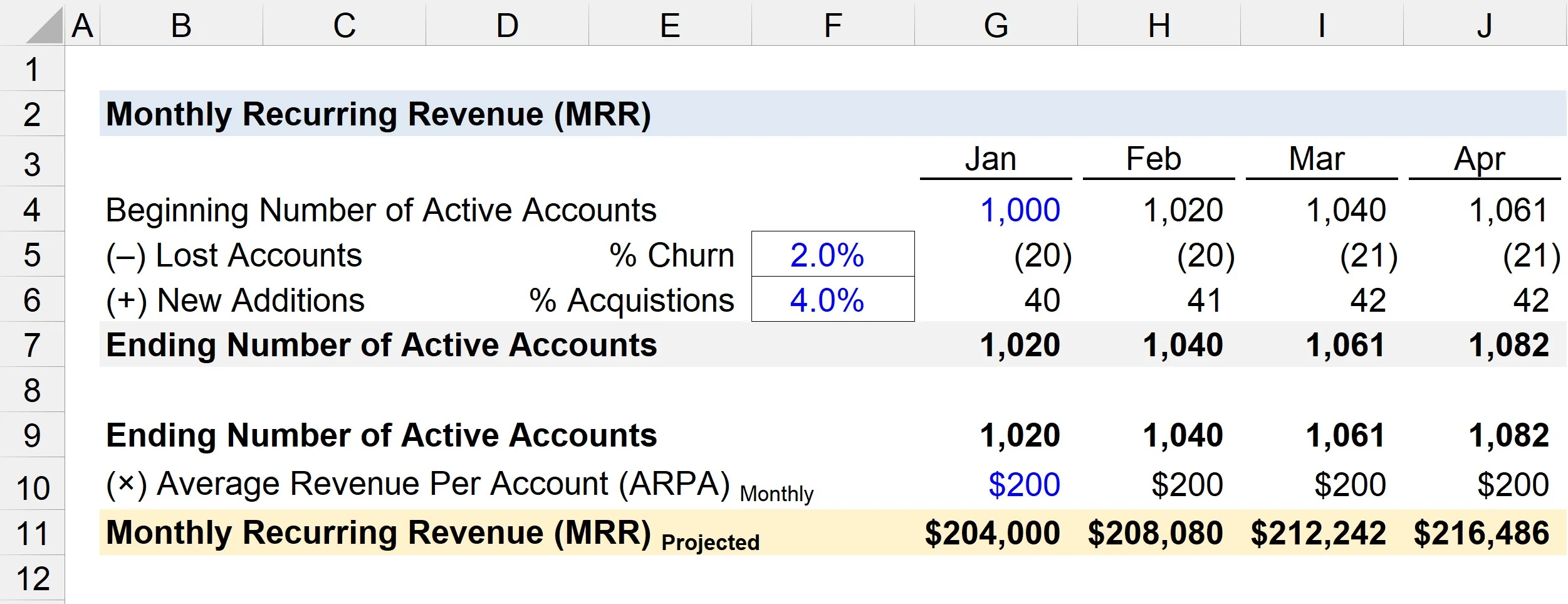
MRR is calculated by multiplying the average revenue per user (ARPU) by the total number of subscribers. Therefore, if you have 100 subscribers paying $50 per month, your MRR would be $5,000.
Understanding MRR helps not only in tracking monthly income but also allows SaaS businesses to plan and forecast future revenues., making it critical for a SaaS business plan.
Why is MRR Forecasting Important?
Forecasting MRR is more than just a mathematical exercise; it’s a crucial aspect of business planning for several reasons:
-
Investment Attraction: Investors often want to see MRR forecasts as part of the business plan. They need to understand your revenue potential and how quickly you can grow.
-
Resource Allocation: Forecasting helps identify how much you can invest in product development, marketing, and customer support.
-
Goal Setting: Understanding your MRR enables you to set realistic short-term and long-term goals.
-
Strategic Planning: It informs your strategic decisions, helping you understand how changes in pricing or customer acquisition initiatives affect your revenue.
-
Cash Flow Management: Given the recurring nature of revenue, accurately forecasting MRR helps in managing cash flow more effectively.
How to Create an Effective MRR Forecast for Your SaaS Business
Step 1: Determine Your Baseline MRR
To begin, calculate your baseline MRR. Use historical data from your existing customer base:
-
Collect Data: Start by gathering historical revenue data from subscriptions, paying close attention to any seasonal trends or fluctuations.
-
Average Revenue per User (ARPU): Calculate your ARPU by dividing your total MRR by the total number of customers at a given point in time.
-
Account for Churn: Factor in your churn rate, the percentage of customers who cancel their subscriptions. Understanding your churn helps refine your revenue projections.
Step 2: Identify Growth Drivers
Next, you need to forecast your customer growth. Consider key growth drivers:
-
Customer Acquisition: Analyze how many new customers you anticipate acquiring. Look at your previous marketing and sales performance to project future acquisition rates.
-
Market Trends: Stay updated on market trends and how they might affect demand for your services.
-
Sales Strategy: Determine if new strategies or partnerships will contribute to increased sales.
-
Product Development: Consider enhancements or new features that could attract more customers or encourage existing customers to upgrade.

- Overcome negative thought patterns, reduce stress, and live a worry-free life
- Overthinking is the biggest cause of unhappiness
- Don't get stuck in a never-ending thought loop
- Stay present and keep your mind off things that don't matter, and never will
- Break free of your self-imposed mental prison
Step 3: Construct a Forecasting Model
With your baseline MRR and growth drivers identified, you can now create an MRR forecasting model. Here’s a simple framework:
-
Monthly Breakdown: Create a spreadsheet to break down MRR month-by-month.
-
Scenario Modeling: Add different scenarios (best case, worst case, and most likely case) to understand how different factors influence your forecasts.
-
Include New Acquisitions: For each month, add the revenue expected from new subscribers based on your acquisition targets.
-
Adjust for Churn: Deduct churned customers from your forecast to get a more realistic view.
-
Growth Rate Assumptions: Make clear assumptions about growth rates. For example, if you expect to grow 20% month-over-month, apply that to your existing customers.
Step 4: Continuously Monitor and Adjust
Once your forecast is in place, it’s important to regularly monitor and adjust as needed. Here’s how to do this effectively:
-
Regular Reviews: Conduct monthly or quarterly reviews of your forecast versus actual performance. This will help you identify where you may need to adjust your expectations or strategies.
-
Strategic Adjustments: If you notice higher churn or slower acquisition than anticipated, be prepared to pivot your approach.
-
Stakeholder Feedback: Engage with your team and investors to refine your forecasts based on new insights and market conditions.
-
Utilize Financial Tools: Consider using SaaS financial forecasting tools and software which can simplify this process and give you a dynamic view of your revenue picture.
Step 5: Use MRR in Decision-Making
Incorporating MRR into your overall business strategy can help shape important decisions:
-
Resource Planning: Use your MRR forecast to guide hiring decisions, marketing budgets, and software development.
-
Pricing Strategy: Analyze how different pricing models can impact your MRR, whether they be tiered pricing, freemium models, or annual subscriptions.
-
Investment Opportunities: If you’re looking for external investments or loans, a solid MRR forecast can strengthen your case.
-
Customer Relationship Management: Understanding your revenue flows can also guide your customer relationship management efforts, enhancing customer retention and satisfaction.
Conclusion
Forecasting Monthly Recurring Revenue (MRR) in a SaaS business plan is a multifaceted process that requires careful consideration of various factors. By establishing a solid baseline, identifying growth drivers, constructing a detailed forecasting model, and continuously monitoring results, you can provide a clearer picture of your revenue potential.
Ultimately, the insights gained from accurate MRR forecasting can drive strategic decisions, improve resource allocation, and attract investors, all while setting your SaaS business on a path toward sustained growth. With the right approach, forecasting MRR can be a straightforward and valuable exercise, allowing you to navigate the complexities of the SaaS landscape confidently.
By leveraging these principles, you’ll not only equip yourself with better forecasting abilities but will also set a foundation for long-term success in your SaaS venture. Don’t underestimate the power of understanding your recurring revenues; it’s a pivotal element in steering your business towards a successful future.


