
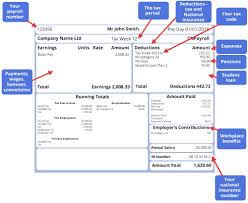
How to Read Your Pay Slip: A Comprehensive Guide
Are you tired of receiving your pay slip every month, only to struggle understanding the various details it contains? you’re not alone! reading a pay slip can be complex, especially for those without a background in finance or accounting. In this article, we’ll take you through each section of the pay slip and provide a clear explanation of what each part means.
Understanding Your Pay Slip
Before we dive into the details, it’s essential to understand that your pay slip is an official document that outlines your salary, deductions, and other relevant information. It serves as proof of payment from your employer to you, the employee. In this guide, we’ll break down each section of the pay slip, so you can easily understand what you’re looking at.
The Header: Essential Information
The header is the first part of the pay slip, containing essential information about both you and your employer. Here’s what you need to know:
-
Company Data: This includes the company name, address, and legal headquarters.
-
Employee Data: This section provides your personal details, including name, surname, date of birth, residence, fiscal code, profession, typology of ccnl (contracted collective national of work), level of belonging, and more.
-
Reimbursement Date: The month and year for which the pay slip is issued.
The Body: Calculating Your Salary
The body of the pay slip contains the most critical information about your salary. Here’s what you need to know:
-
Ordinary Reimbursement: This section shows your basic salary, calculated based on the days worked during the month.
-
Festivity: The number of days that fall within the festival period and are included in the calculation.
-
Thirteenth or Fourteenth: A supplementary payment attributed to all employees, with the second being dedicated only to specific sectors.
-
Awards: Any bonuses or awards for production that contribute to your extraordinary income.
-
Deductions: The days of leave, illness, motherhood, or accidents, which are deducted from your salary.
Provident Data And Fiscal Data
The final part of the pay slip contains provident data and fiscal data. Here’s what you need to know:
-
Provident Data: This includes the taxable provident (the amount subject to deductions) and total contributions made by your employer on your behalf.
-
Fiscal Data: This section shows your taxable amount, including irpef (enforced on income of physical persons), tax deductions, additional taxes, and other relevant information.
Tfr: Treatment of Severance Pay
The severance pay (TFR) is a sum paid to you in the event of termination of your employment contract. Here’s what you need to know:
-
Calculation: The TFR is calculated based on various factors, including your seniority and gross annual income.
-
Taxation: A tax rate of 20% applies for the duration of the delivery, with a final tax rate applied by the agency of entrances.
Net Salary
The net salary is the amount you are entitled to receive after deductions. Here’s what you need to know:
-
Calculation: The net salary is calculated by subtracting fiscal and providing deductions from your gross salary.
-
Payment: Your employer is obligated to pay your salary using a traceable payment method, such as card or banking cheque.
Understanding Holidays
Holidays (annual leave) can be confusing, especially when it comes to understanding which days are included in the calculation. Here’s what you need to know:
-
Previous Year: Holidays acquired during the previous year and included until 31 December.
-
Matured Vacation: Vacation acquired by the employee during the current year.
-
Enjoyed Holidays: Holidays enjoyed by the employee during the month to which the pay slip refers.
-
Residual Holidays: Days and hours for which the employee is entitled but have not been used.
Conclusion
Reading your pay slip can be complex, but now that you’ve read this comprehensive guide, you’ll be able to navigate each section with confidence. Remember, understanding your pay slip is crucial in ensuring accurate payments and deductions. If you’re unsure about any part of the process, consult a professional or seek guidance from your employer.
Faqs
- What Should I do if I’ve Made Errors on my Pay Slip?
Consult our guide on modifying your pay slip for step-by-step instructions.
- How Can I Understand Which Days Are Included in my Holiday Payment?
Check the header section of your pay slip, where you’ll find details about the festival period and calculated days.
- What is Tfr, And How is it Calculated?
The TFR (TFR) is a sum paid to employees upon termination of their employment contract, calculated based on seniority and gross annual income.
- How do I Determine my Net Salary?
Subtract fiscal and provident deductions from your gross salary to calculate your net salary.
- What Are The Different Types of Holidays, And How Are They Included in my Pay Slip?
There are four types of vacation: Previous year, matured, enjoyed, and residual. Each is calculated differently and can be found in various sections of the pay slip.
- Can i Use Cash as a Payment Method For my Salary?
No, according to act 205/2017, employers must use traceable payment methods like cards or banking checks to clear payslips.
- Where Can I Find More Information About Editing Pay Slips And Calculating Tfr?
Check our guides on apps and programs for pay slips and the tfr calculation process.


