
As we inch closer to 2024, many investors are pondering the age-old question: Is real estate a good investment? The allure of real estate has long been recognized, offering opportunities for both passive income and long-term wealth building. Yet, factors like economic climate, interest rates, and market trends continually influence its attractiveness. In this article, we’ll delve into the pros and cons of investing in real estate in 2024, helping you make an informed decision on whether to dive into this dynamic market.
Understanding the Real Estate Landscape in 2024
Before we dive into the pros and cons, it’s essential to grasp the current landscape of real estate as we step into 2024. Over the past couple of years, the market has experienced seismic shifts due to various factors such as the COVID-19 pandemic, rising inflation, fluctuating interest rates, and evolving societal norms around work and lifestyle.
Economic Influences
The U.S. economy has shown signs of recovery from the pandemic, but concerns about inflation persist. The Federal Reserve’s monetary policy plays a pivotal role in this recovery, often influencing interest rates and lending practices. In 2024, many economic indicators suggest a cautious yet steady growth trajectory, making it crucial for investors to assess their risk tolerance and investment strategies.
Real Estate Trends
In 2024, we can expect real estate trends to evolve based on several key factors:
-
Remote Work: The shift towards remote and hybrid work models continues to change buying preferences. Many individuals are moving away from urban centers to suburban or rural areas, seeking larger properties at more affordable prices.
-
Smart Home Technology: Increased demand for smart home features has begun to influence buying decisions, pushing property values higher for homes equipped with the latest technology.
-
Sustainability: Eco-friendly homes are gaining popularity as buyers become more aware of climate change and energy efficiency. Investments in sustainable properties may offer high returns in the long run.
With this understanding of the current market, let’s explore the pros and cons of investing in real estate in 2024.
The Pros of Investing in Real Estate in 2024
1. Potential for Long-Term Appreciation
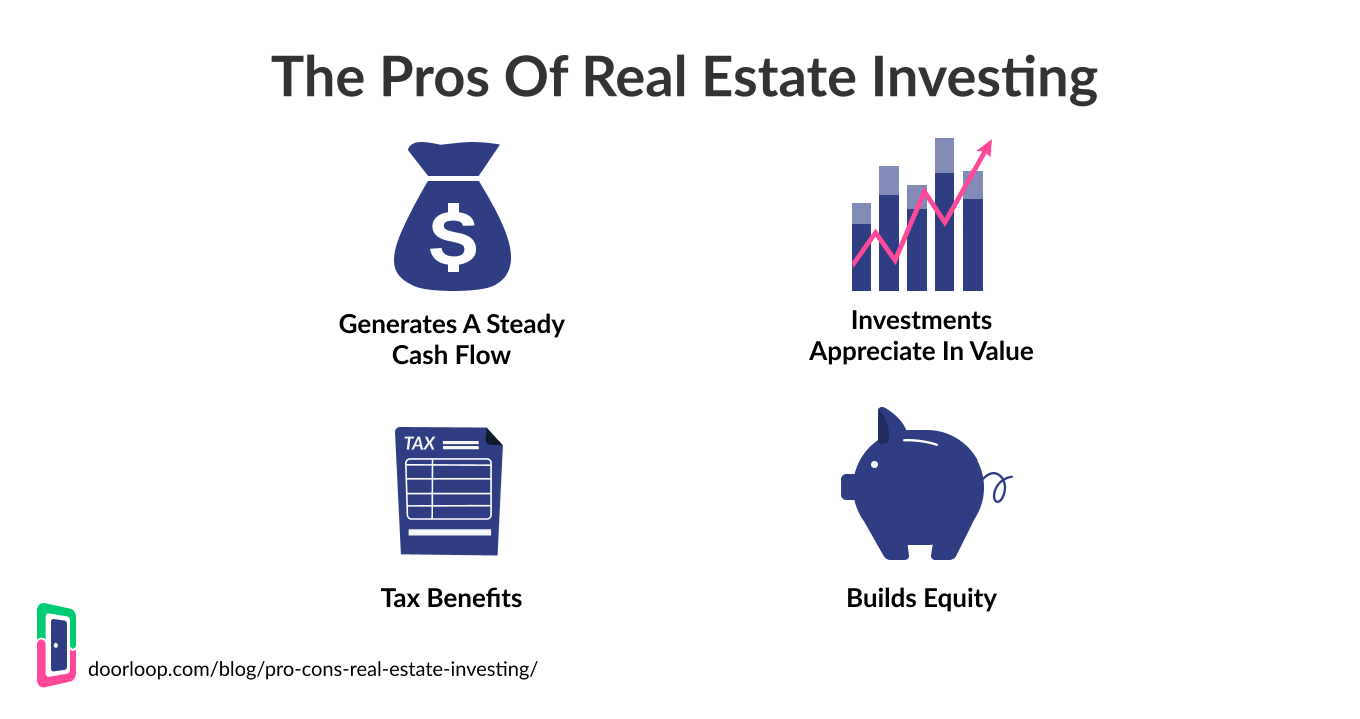
One of the most significant advantages of real estate investment is its potential for long-term appreciation. Despite fluctuations in the market, real estate tends to appreciate over time. For instance, historical data shows that property values have generally trended upward, making it a reliable long-term investment. If you choose the right location and property type, you might find yourself enjoying significant returns in the coming years.
2. Cash Flow Opportunities
Real estate can provide steady cash flow through rental income. With increasing demand for rental properties, particularly in desirable locations, investors can secure reliable income streams. In 2024, as the job market stabilizes and wage growth resumes, more people will seek rentals, creating opportunities for landlords to increase rental rates and boost profitability.
3. Tax Benefits
Real estate investors in the U.S. benefit from numerous tax deductions that can enhance their bottom line. Property owners can often deduct mortgage interest, depreciation, and property management fees, among others. In 2024, these tax advantages remain relevant, providing investors an opportunity to maximize cash flow and minimize tax liabilities.
4. Hedge Against Inflation
Real estate is often seen as a hedge against inflation. As the cost of goods and services rises, so do property values and rental incomes. This can make real estate a safer investment when inflation is high, protecting your capital’s purchasing power over time.
5. Diversification of Investment Portfolio
Investing in real estate can diversify your investment portfolio, reducing your overall risk. Stocks, bonds, and other traditional investments can be volatile, but adding real estate can provide a more stable foundation. In 2024, as investors seek to navigate an unpredictable economy, diversifying into real estate may be a prudent strategy.
6. Control Over Your Investment
Real estate offers a level of control that many other investments do not. Property management, renovations, and value enhancements can all be influenced directly by the owner. This autonomy allows you to actively improve the property and potentially increase its value and cash flow.

- Overcome negative thought patterns, reduce stress, and live a worry-free life
- Overthinking is the biggest cause of unhappiness
- Don't get stuck in a never-ending thought loop
- Stay present and keep your mind off things that don't matter, and never will
- Break free of your self-imposed mental prison
7. Mortgage Leverage
Investors can use leverage to purchase real estate, meaning you can buy a property using borrowed funds. By financing a portion of your investment, you can greatly enhance potential returns on investment. In 2024, with interest rates potentially stabilizing, you may find mortgage lending terms to be more favorable than they have been in recent years.
The Cons of Investing in Real Estate in 2024
1. Market Volatility
While real estate is often seen as a stable investment, it is not immune to market fluctuations. Economic downturns, changes in consumer behavior, and local market conditions can lead to declines in property values. In 2024, potential economic instability could pose challenges for investors looking for quick profits or short-term gains.
2. High Entry Costs
Acquiring real estate typically involves significant upfront costs, including down payments, closing costs, and property inspections. Many new investors may find these barriers overwhelming, limiting access to real estate opportunities. Additionally, ongoing costs such as taxes, insurance, and maintenance can add up, impacting your overall investment returns.
3. Management Responsibilities
Owning rental properties can be a time-consuming endeavor. From finding tenants to managing repairs and addressing tenant concerns, property management can become a full-time job. If you choose to hire property management services, this can further reduce your profit margins, making it essential to consider your capacity and willingness to engage in property management fully.
4. Dependence on Location
Real estate is highly dependent on location. A thriving market in one area can quickly shift due to external factors like local economic downturns, changes in demand, or shifts in demographics. Investors must conduct thorough market research to ensure they choose the right location that will yield returns over time.
5. Illiquidity
Unlike stocks and bonds, real estate is typically considered an illiquid asset. Selling property can take time, and the process often involves significant costs. If you need to access your investments quickly, this can pose a challenge. In 2024, as market conditions evolve, having liquid assets may become increasingly important for some investors.
6. Regulatory Risks
Investors must navigate a complex landscape of local, state, and federal regulations. Changes in laws, zoning restrictions, and housing policies may impact the profitability of your investment. It is crucial to remain informed about regulatory changes that could affect your property or market segment in 2024.
7. Economic and Global Events
Global events can impact the real estate market, as demonstrated by the COVID-19 pandemic. Issues such as political instability, economic downturns, or natural disasters can have unexpected effects on property values and investment performance. Keeping abreast of global trends is crucial in evaluating the potential for real estate investment in 2024.
Conclusion: Is Real Estate Right for You in 2024?
As we contemplate investing in real estate in 2024, it is essential to weigh the pros and cons carefully. The potential for long-term appreciation, cash flow opportunities, tax benefits, and portfolio diversification undoubtedly makes real estate an attractive option for many investors. However, the associated risks, such as market volatility, high entry costs, and management responsibilities, necessitate thorough consideration.
Ultimately, your decision will depend on your individual financial goals, risk tolerance, and ability to dedicate the necessary time and effort to property management. If you are prepared to navigate the complexities of real estate, investing in this asset class may very well prove rewarding in 2024 and beyond.
As you move forward, consider enlisting the help of real estate professionals, including agents, financial advisors, and market analysts, to guide you in making informed investment choices. By doing your due diligence and staying informed about market trends and economic indicators, you can position yourself to make the most of real estate opportunities in 2024. Happy investing!


