
Learning Latin can be quite a challenge, but thanks to modern technology, there are now apps that make it easier and more accessible. Whether you’re a student struggling with translations or simply interested in brushing up on your Latin grammar, there’s an app out there that can help. In this comprehensive guide, we’ll take a look at the best apps for learning Latin and for translating it, covering both iOS and Android platforms.
1. Introduction to Latin Learning Apps
Latin is often considered a difficult language, particularly due to its complex grammar and syntax. However, numerous apps have been developed to help learners navigate these complexities. From conjugating verbs to understanding morphology, these apps aim to make Latin easier to learn and master.
2. Why Use Latin Learning Apps?
If you’re wondering whether you need an app to help with Latin, the answer is probably yes. Latin learning apps:
- Provide interactive lessons.
- Offer vocabulary drills.
- Simplify verb conjugations.
- Help with real-time translations.
Now, let’s dive into the top apps for learning and translating Latin.
3. Best Apps for Learning Latin
If you’re focusing on mastering the basics of Latin—grammar, syntax, and vocabulary—here are some standout apps for both Android and iOS.
3.1 MyLatino (Android)
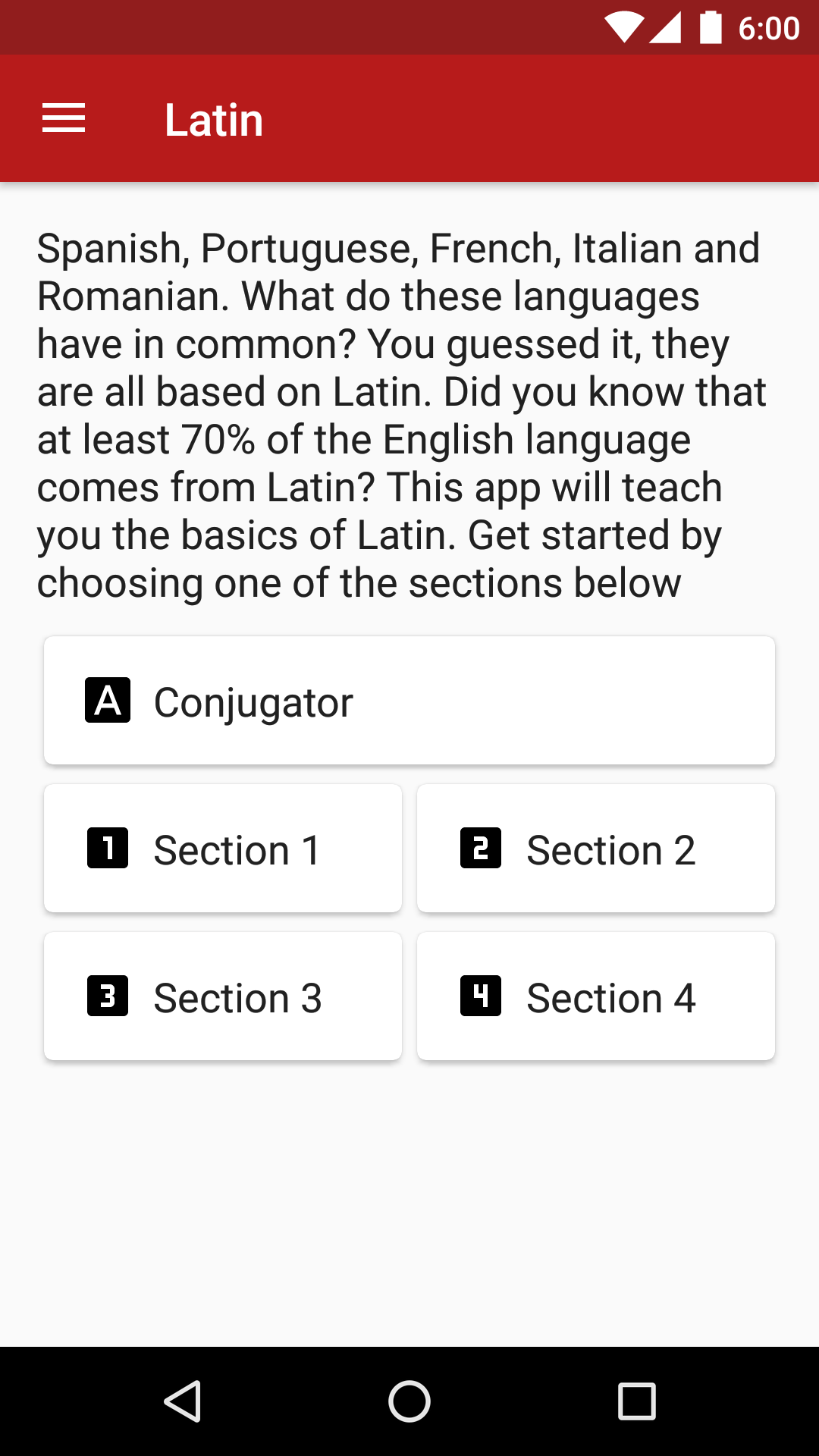
MyLatino is a fantastic app for Android users that focuses on the foundational aspects of Latin. Whether you’re looking to brush up on declensions, verbs, or phonetics, this app provides a straightforward way to navigate Latin grammar. Here’s what MyLatino offers:
- Easy navigation for finding grammar rules.
- Sections for phonetics, morphology, and syntax.
- Interactive tools for revising Latin rules.
You can download MyLatino from the Google Play Store.
3.2 Latin Help (iOS/iPadOS)
If you’re using an iPhone or iPad, Latin Help is a highly recommended app for learning and understanding Latin better. It not only helps you rearrange Latin texts but also highlights key elements to improve comprehension.
Features of Latin Help include:
- Drag-and-drop interface for reordering text.
- Highlight tools to emphasize important grammar points.
- Text-saving feature for future review.
It’s available for free on the Apple App Store, but additional features can be unlocked for $1.99.
4. Best Apps for Translating Latin
Latin translation can be tricky, but with the right tools, it becomes much easier. Below are some of the top apps that simplify Latin translations.
4.1 Google Translate (Android/iOS/iPadOS)
Google Translate is one of the most popular translation tools available, and while it’s not dedicated solely to Latin, it offers reliable Latin-to-English and English-to-Latin translations. Whether you’re translating single words or whole sentences, Google Translate is up to the task.
Features include:
- Translations for phrases and single words.
- Handwriting input for Latin characters.
- Image-based translations using your device’s camera.
You can get Google Translate for Android or iOS.
4.2 IL Castiglioni-Mariotti (Android/iOS/iPadOS)
This app is a digital version of the famous Castiglioni-Mariotti Latin Dictionary, making it an essential tool for more serious Latin students and scholars. The app offers comprehensive translations from Latin to Italian and vice versa.
Key features:
- Complete Latin-to-Italian dictionary.
- Option to search by forms or full text.
- Ability to save and revisit searches.
Although free to download, access to the complete dictionary requires an in-app purchase. It’s available for both Android and iOS.
5. How to Choose the Best App for You
Choosing the right app for Latin learning depends on your needs. If you’re a beginner looking for an easy way to navigate grammar rules, MyLatino or Latin Help might be the best options. If you’re dealing more with translations and deeper understanding of texts, Google Translate or IL Castiglioni-Mariotti are great choices.
5.1 Key Factors to Consider
When selecting a Latin learning or translation app, consider the following:
- Ease of use: Is the interface intuitive and user-friendly?
- Content: Does the app cover the areas you’re struggling with, such as verb conjugation or translations?
- Price: Is the app free, or does it offer in-app purchases for additional features?
6. The Future of Latin Learning Through Technology
As technology continues to advance, we can expect even more innovations in the field of language learning, particularly with classical languages like Latin. Apps that utilize AI for translations, interactive quizzes, and real-time feedback are likely to become even more refined.
6.1 The Role of AI in Learning
Artificial Intelligence is already making waves in language learning apps. By analyzing the common mistakes learners make, AI can personalize lessons and offer targeted feedback.
7. Other Apps for Latin Learning and Translation
If you’re still looking for additional resources, here are a few more apps worth considering:
7.1 Verbi Latini Petrini
This app focuses specifically on Latin verbs, helping users to master conjugations through interactive quizzes and exercises. Available on both Android and iOS, it’s a valuable tool for Latin learners at any level.
7.2 Vocabolario Latino-Italiano
Vocabolario Latino-Italiano offers more than 150,000 terms for translation, making it a robust resource for those delving deep into Latin texts. It also provides declension and conjugation tools. Available for Android.
7.3 iLatinista
Designed for iOS users, iLatinista includes more than 100 topics of Latin grammar and syntax, making it a handy guide for students. It also provides searchable Latin terms, making it easy to find the definitions you need. You can get it from the Apple App Store.
8. Benefits of Learning Latin with Apps
There are several advantages to using apps for learning Latin:
- Accessibility: Learn anytime, anywhere using your mobile device.
- Interactivity: Apps often provide exercises, quizzes, and interactive tools.
- Customization: Tailor your learning to your specific needs and pace.
9. Final Thoughts on Learning Latin Through Apps
While learning Latin may seem daunting at first, the variety of apps available today makes the process much more manageable and even enjoyable. From mastering grammar to translating complex texts, these tools provide a well-rounded learning experience. So, why not give them a try?
FAQs
1. Can I learn Latin from scratch using an app?
Yes, many apps are designed for beginners and will guide you through learning Latin step by step.
2. Are there free Latin learning apps?
Yes, several apps, such as Google Translate and MyLatino, are free to use with optional in-app purchases for additional features.
3. What’s the best app for translating Latin?
Google Translate is a popular choice for Latin translations, but IL Castiglioni-Mariotti offers a more detailed, specialized dictionary for serious learners.
4. Can these apps help me with Latin homework?
Definitely! Apps like Latin Help and Verbi Latini Petrini are excellent for helping with translations, conjugations, and understanding Latin texts.
5. Are there apps for advanced Latin learners?
Yes, IL Castiglioni-Mariotti and iLatinista cater to more advanced learners, offering detailed translations and grammar resources.
6. Do I need an internet connection to use these apps?
Some apps require an internet connection for certain features, but many offer offline capabilities once they’ve been downloaded.
7. Is there an app that helps with Latin pronunciation?
Yes, apps like Google Translate offer pronunciation features for Latin words.
8. Can I translate entire Latin texts using an app?
Yes, apps like Google Translate allow you to input entire sentences or scan text with your camera for instant translation.


