
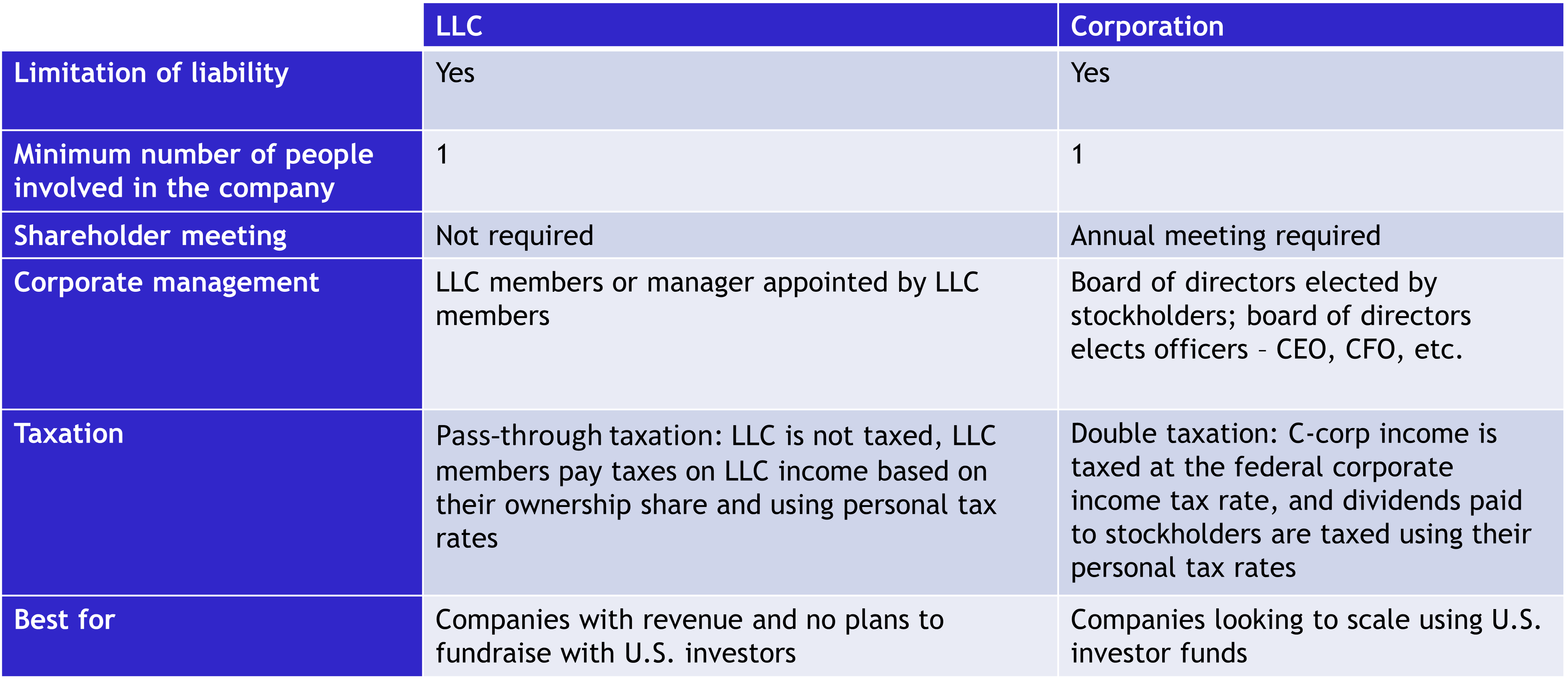
Starting a business is an exhilarating journey, unmatched in its ability to offer freedom and the potential for financial growth. However, with this excitement comes immense responsibility—especially when it comes to selecting the right business structure. One of the most pivotal decisions for entrepreneurs is determining whether to establish a Limited Liability Company (LLC) or a Corporation (Corp.). If you’re knee-deep in planning your startup, you may be grappling with the ultimate question: LLC vs. Corporation: which form offers the best tax advantages?
In this article, we’ll delve into the key differences between LLCs and Corporations, their taxation frameworks, and how to evaluate which structure is the most beneficial for your startup from a tax perspective.
Understanding LLCs and Corporations
Limited Liability Company (LLC)
An LLC is a hybrid business structure that combines the advantages of both corporations and traditional partnerships. One of the primary benefits of an LLC is that it provides its owners (referred to as “members”) with limited liability protection. This means that in most cases, members are not personally responsible for the debts and liabilities incurred by the business.
Key Features of LLCs:
– Flexibility in Management: LLCs can be managed by members or designated managers.
– Tax Pass-Through: Typically, LLCs are not taxed at the business level. Instead, income is passed through to members’ personal tax returns.
– Fewer Formalities: LLCs generally have fewer ongoing requirements and formalities compared to a corporation.
Corporation
A Corporation is a more traditional business structure, recognized as a separate legal entity from its owners (shareholders). Corporations can offer significant advantages, particularly for larger companies or those seeking to raise capital through the sale of stock.
Key Features of Corporations:
– Limited Liability: Like LLCs, corporations protect their owners from personal liability for business debts.
– Double Taxation: Standard (C) corporations are subject to corporate tax rates and their shareholders may also have to pay taxes on dividends, leading to double taxation.
– Easier to Raise Capital: Corporations can easily sell shares to attract investors.
Taxation: A Closer Look
When choosing between an LLC and a Corporation, one of the most important factors to consider is how each structure is taxed. Here, we break down the taxation features of both entities.
LLC Taxation
-
Pass-Through Taxation: LLCs generally enjoy pass-through taxation, meaning profits and losses are reported on the members’ personal income taxes. This can be advantageous for members in lower tax brackets.
-
Self-Employment Taxes: Members are typically considered self-employed, which means they are responsible for paying self-employment taxes on the LLC’s profits. This includes Social Security and Medicare taxes.
-
Choosing a Tax Treatment: LLCs can elect to be taxed as a corporation if beneficial. This provides flexibility for members who might want to avoid self-employment taxes.
Corporation Taxation
-
C Corporation (C Corp) Taxation: C Corporations face double taxation. The corporation pays taxes on its profits, and shareholders pay taxes on dividends received. This can create a higher overall tax liability compared to pass-through entities.
-
S Corporation (S Corp) Taxation: An S Corporation can pass income directly to shareholders while avoiding double taxation. However, S Corps are subject to specific eligibility requirements, such as the number of shareholders and types of allowable shareholders.
-
Deductible Business Expenses: Corporations can deduct business expenses before calculating taxable income, potentially leading to a lower tax liability.

- Overcome negative thought patterns, reduce stress, and live a worry-free life
- Overthinking is the biggest cause of unhappiness
- Don't get stuck in a never-ending thought loop
- Stay present and keep your mind off things that don't matter, and never will
- Break free of your self-imposed mental prison
Which Structure is Best for Your Startup?
Determining whether an LLC or a Corporation is better for your startup requires careful consideration of various factors, including your tax situation, growth plans, and funding needs.
1. Your Business Goals
Consider the goals you have for your startup. Are you planning to seek venture capital funding, issue stock, or expand significantly? If so, a Corporation may be a more suitable choice, as it allows for greater flexibility in raising capital and offers a structure familiar to investors.
2. Expected Profits and Losses
Think about your expected profit levels. If you anticipate significant profits in the early years, an LLC’s pass-through taxation may provide a more favorable tax situation. However, if you expect losses, the ability to offset business losses against personal income in an LLC might provide personal tax relief.
3. Tax Rates and Personal Income
Consider how LLC and Corporation structures would affect your personal tax situation. If your income is high and you expect to remain in a higher tax bracket, the potential for double taxation as a C Corporation may not be ideal. In this case, an LLC or S Corporation may provide a better tax outcome.
4. Self-Employment Taxes
If you set up an LLC, keep in mind the self-employment tax responsibilities. If your plan is to draw a salary from your corporation or take regular dividends, this may require an analysis of self-employment taxes versus corporate taxes.
5. Professional Guidance
It’s prudent to seek legal and tax advice when deciding the structure of your startup. A qualified CPA or business attorney can provide personalized advice that takes your unique situation into account and ensure compliance with state and federal laws.
Conclusion
In a nutshell, choosing between an LLC and a Corporation largely comes down to your specific business goals and personal circumstances. An LLC may be the simplest option, offering flexibility, pass-through taxation, and limited liability. Conversely, a Corporation could be advantageous for those looking for growth, external investment, and a structure that allows for stock issuance.
As your startup evolves, reconsidering your business structure may also be prudent. It is crucial to maintain a dynamic approach, adjusting your entity as your business landscape changes.
Breaking down the options between an LLC and Corporation will empower you to make a more informed and beneficial decision for your startup. Remember, each business is unique, and the right structure can lead the way for a rewarding entrepreneurial journey.
In conclusion, take the time to explore the specifics surrounding your startup’s needs, and don’t hesitate to reach out for professional help. After all, building the right foundation for your business is critical—both for your immediate success and for your future growth. Happy startup journey!


